
The arrival of Edi Rama at Parliament was accompanied by a politically charged atmosphere and open tension on the ground. Inside the chamber, the majority is pushing forward its draft for the territorial reform; outside the building, the situation deteriorated into physical clashes between protesters and police forces.
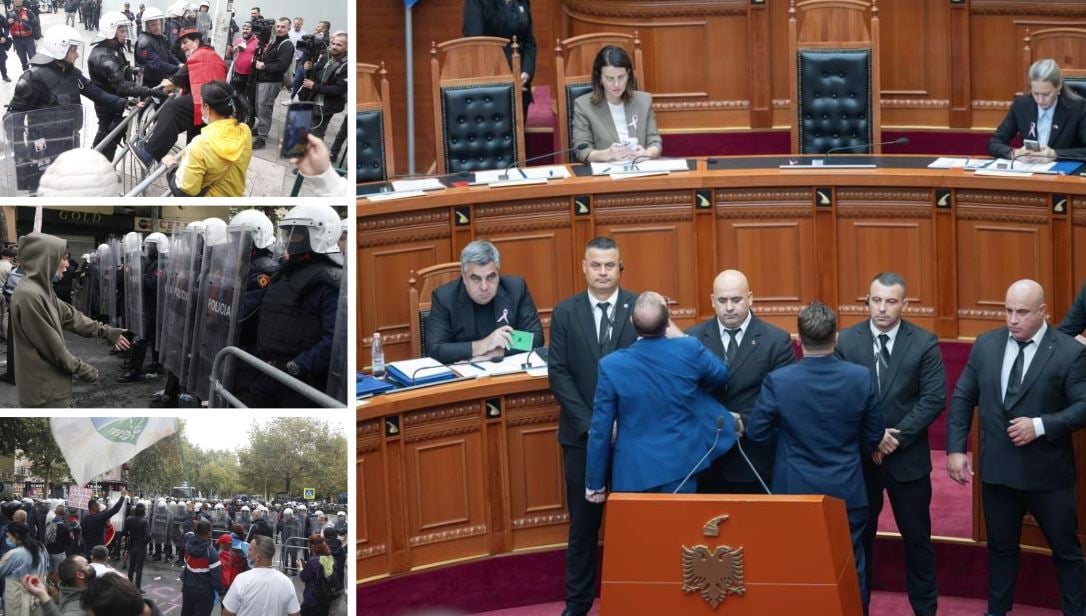
Parliament session focuses on territorial reform vote
The plenary session began in the Parliament of Albania at a politically charged moment, with the issue of territorial reform also on the agenda. According to the majority’s version, the Socialist Party draft is expected to be approved in Parliament.
Paragraphs framed as a contest of numbers and political discipline do not change the essence of the debate: territorial reform remains a decision with a direct impact on local representation and local administration. For precisely this reason, its vote is being followed with tension inside and outside Parliament.
Rama arrives at the Parliament premises
Prime Minister Edi Rama arrived at the Parliament premises at a time when the session had already started and the majority was preparing for the vote on the draft. His presence comes at a moment when the government is trying to pass one of the most sensitive political issues of the day.
Paragraphs about Rama’s entry into Parliament carry political weight not only for their symbolism, but also for the message of control the majority is seeking to project in a session accompanied by public tensions.
Clashes outside the Parliament building
Outside the Parliament building, the protest intensified between demonstrators and police officers. Protesters physically clashed with the police cordon and attempted to knock down the barriers placed around the security perimeter.
Paragraphs from the scene show an aggravated situation, where the management of public order became another point of debate. The presence of barriers and the direct confrontation with citizens shifted attention from the parliamentary chamber to the way opposition in the street is being managed.
Police use tear gas
As the situation escalated, police used tear gas to disperse protesters and regain control of the area in front of Parliament. This is the official version of the intervention on the ground, at a time when the protest was unfolding in parallel with the discussions in the chamber.
Paragraphs about the use of force at public gatherings always remain subject to public scrutiny, especially when the intervention happens near the country’s highest representative institution. In this case, the session on territorial reform and the police response unfolded simultaneously, making the political climate even more strained.
While the territorial reform is being discussed inside Parliament and is expected to be put to a vote, opposition outside the building has taken direct shape in the street. The clash between parliamentary decision-making and public reaction has turned this session into a test of political and institutional strength.