
A strong message has come from Warsaw at a time when the security climate in Europe remains tense. NATO Supreme Allied Commander Europe, U.S. General Alexus Grynkewich, said the Alliance is not seeking war, but warned that any attack on a member state would be met with a military response.
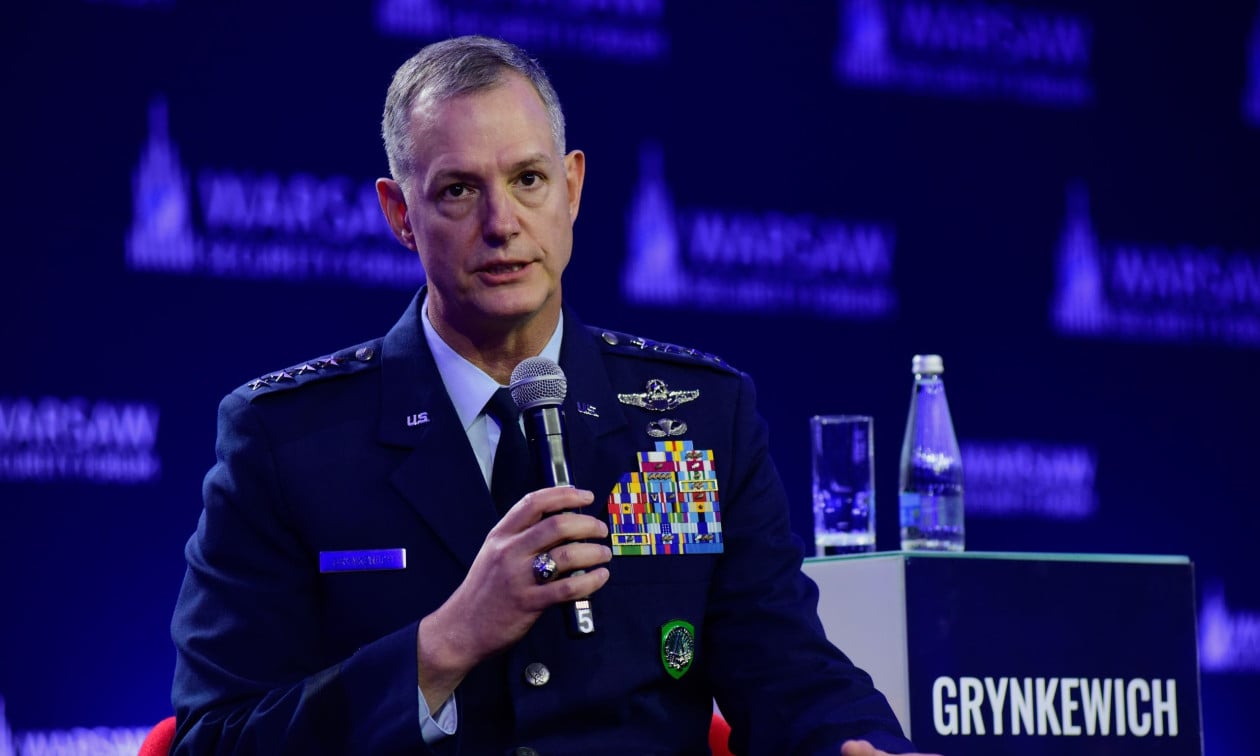
Strong statement at the Security Forum
During his remarks at the Security Forum in Warsaw, Grynkewich said NATO should not be read as weak simply because it presents itself as a defensive alliance.
He said the Alliance does not seek conflict with anyone, but added that if someone were to attack NATO, the response would be war. The message comes at a time when military rhetoric and security alarms across the continent have increased significantly.
How he described NATO’s response in the event of an attack
According to the version presented by the American commander, NATO’s response would begin with stopping the attack and preventing the adversary’s advance into Alliance territory.
If the aggression continued, he said, this would be followed by actions to weaken enemy forces and, if deemed necessary, to destroy their combat capabilities.
He also warned that the counter-response would not be limited only to the units carrying out the attack, but could also include the structures that support, supply or command them.
Russia in the background, even without being mentioned directly
Although Grynkewich did not mention Russia by name in his speech, the remarks have been widely read as a signal to Moscow, amid the deterioration of relations between Russia and Western countries.
NATO’s strategic doctrine adopted in 2022 describes Russia as the most significant and direct threat to the Alliance’s security. For its part, Moscow has previously issued strong warnings, including references to the use of nuclear weapons in the event of a confrontation over Kaliningrad.
Between deterrence and the risk of escalation
According to the statements made in Warsaw, NATO’s goal remains the prevention of war through military readiness, not its initiation. But the harsher the public language of the sides becomes, the more visible the risk that tension could spiral out of control.
Grynkewich stressed that preparation for defense and maintaining communication are key elements in avoiding misunderstandings. This shows that even in the Western camp there is awareness that signals of strength can function as a tool of deterrence, but also as an additional factor of pressure in an already heated climate.
The NATO commander’s statement comes at a time when European governments are increasingly speaking about sabotage, drone incidents and cyberattacks they attribute to Russia.
Against this backdrop, the message from Warsaw appears designed to show military resolve, but also to remind that the line between deterrence and escalation remains fragile.