
An investigation published by The Telegraph has drawn attention to the expansion of Russia’s drone infrastructure near the border with Ukraine, raising concerns not only about the continuation of attacks on Kyiv, but also about the further exposure of NATO’s eastern flank. The claims are based on leaked documents, satellite images and specialized analysis of the Kremlin’s new moves.
What the investigation claims
According to The Telegraph, 10 Kremlin bases have been identified with newly built platforms for launching long-range kamikaze drones. Some of them, according to the same report, are already being used in attacks on Ukraine.
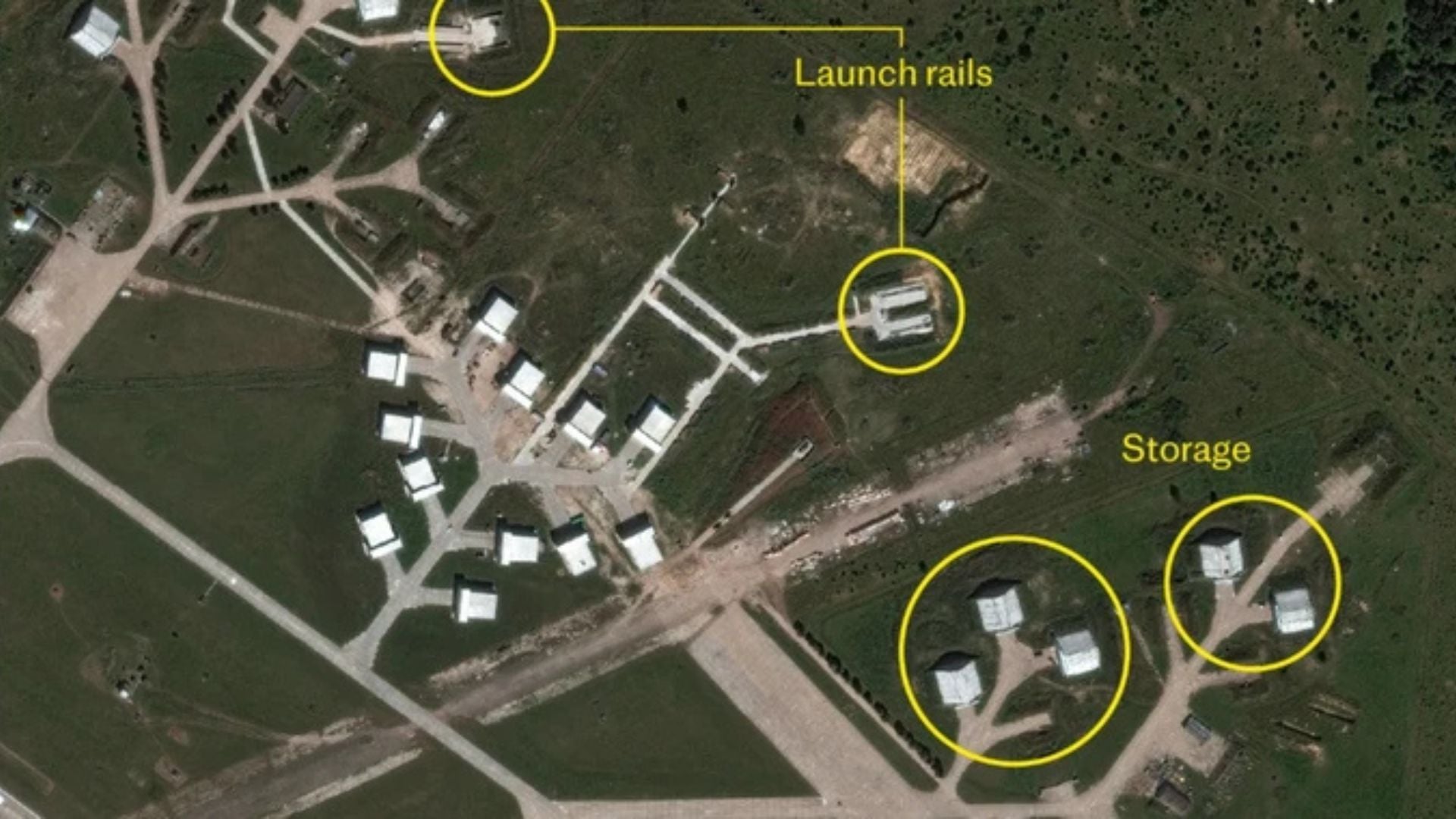
The investigation says that at least 59 new launch rails have been found along Russia’s border with Belarus and Ukraine, used to send fixed-wing drones into the air without the need for a traditional runway. Some of these sites appear to have been established on existing military bases or civil airports, while others have been spread across rural areas.
Why it is being seen as an alarm for NATO
According to analysts cited in the report, the proximity of these bases to the border supports massive air attacks on Ukraine while also expanding the threat range to NATO allies. Some of the platforms, according to published assessments, would put Russian drones within striking distance of Warsaw.
European and U.S. intelligence officials, according to the version reported by the British newspaper, believe Moscow is examining scenarios such as armed provocations on Polish territory, strikes on critical infrastructure or false-flag operations that could be blamed on Ukraine. However, the same report stresses that there are no direct indicators that Russia is planning such an attack now.
New technology and expanding capabilities
Analysis of images by DroneSec has found that around 20 of the new rails appear longer, which experts say may indicate the ability to launch the latest models of long-range attack drones. The report mentions the Geran-4 and Geran-5 variants, which according to documents published by the Ukrainian side can carry payloads of up to 90 kilograms and fly at speeds that make interception more difficult.
According to the cited data, one base has storage capacity for more than 1,000 drones at the same time, while at several other locations construction of additional rails is still under way. This picture suggests a sustained expansion of the launch network, not just temporary improvisations in the field.
NATO’s response and the questions that remain
A NATO official, quoted by The Telegraph, said the alliance is ready to defend every inch of its territory and is increasing its deterrence and defense capabilities, including against drone threats. NATO has also acknowledged that drones have significantly changed the nature of modern warfare.
Despite the strong language of readiness, the report underlines that the acceleration of Russian drone capabilities is creating a new security challenge for Europe. At its core, the issue is not only how far these systems can reach, but how quickly the infrastructure that keeps them operational is expanding.
Open-source data, according to the investigation, show that seven of the 10 identified sites were used during several of the latest bombardments against Kyiv. That makes the debate less theoretical and more a concrete issue of military escalation on Europe’s eastern borders.
Beyond political statements, what emerges from the report is a clear signal: drone warfare is entering a broader phase, with consequences that may not stop only on Ukrainian territory.