
Adriatik Llalla has made a statement that once again places him at the center of the debate over standards of justice and accountability for senior officials. The former prosecutor-general says he was himself the initiator of legal changes that toughened penalties for failing to declare assets, while years later he was convicted precisely for that offense.
Llalla’s claim about the legal initiative
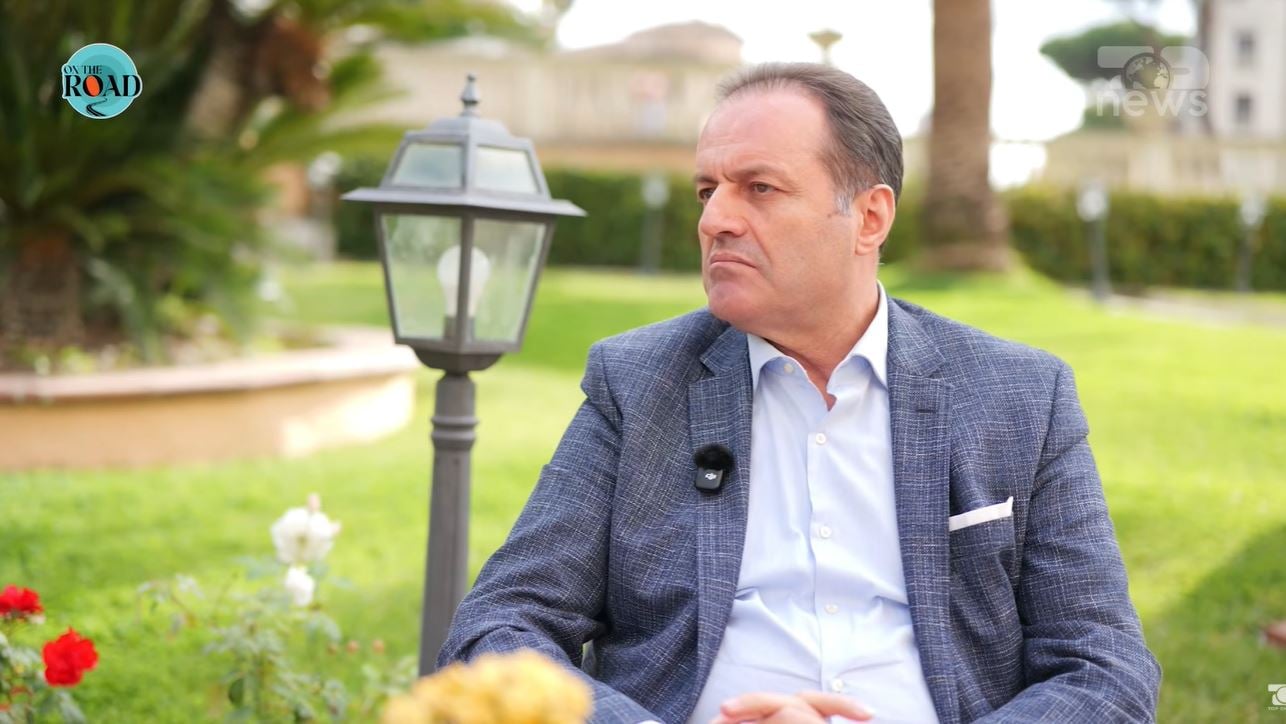
In an interview given to the program “On the Road” on Top News, Llalla said that when he headed the High Inspectorate for the Declaration and Audit of Assets, he had requested that failure to declare assets be punished not only with a fine, but also with imprisonment of up to three years.
According to his version, the initiative came after many officials were avoiding the obligation to declare their assets. He claims that the tougher penalties helped increase officials’ sense of responsibility toward the asset-control institution.
From initiator of tougher penalties to convicted for the same offense
Llalla’s statement highlights a sharp political and institutional contrast: a former senior official who says he sought to strengthen the law, but who was later struck by the same criminal mechanism.
In May 2021, the Special Court sentenced Llalla to two years in prison for failure to declare and concealment of assets in three episodes. That ruling was also upheld by the Special Appeals Court on September 22, 2021.
Llalla has said that he respects the court’s decision, even though he has reservations about it.
What he says about the law’s effect
According to Llalla, the tougher penalties brought an improvement in asset declarations by officials. This is an assessment made by Llalla himself in the interview and not an account accompanied by data or independent verification in that same public appearance.
This is precisely where a sensitive point remains: the claim about the law’s effectiveness comes from a figure convicted of the violation that, according to him, the legal changes sought to curb.
Non-extradition from Italy, according to his explanation
In the same interview, Llalla also spoke about the decision by the Italian authorities not to extradite him to Albania.
According to him, the Italian courts took into account the sentence handed down by Albanian justice, which he considers severe for the nature of the criminal offense, as well as his health condition. At this point, this reflects Llalla’s own position on the reasons for the non-extradition.
The case of the former prosecutor-general remains one of the most significant episodes in the clash between the former power of senior officials and the criminal consequences that later affected them.
His statement that he himself proposed toughening the law under which he was later convicted brings back into focus not only Llalla’s own case, but also the broader debate over how laws on officials’ assets are drafted, enforced, and interpreted.