
The parliamentary session once again descended into personal accusations and political clashes, as attention shifted from the formal discussion to attacks over wealth, loans and investigations. At the center of the exchanges were Socialist MP Ulsi Manja and the leader of the Mundesia Party, Agron Shehaj, while Erald Kapri also became involved in the debate.
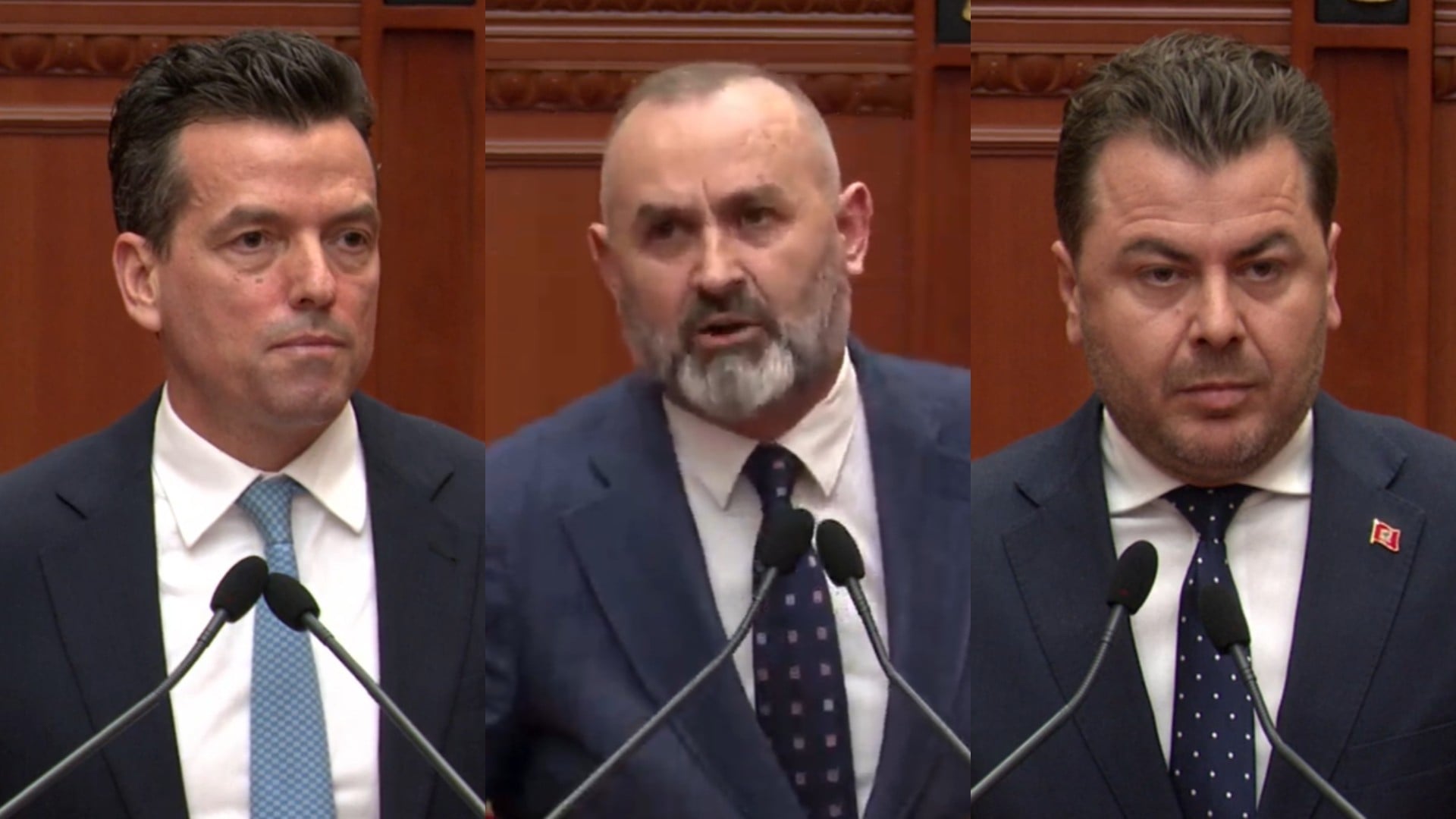
Shehaj mocked Balla’s absence and the declared loan
Agron Shehaj used his speaking time to attack the majority, referring to the absence of the interior minister and Taulant Balla from the session. He mocked Balla’s declaration of a loan which, according to him, is to be repaid by 2044.
Shehaj raised questions about whether this loan was linked to the declared apartment of nearly 500 square meters in a tower in Tirana, turning the issue into a political attack on figures in the majority. At its core, the opposition was trying to present the debate on the protests and the normative act as being accompanied by significant absences on the government side.
Manja turns fire toward the villa in Italy and crypto claims
Ulsi Manja’s response did not focus on the normative act, but shifted instead to Shehaj’s wealth and his previous activity. Manja publicly challenged the leader of the Mundesia Party to explain the villa in Forte dei Marmi, Italy, which he said had been bought for around €2 million and then sold for €15 million within a short period of time.
According to asset declarations cited in the debate, the property was listed in 2021 at a value of €2.9 million, while in 2025 it was declared sold for €15 million. Over this issue, Shehaj has been reported to SPAK for money laundering.
Manja also raised suspicions over alleged cryptocurrency transactions, but without presenting evidence in the chamber. His accusations remained at the political level, tied to the day’s clash and the mobilization for the November 28 protest.
Kapri accuses him of blackmail, clash deteriorates into insults
MP Erald Kapri also intervened in the debate, accusing Manja of political blackmail against an opposition lawmaker. Kapri portrayed the majority’s stance as a sign of institutional arrogance, claiming that even the limits set by constitutional justice were being ignored.
The clash then slipped further into personal attacks and offensive language, with mutual accusations involving files, wiretaps and unproven connections. Manja’s reaction to Kapri pushed the tone of the debate even further, taking the session away from any standard of a parliamentary discussion on the law.
Parliament as an arena for accusations, not a forum for accountability
What was seen in the chamber was another episode in which Parliament functioned more as a stage for political denunciations than as a space for institutional clarification. Claims about loans, wealth, reports filed with SPAK and cryptocurrencies were used as rhetorical weapons, without being accompanied by verification or concrete responsibility at the time.
Instead of clear answers on the issues raised publicly, the session produced more political noise and little transparency. This leaves the debate trapped between strong insinuations and the lack of accountability the public expects from elected officials.
The clash between Manja, Shehaj and Kapri turned the session into a battle of accusations over wealth, investigations and personal integrity, while the issue that was on the agenda remained secondary.
At its core, the public once again saw a Parliament where political noise dominates over clarification of the facts, and where serious accusations are used more quickly than they are proven.