
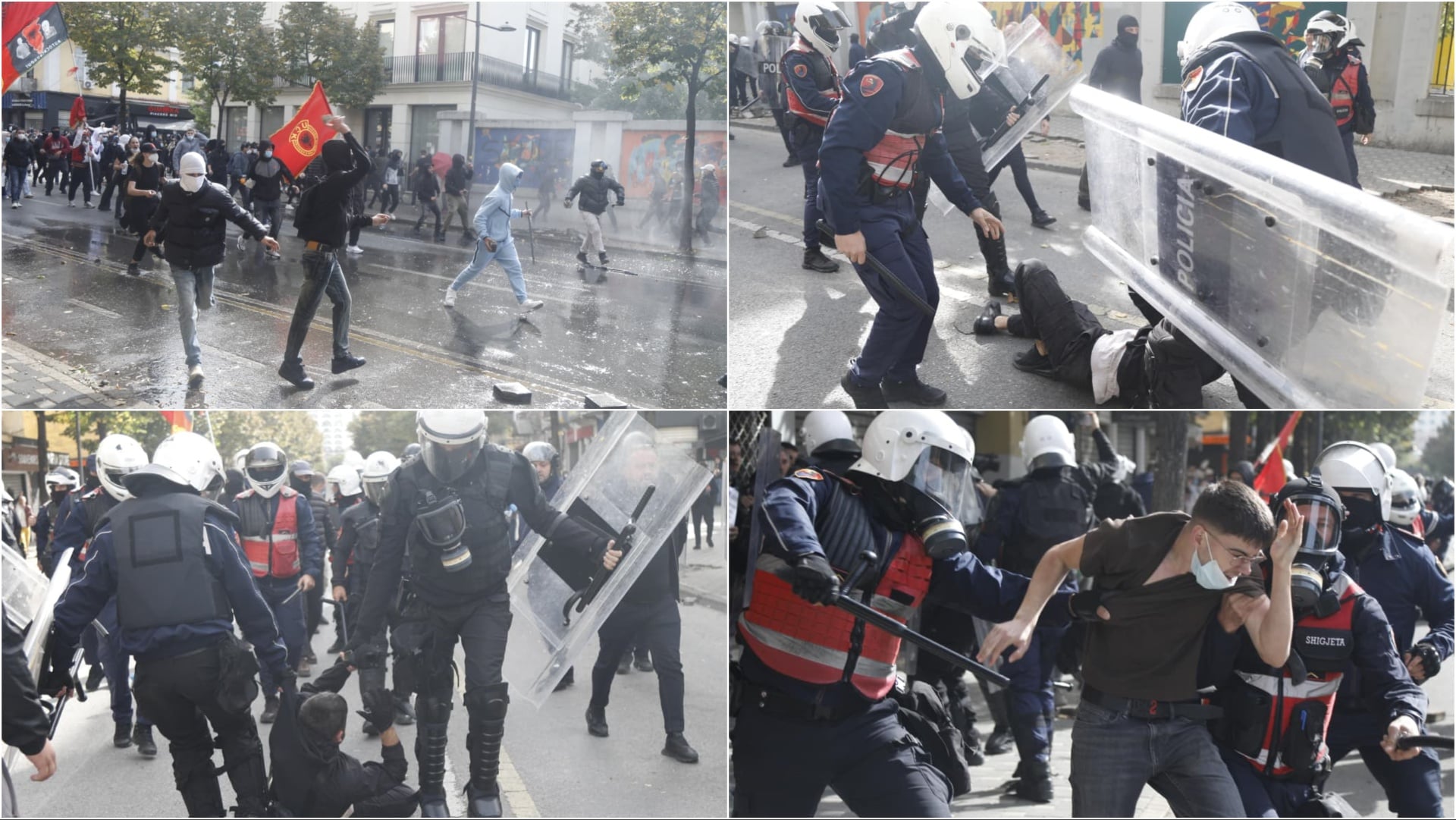
The student protest entered its third day this Thursday, with classes boycotted in high schools and faculties in Tirana, as well as in other cities across the country. In the capital, demonstrators began gathering outside Parliament from the early hours, in a tense atmosphere following clashes and damage reported a day earlier.
The boycott spreads beyond Tirana
Pupils and students responded to calls for protest circulating on social media, boycotting classes not only in Tirana but also in several other cities in Albania.
The involvement of high school and university students shows that the movement has taken on a broader reach, while educational institutions are facing absences in lecture halls and classrooms.
The capital under tension after Wednesday’s clashes
Thursday’s rally comes after a day of tensions in Tirana, where clashes, fires and material damage were reported on streets, at institutions and at businesses.
The full extent of the damage and responsibility remains unclear, while the situation has shifted public attention to how the protest and public order in the capital are being managed.
Plenary session canceled amid the crisis
At the height of the developments, lawmakers canceled the plenary session scheduled for this Thursday.
The decision comes at a time when the political focus has shifted entirely to the student protest and the consequences of the unrest a day earlier, leaving Parliament out of operation on one of the most tense days.
Rama accuses the opposition, but the protest remains at the center
After Wednesday’s events, Prime Minister Edi Rama reacted by accusing the opposition of trying to obstruct Albania on its path toward Europe.
This is the political version of the majority regarding what is happening on the ground, while the student protest and the scale of the dissatisfaction remain the main element of the day’s crisis.
With the boycott expanding and Tirana at the center of the tension, the third day of the protest is becoming a major test for the institutions and for the way this movement is being politically interpreted.
Beyond the accusations between the sides, developments show that the situation has moved beyond the framework of a routine reaction and is producing direct consequences for public and institutional life.