
The student protest entered its third day this Thursday, with a boycott of classes in high schools and faculties in Tirana, as well as in other cities across the country. In the capital, school pupils and university students began gathering outside Parliament from the early morning hours, in a tense atmosphere following the events of the previous day.
Boycott in schools and faculties
Calls for protest appear to have resonated both in Tirana and in several other Albanian cities, where a boycott of classes has been reported. High school pupils and university students have joined the movement, mainly following calls circulated on social media.
The spread of the protest beyond the capital shows that the discontent is not remaining an isolated episode, as institutions face a situation that is taking on broader public and political dimensions.
Tirana after a day of clashes and damage
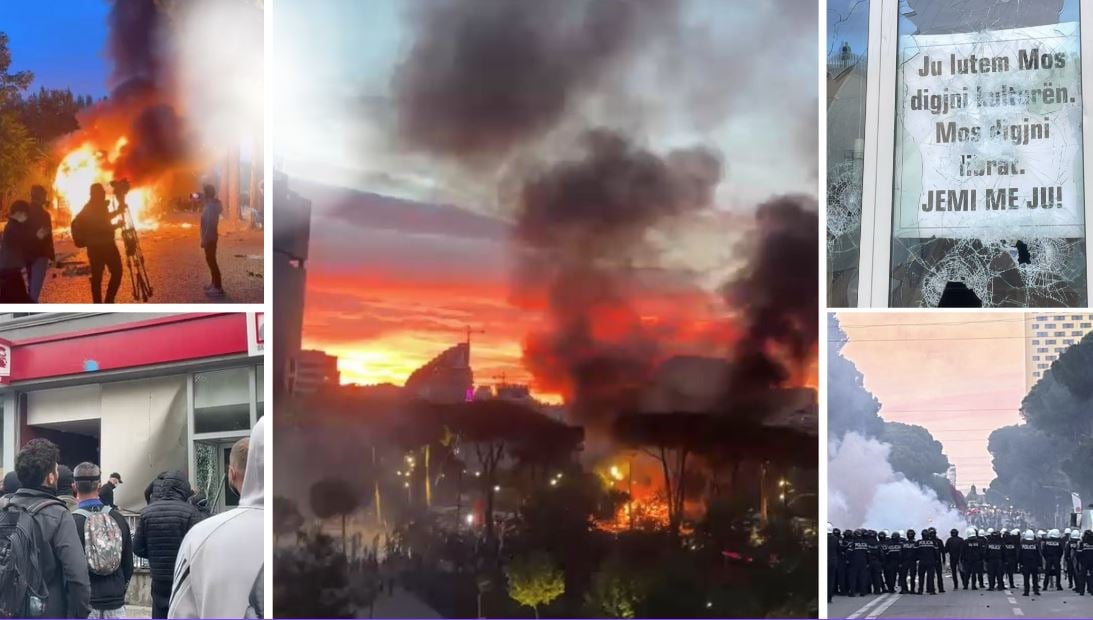
This day of protest comes immediately after Wednesday’s tensions in Tirana, where clashes, fires and material damage were reported on streets, at institutions and at businesses. The full extent of the consequences has not been made clear in detail, but the images and developments from the previous day have significantly worsened the atmosphere in the capital.
In such a situation, it remains essential that official versions regarding responsibility and the management of public order be treated with full verification, especially as the protest expands and tensions on the ground remain high.
Plenary session cancelled
Amid this climate, lawmakers have cancelled the plenary session scheduled for this Thursday. The decision comes at a moment when political and public attention has shifted almost entirely to the student protest and the situation created in the country.
The cancellation of the session is a direct indication that developments outside Parliament are dictating the institutional pace, rather than institutions providing clarity on the crisis that has emerged.
Rama’s reaction and the political clash
After Wednesday’s protest, Prime Minister Edi Rama reacted by accusing the opposition of trying to block Albania on its path toward Europe. According to his version, the country will not turn back.
This positioning shifts the debate toward the usual political clash, while more direct questions remain on the ground: what is fueling the revolt, how the protest is being managed, and why the situation has deteriorated into clashes, fires and material damage.
As the third day of the protest began with a boycott and gatherings in Tirana, the overall picture remains tense both on the streets and on the political front.
For the moment, the main development is clear: the protest has not faded, while the institutional response is being seen under increased public pressure.