
Prime Minister Edi Rama used strong language toward the families of children involved in violent incidents during the protest, warning of financial consequences and restrictions on benefits from the state. The statement raises questions not only about the threatening tone used by the head of government, but also about how responsibility is being framed for minors and their families.
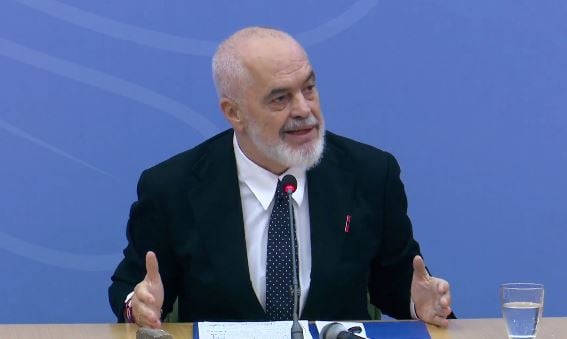
Rama’s direct warning
In his remarks, Rama addressed the families of minors with the message that “you will pay,” accusing them of leaving children “out on the streets from the age of 13” to take, in his view, the role of a shield for others.
He added that the damages “bill” would follow them “to the end,” a harsh formulation that shifts the burden of responsibility onto families, while no further details were given on the specific procedures that would be followed.
Focus on minors and school
Rama also said that these children “will not return to school normally,” linking the situation to direct consequences in education.
Along the same lines, he said there would be no free education for those who, according to his version, go out and attack police officers after throwing stones. The statement is politically forceful, but at this stage it remains unclear on what legal basis such a measure could be imposed.
Claim regarding public funds
The prime minister went further when he said that “not a single penny” would be received from Albanian taxpayers, presenting the issue as a cut-off of benefits from public funds.
This wording also places the debate on the relationship between the political punishment suggested in the statement and the limits set by law on children’s rights, education and the treatment of their families. So far, no additional institutional clarifications have been made public on how such a position would be implemented.
Harsh language on a sensitive issue
The case touches on a particularly sensitive area: the involvement of minors in protests and how the state responds to them. When political statements move from verbal condemnation to warnings of consequences for education and public benefits, the issue no longer remains only political, but also becomes a test of legal and institutional standards.
Up to this point, the cited statements do not provide details on identifying the cases, the procedures, or the specific measures that would be taken against the families and minors mentioned by Rama.
The prime minister’s statements shift the debate from the incidents on the ground to the larger question: is the language of public punishment being used against families and children beyond what the law allows?
Without concrete clarifications from institutions, questions remain open about the legal basis, proportionality, and how the rights of minors would be affected.