
Professor Artan Fuga has publicly come out in defense of students with a harsh message against any attempt to link them to violence. In his reaction, he rejects insinuations against students and raises political accusations over the way their demands and future have been treated, in his view.
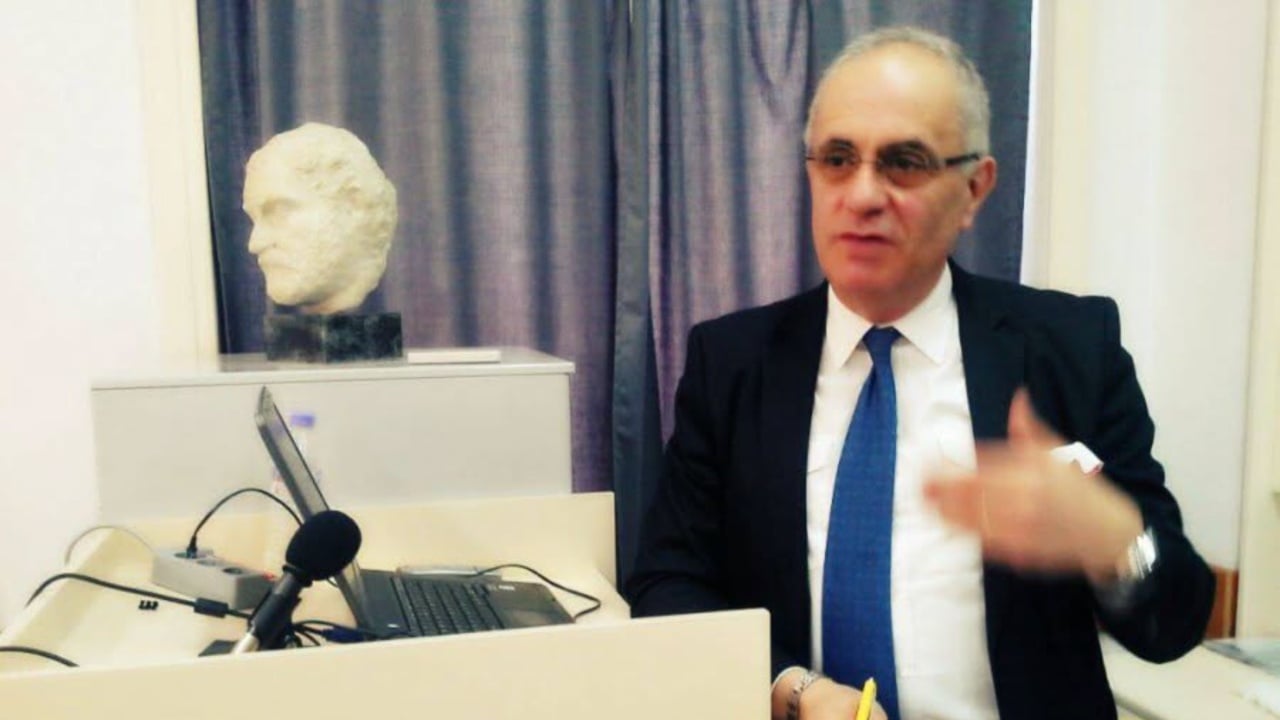
Fuga’s message: students do not commit violence
In a social media post, Fuga says bluntly that “students are always right” and calls on no one to commit what he describes as the “national crime” of using violence against them.
He insists that students, as a social group, do not commit violence against anyone and rejects any labeling that portrays them as the cause of violence in the city or in confrontations with police. According to him, at least the students with whom he and his colleagues have worked are not represented by the image of violence publicly attached to them.
Accusations of labeling without evidence
Fuga attacks what he calls government propaganda and media cliches that, according to him, attach labels to students without evidence. He says he does not accept insinuations describing students as people who break things, set fires, or make threats.
At the same time, he draws a clear distinction between students as a category and any possible individual case, about which he says he has no information. According to him, even if an individual is involved in a violent incident, this cannot be used to stain all students.
Strong criticism of politics and governance
The most political part of Fuga’s reaction concerns the way students have been treated over the years. According to him, politics has lied to them and has not kept the promises made several years ago.
He lists a series of problems that, in his version, remain unresolved: the lack of statistics on intellectual unemployment, the absence of meritocracy in hiring, the lack of forecasting for the professions of the future, and the centralization of universities in the hands of politics.
In the same reaction, Fuga also mentions the issue of dormitories for Tirana students in Durres, presenting it as an example of political and administrative absurdity in relation to students’ real needs.
Call against detentions and arbitrary treatment
Fuga goes further when he warns that any use of violence against students, any detention without evidence, and any treatment outside the legal basis would, according to him, be unacceptable and would carry serious social consequences.
He calls for students to be heard through peaceful and institutional channels, stressing that their social, economic, pedagogical, and political demands cannot be treated with distrust, force, or collective labeling.
In the end, his message remains direct: students have the right to demand, to oppose, and not to be branded as violent without evidence.
The professor’s reaction comes as a strong public defense of students and as a direct accusation against the way power and public discourse have treated them.
At its core, he calls for a clear line: no violence against students, no collective labeling, and no political use of a generation that, according to him, has for years been paying the price of unkept promises.