
The Socialist Party is trying to maintain two positions at once in the face of the crisis with students: on the one hand it speaks of dialogue and a “Pact 2.0” for the university, while on the other it places the emphasis on violence at the protest and on defending public order. In a public appearance, Taulant Balla said students should be heard, but his message was also accompanied by strong language toward protesters who, according to the official version, attacked police and institutions.
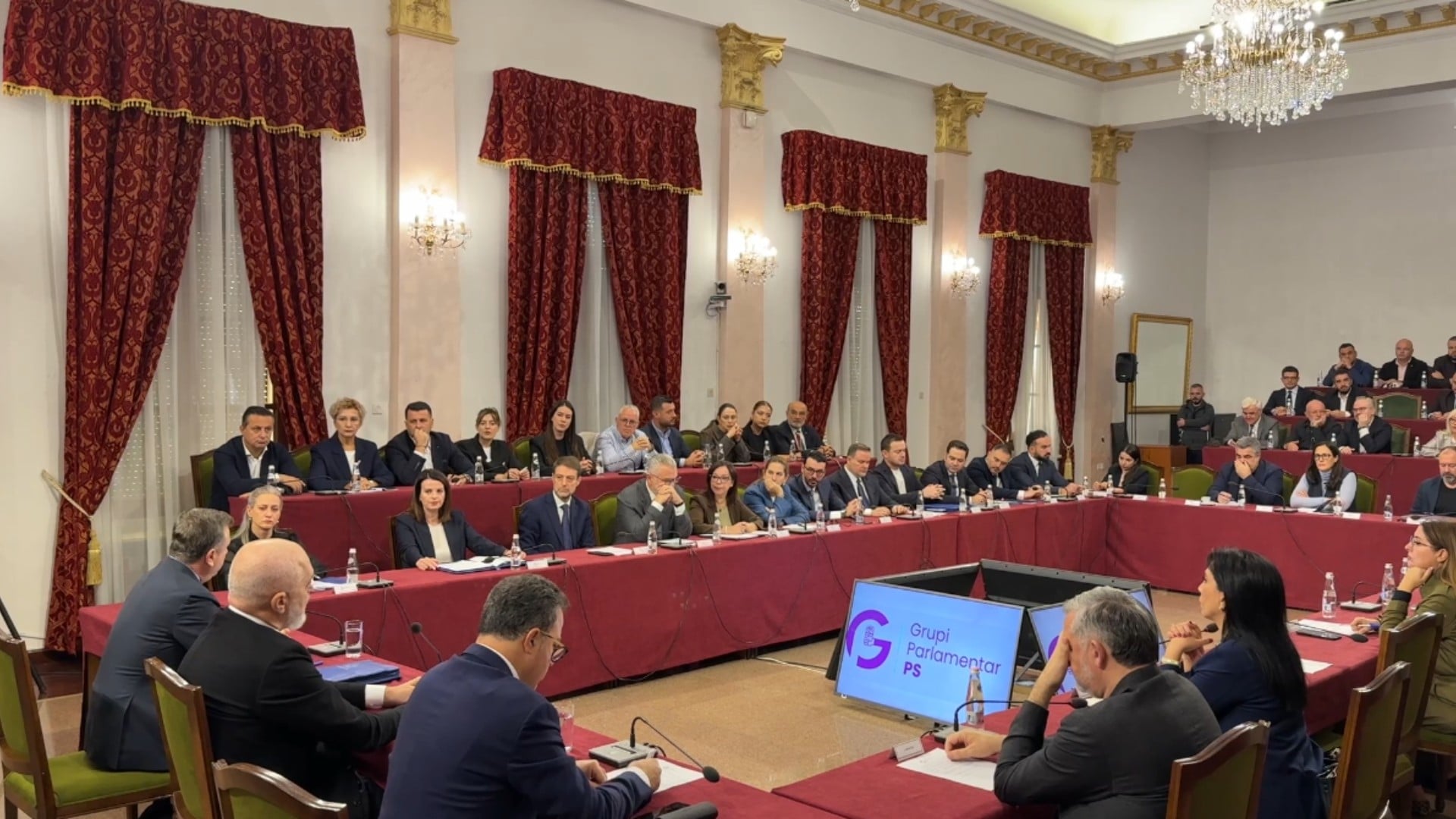
SP offers a table, but asks for representatives from the students
Balla said the government and the prime minister have offered a dialogue table to discuss the students’ demands. According to him, this is the moment for a “Pact 2.0” for the university and for talks with student representatives.
Dormitory promises return to the center
In his argument, Balla also raised the issue of conditions in dormitories, one of the most sensitive topics for students. He said that on Thursday, Parliament is expected to vote on an agreement with the Federal Republic of Germany and KfW for further investments in this direction.
Balla claimed that conditions in the dormitories are better than in the past, but he also linked the debate to the cost of damage caused during the protests, suggesting that this money could have been used for investments in university infrastructure.
From dialogue to condemnation of the protest
Despite the call for dialogue, the focus of a large part of Balla’s statement was on the violence during the protests in Tirana. He said attacks on police employees constitute a criminal offense and that the SP Parliamentary Group condemns the violence.
According to Balla, the largest number of injured people who have presented at hospital in Albania are police employees, unlike what, according to him, happens in similar protests in other countries. This is a claim made by officials, while no full comparative data or independent verifications were presented in the same appearance.
Minors, politics and the message for schools
Balla also addressed the presence of minors at the protests, saying that parents have a responsibility to ensure children are not involved in acts of violence or used for political purposes. He also used strong language about possible political or external influences, without providing concrete details in this statement.
Along the same lines, he said teaching is continuing in all schools, presenting this as an indicator of stability in the education system despite the tensions of recent days.
Attack on institutions as the axis of the official narrative
In the end, Balla described the attack on institutions as a serious event and claimed that the building attacked had not been touched even in the years 1997 and 1998. With this comparison, the majority is shifting the debate from the students’ demands to security, damage and public order.
This leaves open the main political question: whether the offer of dialogue is real and equal, or whether it is being used in parallel with a narrative that narrows the protest to violence rather than the causes that produced it.
For the moment, the government camp is repeating that the door for talks is open. But at the same time, the political language of order and condemnation is also being strengthened, making it harder to understand whether the priority remains resolving the students’ demands or controlling the public cost of the protest.