
France is entering a new phase of tension, with unrest pushing the government to speak openly about extraordinary measures. In the official version, the aim is to curb violence and protect businesses, but the crisis has also increased political pressure on the French executive.
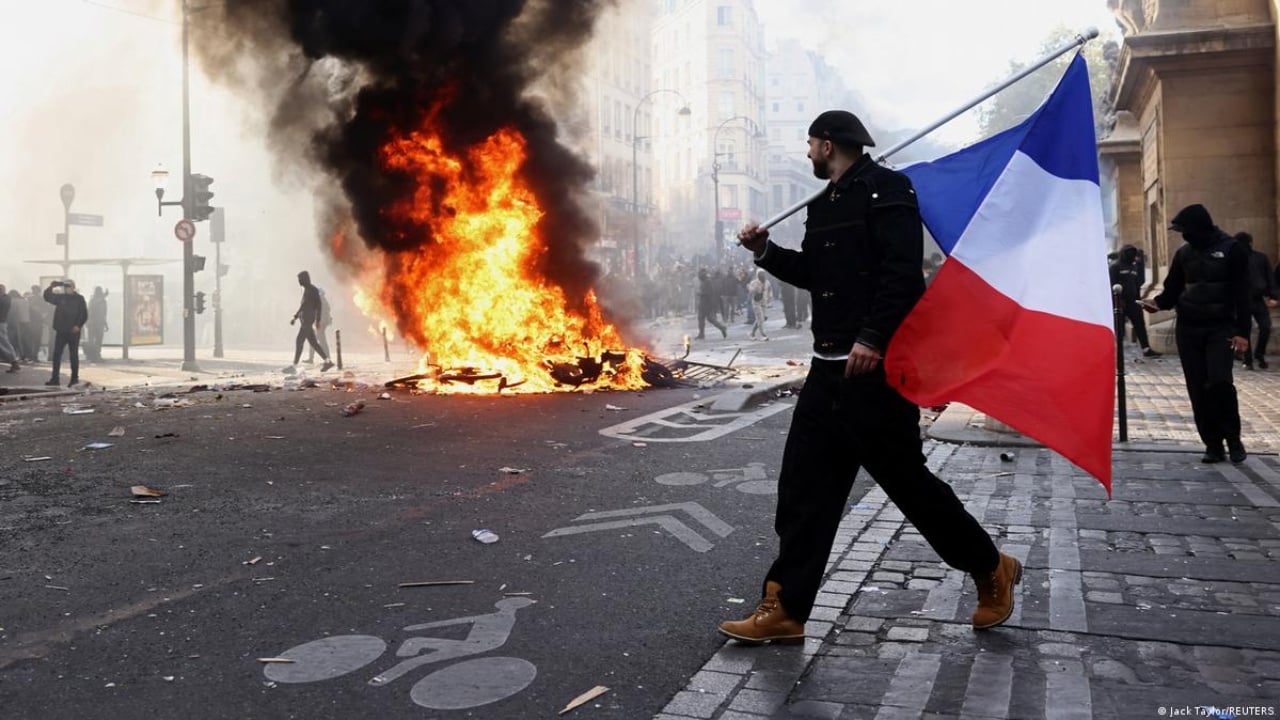
Lecornu leaves state of emergency on the table
Prime Minister Sébastien Lecornu said on Monday that declaring a state of emergency remains a possibility if the situation worsens further.
After a crisis meeting with government officials, he said he was determined to restore order, while signaling that the authorities are weighing tougher tools to confront the violence.
Government leans toward local curfews
Despite that warning, the head of the French government indicated that, at least for now, Paris sees a partial curfew as a more suitable option than a broader nationwide measure.
Lecornu asked regional authorities to consider movement restrictions in specific areas, especially where looting and acts of vandalism against businesses have been reported.
3,000 businesses affected, government promises support fund
According to French authorities, the weekend unrest has affected at least 3,000 businesses. The government has announced a special support fund and other measures to deal with the damage.
At the same time, Lecornu sought to lower public alarm by stressing that the violence has not spread across all of French territory, but remains concentrated mainly in several urban centers.
Interior minister’s resignation was not accepted
At the height of the crisis, Interior Minister Laurent Nuñez submitted his resignation, arguing that police had lost control in several cities over the weekend.
President Emmanuel Macron did not accept his resignation. Meanwhile, Nuñez announced that new measures would take effect from Monday evening to prevent looting and vandalism, along with an increased deployment of police and gendarmerie forces on the ground.
From student protests to political escalation
The unrest comes after several weeks of student demonstrations calling for better conditions in schools. The escalation of violence is putting the French government under pressure at a delicate political moment, as the country moves closer to choosing Macron’s successor.
Lecornu accused the far-left movement of trying to fuel deep unrest ahead of the upcoming elections, a political claim that adds further weight to the public debate around the crisis.
French authorities are preparing additional security measures and determining the areas where movement restrictions could be enforced.
It remains to be seen whether the government will stop at local curfews or move to an even heavier instrument, such as a state of emergency.