
The clashes between protesters and police in Tirana on November 28 have gone beyond domestic coverage and were reported by some of the largest international agencies. At the center of the coverage were demands for Prime Minister Edi Rama to step down, the violence on the ground, and the way police intervened.
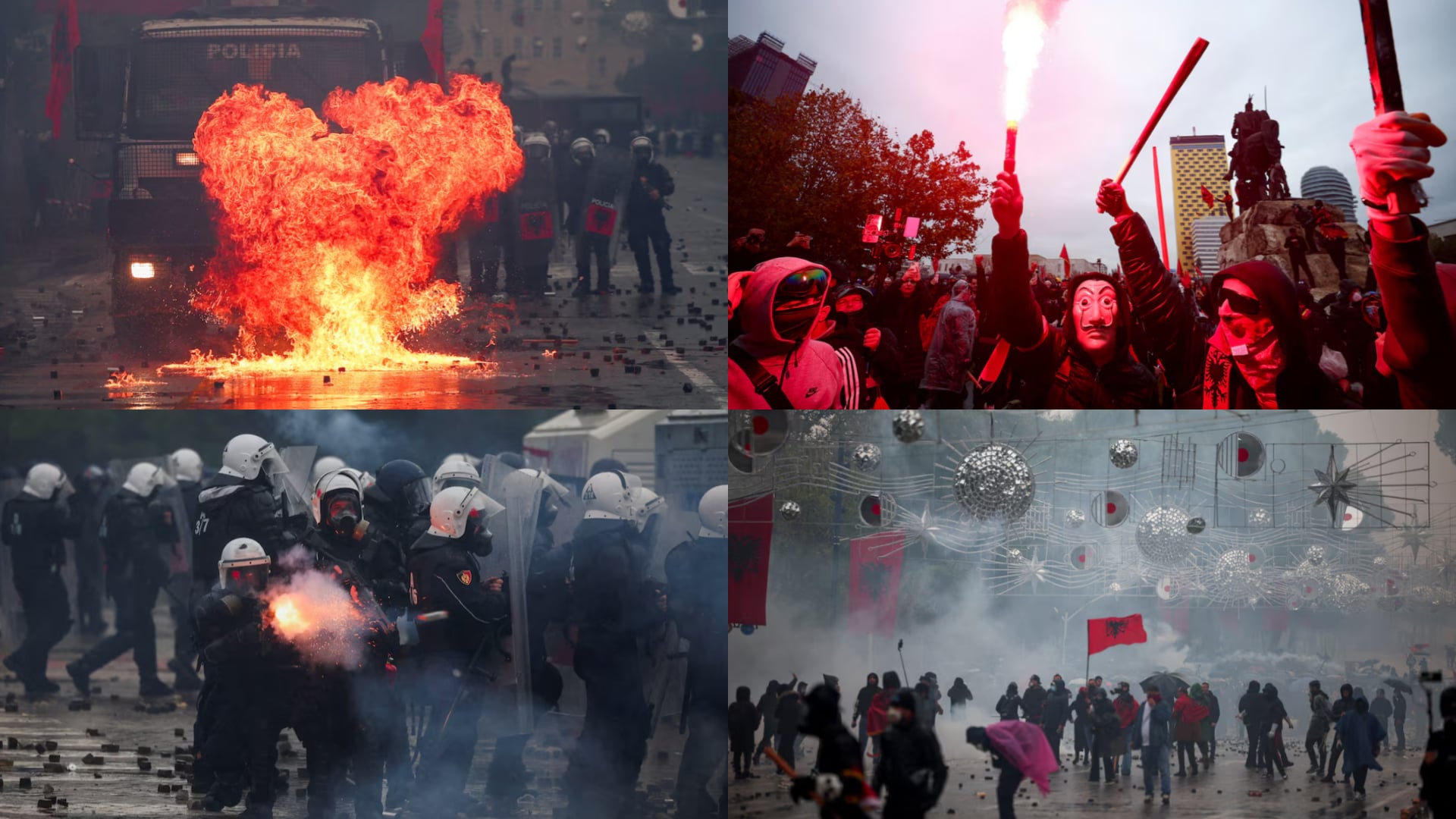
Reuters: student-led protest against the government
Reuters presented the event as a student-led protest in which, according to the agency’s reporting, demonstrators demanded the resignation of Prime Minister Edi Rama.
The same report mentioned stones and Molotov cocktails being thrown at police, while officers on the other side used tear gas and water cannons to disperse the crowd.
Associated Press and other media: focus on clashes and police intervention
Associated Press reported that thousands of citizens gathered in Tirana to demand Rama’s removal. The American agency also emphasized damage to government buildings and the police intervention to disperse protesters.
Al Jazeera also covered the developments with a focus on clashes between police and protesters on Independence Day, while Deutsche Welle wrote that the protest began peacefully and later escalated. According to that report, there were attacks on government buildings and the use of tear gas, high-pressure water, and rubber bullets by police.
Other reports and the initial toll
The protest was also covered by AFP, Anadolu Agency and The Telegraph, turning the developments in Tirana into a story with resonance beyond Albania.
Anadolu Agency reported the initial toll of those injured and arrested, as well as protesters’ demands for the prime minister’s resignation, in a broader picture in which international attention has focused not only on the protest itself, but also on its institutional management.
Foreign media coverage has brought to the forefront not only the tension in Tirana’s streets, but also the political crisis that accompanied November 28.
On a day with national symbolism, what crossed the country’s borders was the clash between anger on the ground and the state’s response.