
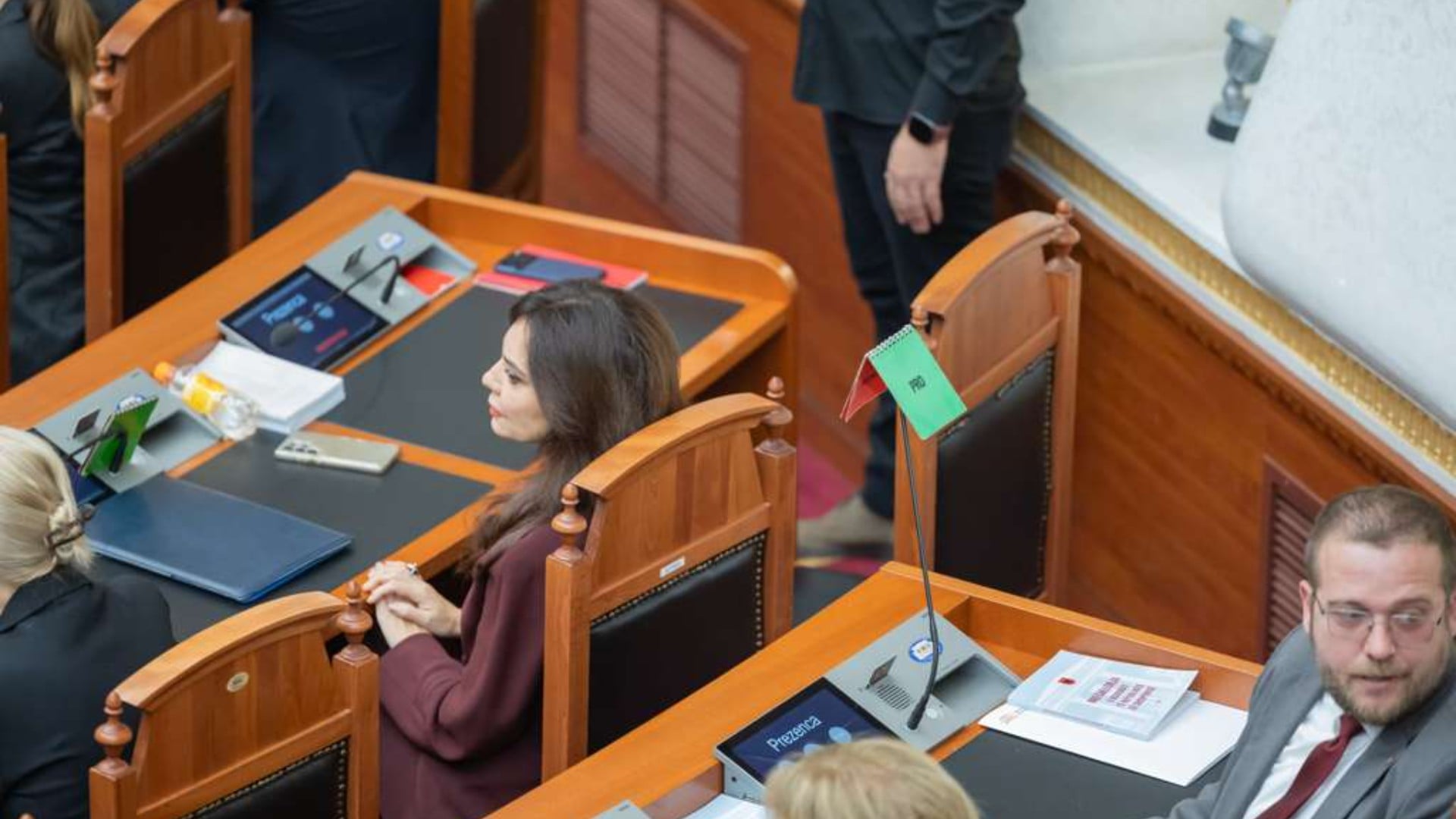
The day’s plenary session closed after more than an hour of tension and clashes between opposition and majority MPs, in another episode that raises serious questions about the normal functioning of Parliament. Elisa Spiropali was also in the chamber, remaining seated and without intervening as the situation around her escalated.
The session began in tension and ended in chaos
Clashes began at the very start of the session, turning the parliamentary chamber into a space of open political and physical tension. According to the version reported from the session, the meeting was closed only after more than an hour of fights and incidents between DP and SP deputies.
The situation deteriorated to the point of overturned chairs, the blocking of the podium, and the throwing of cards and water bottles toward the majority’s seats, a scene that once again highlighted the crisis in minimum parliamentary standards.
Peleshi moved straight to a vote amid the disorder
Amid the tension, Niko Peleshi moved immediately to the voting procedure. He quickly read out the articles and draft laws, while majority MPs held green cards in their hands.
The way the session unfolded raises questions not only about control of order in the chamber, but also about the real quality of parliamentary review, when decision-making takes place under noise, obstruction and physical confrontation.
Spiropali in the chamber, but without reaction
Elisa Spiropali was also present at the session. She was seen remaining calm in her seat, without making any intervention, while chaos continued around her.
At a moment when Parliament was being gripped by intense tension, the lack of a visible reaction from an important figure in the majority does not go unnoticed, especially in the face of a situation that moved beyond normal parliamentary control.
Physical clash between Kreka and Hoxha
The hottest point of the session was the physical clash between DP MP Fidel Kreka and former minister Ervin Hoxha. The incident took place at the height of the chaos that had engulfed the chamber.
Despite the tension, Peleshi managed to carry the session through to the end and put all items on the agenda to a vote, placing the emphasis on the way the majority chose to move forward even in conditions that clearly departed from institutional normality.
The footage and episodes from this session add to doubts about Parliament’s ability to function as an institution of debate and democratic oversight, rather than simply as a chamber where votes are pushed through at any cost.
When political tension replaces procedure and order, the damage does not remain only among MPs, but falls directly on the credibility of the institution.