
The parliamentary session on Territorial Reform quickly veered away from discussion of the administrative division and shifted into personal political accusations. At the center of the clash were Elisa Spiropali and Gazment Bardhi, who exchanged accusations of blackmail, pressure and enforced silence within politics.
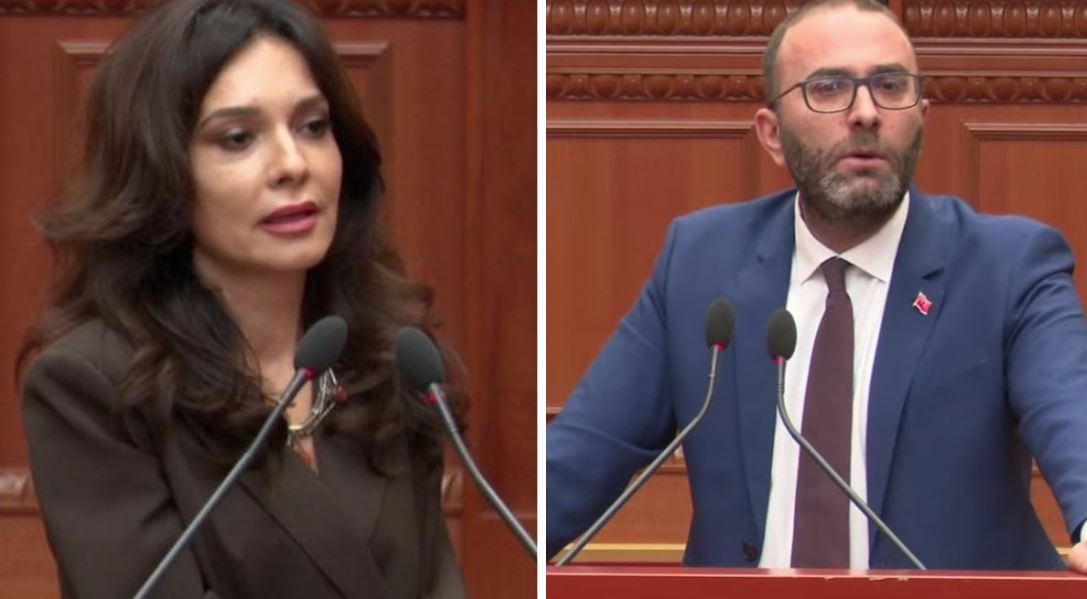
Accusations from Bardhi over silence and pressure
Gazment Bardhi claimed in the chamber that Spiropali had been “silenced” and that she was not speaking about Territorial Reform because of threats.
He also drew attention to a colleague who, according to him, had presented a 10-point platform to hear citizens out, but who today is no longer being heard. According to Bardhi, this is linked to blackmail and to a political culture that, in his version, aims to hold hostage anyone who goes against the imposed line.
Spiropali’s response in the chamber
Elisa Spiropali rejected the accusation and declared that she is blackmailed by no one. She said that she could not be blackmailed even by people who, according to her, had exerted pressure on MPs and political leaders in Fier.
In her response, Spiropali told Bardhi that he cannot present himself as the voice of the citizens and accused the opposition of repeatedly using the floor for the same political issues, even when the formal subject of discussion is something else.
The clash shifted from reform to the fight for political control
The debate once again showed that the discussion on Territorial Reform is being used as ground for internal political conflict, more than for concrete arguments about the model of local governance.
Spiropali said she stands point by point by her previous positions, while attacking the Democratic Party for a lack of internal debate and for concentrating power in a single person.
The reform remains in the shadows amid accusations
Despite the sharp tone, the clash brought no new clarification on the content of Territorial Reform or on its impact on citizens and local government.
Instead of a confrontation over criteria, consequences and the public interest, the session produced another episode in which accusations of blackmail and political control took the place of substantive debate.
In essence, what was seen in Parliament was a debate in which political rhetoric overshadowed the issue that was on the agenda.
So far, the public has heard more exchanges about pressure and political score-settling than clear arguments about how the country’s territorial map should be reviewed.