
Parliament is expected to convene today at a politically charged moment, following the recent protests and amid a climate of distrust toward institutions. Against this backdrop, lecturer and analyst Artan Fuga has issued a direct appeal to lawmakers, calling for the session not to be reduced to the usual parliamentary ritual, but to become a real confrontation with the crisis.
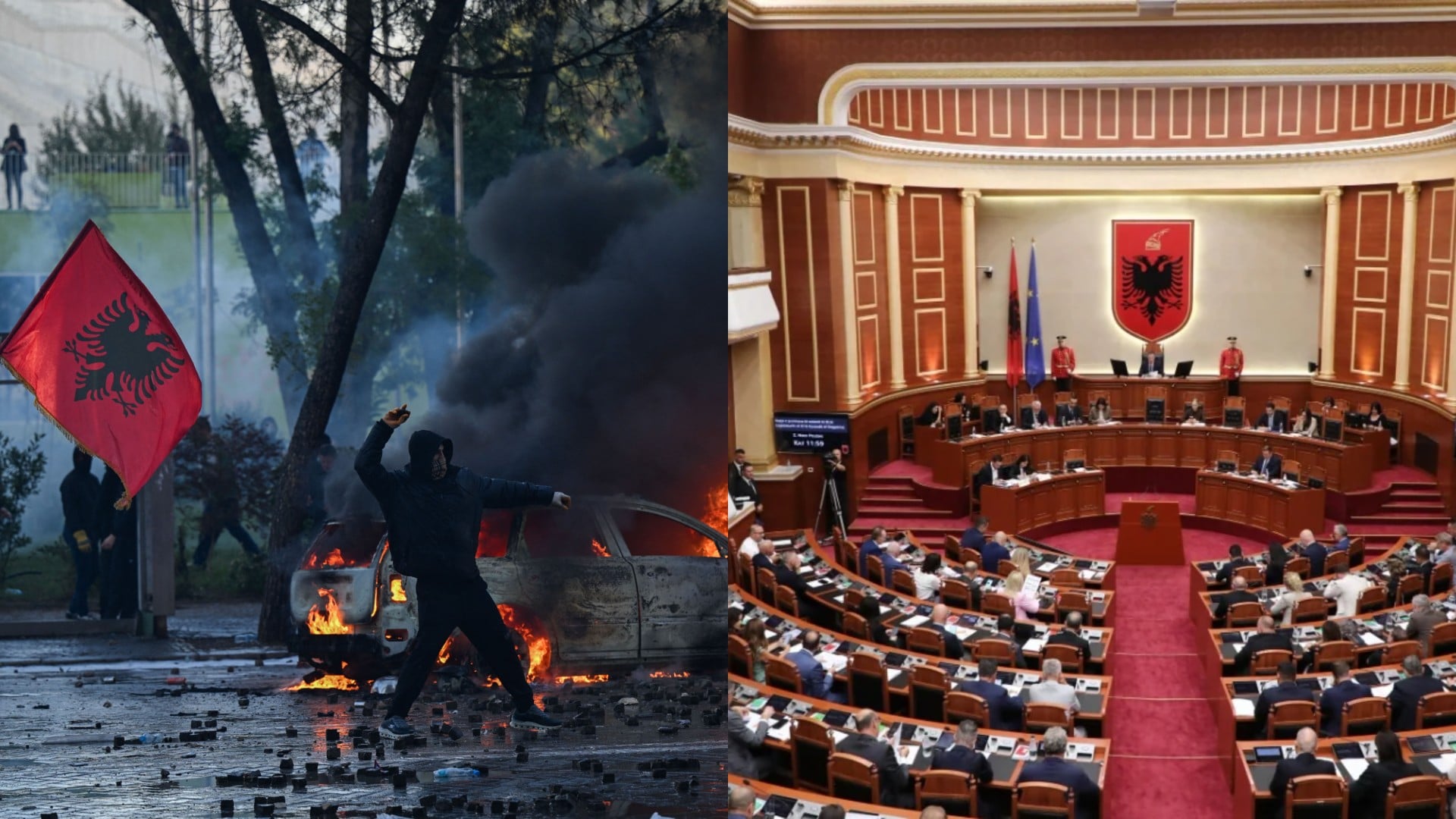
Call for an extraordinary session, not a formal debate
Fuga describes the convening of Parliament as a positive development, but argues that the situation requires an extraordinary session rather than an agenda that, in his view, hides the real debate behind routine political clashes.
According to him, citizens, young people, students and different segments of society are no longer waiting for empty rhetoric or political insults, but for concrete solutions that should come from the legislative institution. He underlines that political responsibility falls on Parliament and the President, not on the executive’s usual statements.
Accusations of silence and lack of responsibility among lawmakers
In his reaction, Fuga sharply criticizes what he sees as lawmakers hiding during the past few days, saying that a large number of them have been absent from the public confrontation with the crisis and have limited themselves to short statements on social media.
He calls on MPs not to shield themselves behind party discipline, but to bear personal responsibility for their vote, their position and their role in Parliament. According to him, justifying themselves with the party line does not free them from their constitutional obligation to act.
Five demands for how the session should be conducted
Fuga sets out several conditions that, in his view, would give the session political and institutional meaning. He calls for lawmakers not to behave as blocs commanded by parties, but as representatives with an individual mandate and responsibility.
Another demand is that each lawmaker express themselves individually, by voice or by vote, on the possible solutions allowed by the Constitution. He also calls for the entire session to be broadcast minute by minute on all television channels, in order to avoid the political fog that usually covers important decision-making.
Along the same lines, he proposes negotiations beyond party divisions to create majorities, even temporary ones, that could produce a clear political and constitutional solution to the crisis.
Pressure on Parliament’s leadership and rejection of solutions outside the Constitution
Fuga places direct responsibility on Parliament’s leadership, also mentioning the parliamentary bureau and group leaders. According to him, their duty is not to deliver moral messages or manage public perception, but to steer the institution toward a political solution.
He also opposes quick formulas or populist solutions that are not supported by the Constitution. In his assessment, the country needs a political and constitutional way out of the crisis, while the current government, according to him, is not showing that it has the situation under control or that it is grasping its depth.
Final message: responsibility is personal
At the end of his appeal, Fuga asks lawmakers not to use the session for staged quarrels or mechanical obedience to party orders. He insists that before history and public responsibility, each person will be judged individually for what they do or fail to do in the parliamentary chamber.
His message comes at a time when public trust in politics and institutions remains shaken, while expectations for real solutions are far higher than what official politics has offered so far.
Today’s session is expected to be seen as a test not only for the majority and the opposition, but for Parliament’s very ability to function as a representative institution in an open political crisis.
Whether this meeting will produce real debate and decision-making, or only another day of parliamentary rhetoric, remains the key point citizens are waiting to see.