
The new fiscal package has triggered another sharp political clash. Democratic Party leader Sali Berisha has fiercely attacked the plan announced by the government, presenting it as a direct blow to businesses and consumers, while also setting out the opposition’s promises to overturn it if it comes to power.
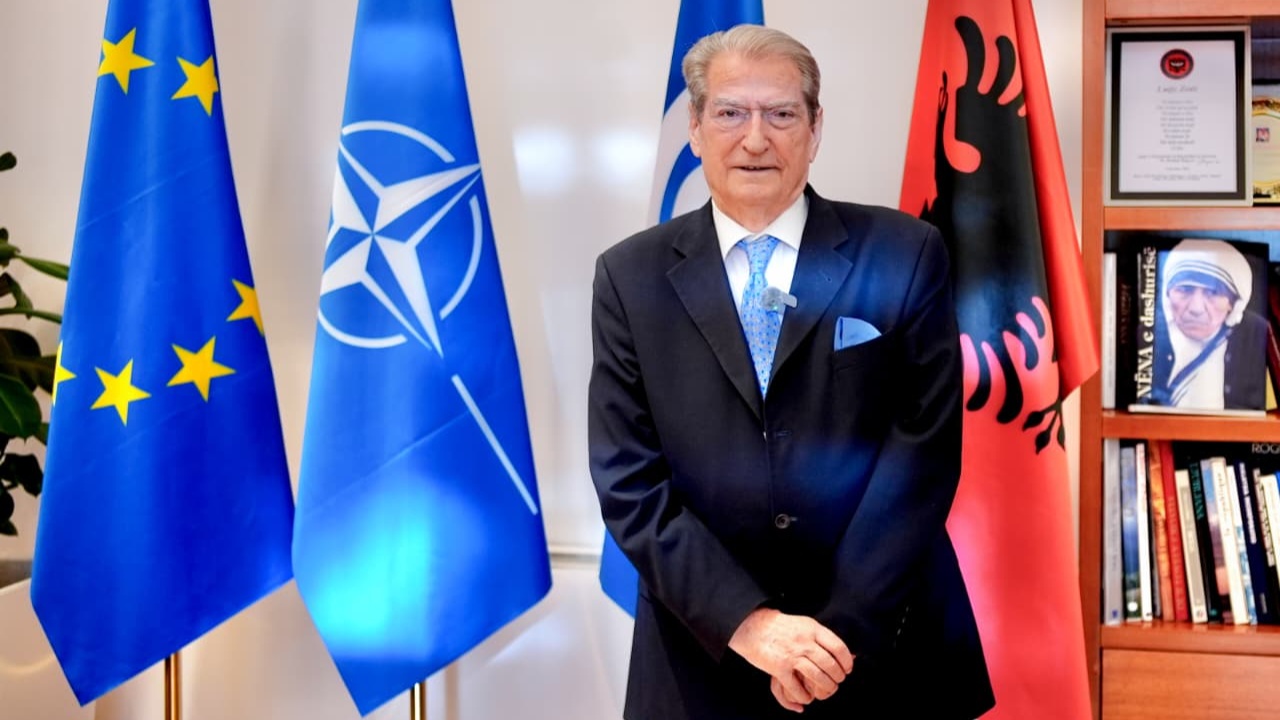
What Berisha opposes in the new package
In a video message on social media, Berisha said the government is moving toward increasing the fiscal burden on businesses. According to him, the announced measures include raising the dividend tax from 8% to 15%, increasing the corporate profit tax from 15% to 17%, and lowering the VAT threshold from 10 million lek to 5 million lek.
In essence, the opposition is portraying the package as an intervention with a chain effect on the market: more obligations for businesses, followed by costs passed on to consumers. This is the main point of the political attack that the Democratic Party is making against the draft announced by the government.
Claim of bankruptcies and rising prices
Berisha said these fiscal changes, if approved, would lead to serious difficulties for thousands of businesses and would weigh on the labor market. According to his version, the consequences would not stop at company balance sheets, but would also affect citizens through higher prices.
These are political claims made by the opposition at a stage when the package is also being used as ground for a public clash with the government. Up to this point, Berisha’s message aims to turn the fiscal debate into a debate over the cost of living and the survival of small and medium-sized businesses.
PD promises on the flat tax and VAT
Alongside his opposition to the package, Berisha also announced the alternative that, according to him, the Democratic Party would implement. He said the PD would cancel the package and introduce a 10% flat tax.
He also promised to raise the VAT threshold to 15 million lek and cut VAT to 6% for food and basic goods. The opposition is presenting these promises as a relief formula for businesses and families, in contrast to the fiscal course it attributes to the government.
The tax debate is shifting to the real effect on the economy
Beyond the political rhetoric, the clash is focusing on a fundamental question: will the package bring more revenue to the budget, or a new burden for businesses at a sensitive moment for the economy? Berisha has also linked this debate to developments in the exchange rate, exports and industrial production, arguing that the economy cannot bear another fiscal tightening.
In the absence of a detailed confrontation between the government and market actors, the package is being read not only as a financial instrument, but also as a test of how decisions are made that directly affect enterprise and prices.
The clash over the fiscal package is thus taking the form of a broader debate over the direction of economic policy, the burden on businesses, and the cost that could ultimately fall on citizens.
On the political front, the opposition is using this issue to target the government over taxes, while the core of the debate remains the real effect that the announced measures could have on the market and on household budgets.