
The protest in Tirana entered its 14th day with a different picture from previous days: lower turnout on the boulevard, a smaller police presence and no clashes. Once again, the prime minister’s call for dialogue was rejected by the protesters.
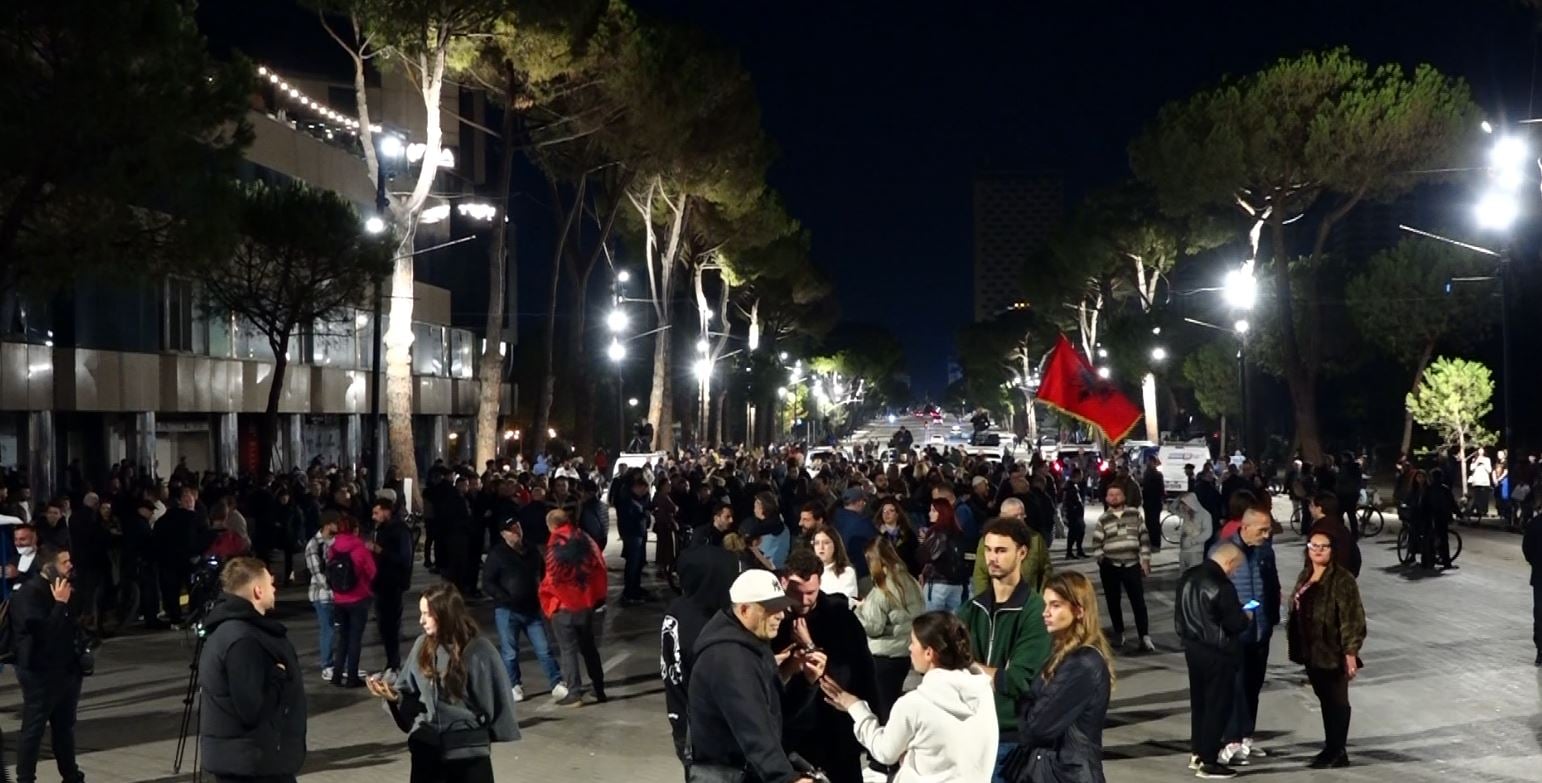
The gathering began at the Ministry of Education
The gathering began at around 14:00 near the Ministry of Education, where the situation was reported as calm and without incidents. From there, the protesters then moved through the streets of the capital.
Young people were at the center of participation, joining the gathering on the 14th day of the protest.
Fewer protesters and less police on the boulevard
After several days of tension and clashes, the protest on the boulevard appeared smaller in numbers. The presence of police officers was also visibly lower compared with previous days.
On the “Dëshmorët e Kombit” boulevard, protesters remained for nearly three hours without incidents, which appears to have also contributed to a more restrained police posture, with no additional measures on the ground.
The call for dialogue rejected again
According to developments at the protest, Prime Minister Edi Rama’s call for dialogue was rejected once again. In front of the government building, at the so-called “table of dialogue,” protesters symbolically placed a caricature of Edi Rama and Aleksandër Vuçić.
The caricature was later burned by the protesters, in a symbolic act that marked the strongest political moment of Sunday’s gathering.
March through the capital without clashes
Unlike the days when the protest had been accompanied by chaos and tension, this day ended without clashes. The march in the capital took place without incidents, while no interventions or escalation of the situation were seen on the ground.
This relative calm does not diminish the fact that the political confrontation remains open, while the rejection of dialogue shows that the sides continue to remain far from a negotiated solution.
The 14th day of the protest thus ended at a slower pace on the ground, but with the same strong political signals: rejection of the official call for dialogue and the continuation of discontent in the streets.