
The student movement that shook Serbia’s political scene is entering negotiations to form a new government, after a preliminary result gave it a majority in parliament. But the election victory does not automatically resolve the main question: who will lead the executive, and how a protest movement will be turned into real institutional power.
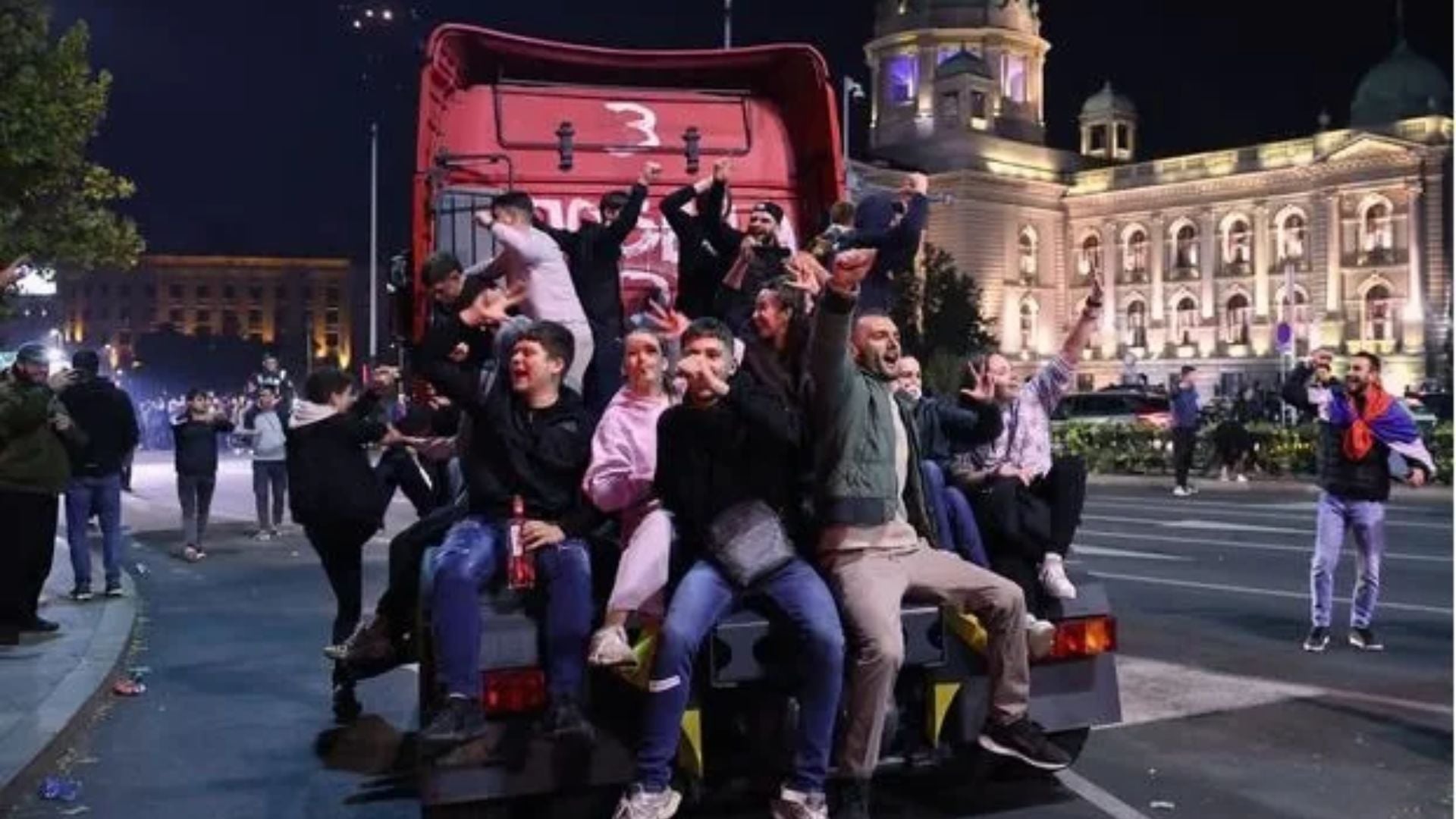
A majority in seats, but no clarity in leadership
According to the preliminary result published by The Guardian, the Student List won 53% of the vote and 141 of 250 seats in the Serbian parliament. On the other side, Aleksandar Vučić’s Serbian Progressive Party is reported to have won about 39% of the vote and 103 seats in parliament.
If these figures are confirmed at the end of the process, the student movement could form a government without being forced to seek allies. However, the numerical majority has still not clarified who will take political responsibility for leading the new government.
A movement without a single leader
The most sensitive issue remains the absence of a single leading figure. The Student List operates on the principle of collective decision-making and so far has no designated name for the post of prime minister.
Among the names mentioned in the discussion is former governor of the Central Bank of Serbia, Dejan Šoškić, but so far there is no final decision. Representatives of the movement have said that decisions will go through broad consultations and not through a narrow circle of leaders.
From the Novi Sad protests to power
This victory comes after nearly two years of sustained protests against the government. Public dissatisfaction gained momentum after the collapse of the railway station canopy in Novi Sad in November 2024, where 16 people lost their lives.
The incident became a symbol of anger over corruption and the lack of institutional accountability. It was precisely on this sentiment that the movement built its political capital, and it must now prove whether anti-corruption rhetoric can be translated into concrete governance.
Strong reform promises, against the reality of a state filled with political appointments
The declared program of the Student List focuses on fighting corruption, restoring the rule of law, the independence of institutions, depoliticizing the judiciary, reforming the police, and ensuring transparency over public contracts and state finances.
Another stated objective is limiting political appointments in state-owned enterprises and creating more independent mechanisms for overseeing public spending. But these goals clash with an old reality: Serbian institutions remain filled with officials appointed during the previous administration, making change far more difficult than simply winning at the ballot box.
Constitutional deadlines and the first political test
Under constitutional procedures, the new parliament must convene within 30 days of the official announcement of the results. After that, the 90-day deadline for forming a government begins.
In parallel, Serbia is also expected to hold presidential elections by December 27, after Vučić left the presidency to enter the parliamentary race. That makes the political calendar even tighter at a moment when the country is entering a rare transition after more than a decade of dominance by the same political force.
For now, attention has shifted from the victory celebrations to the ability to build a government that works. For a movement sustained by rejection of the old political model, the real test begins precisely where protest ends: in the administration of power and confrontation with the structures it has promised to change.