
European Union enlargement is once again being presented as a strategic issue in Brussels, but this time under the shadow of the geopolitical confrontation with Russia. Enlargement Commissioner Marta Kos said candidate countries are moving forward in a far more competitive environment and that, according to her, there are actors seeking to block the process.
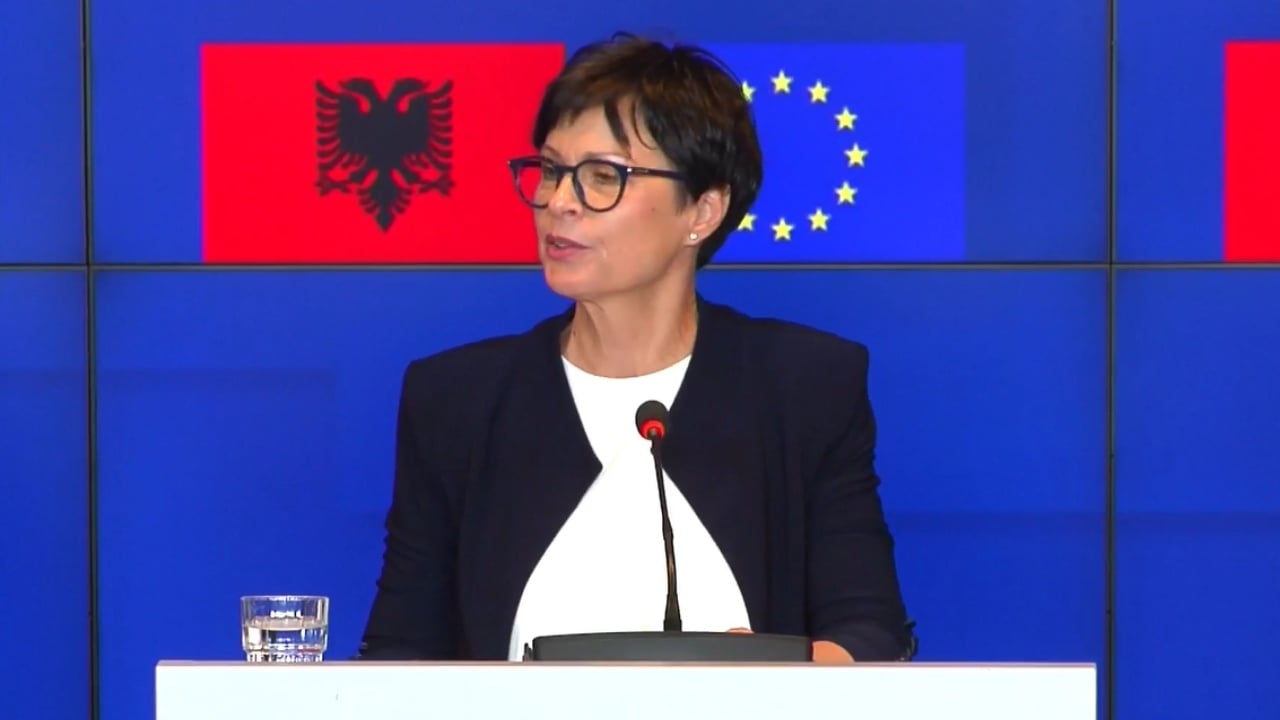
Kos warning from the Enlargement Forum
At the Enlargement Forum in Brussels, Kos described enlargement as a contest that no longer unfolds only within the corridors of European politics, but also on ground shaped by strong geopolitical interests.
According to her, the European Union is facing opponents who want to hinder the progress of candidate countries and damage the project of European unity itself. At the center of that warning, she placed Russia, accusing it of seeking to derail the process.
Political message for a bigger and stronger EU
In her remarks, the commissioner argued that Europe cannot stand still while the geopolitical order is changing rapidly. According to the version she presented, the current moment should be used to build a more united Europe that is more capable of determining its own future.
She linked enlargement not only to the interest of candidate countries, but to the EU’s own capacity to preserve influence, peace and prosperity in the decades ahead.
Brussels speaks of renewed focus on enlargement
Kos said the strong presence of political leaders, diplomats, ministers, media representatives and business figures at the forum was a signal that enlargement has returned to the center of European political debate.
According to her, European policy is once again treating enlargement as a strategic response to the crises of the time, as happened after the end of the Cold War, when the EU admitted 13 new member states.
Claim of a faster pace in the process
The commissioner claimed that more results have been achieved this year alone than in any other year in the past 25 years in this field. She also said several candidate countries are moving at a faster pace toward new stages of the process.
However, the statement remains Brussels’ political reading of the course of enlargement, at a time when the process continues to face numerous obstacles, competing interests and uneven progress for the various aspiring countries.
Kos’s speech once again places EU enlargement in a strong framework of security and political influence, not simply as a technical accession procedure.
For candidate countries, the message is clear: the process remains open at the declarative level, but it is unfolding on increasingly politically complex ground.