
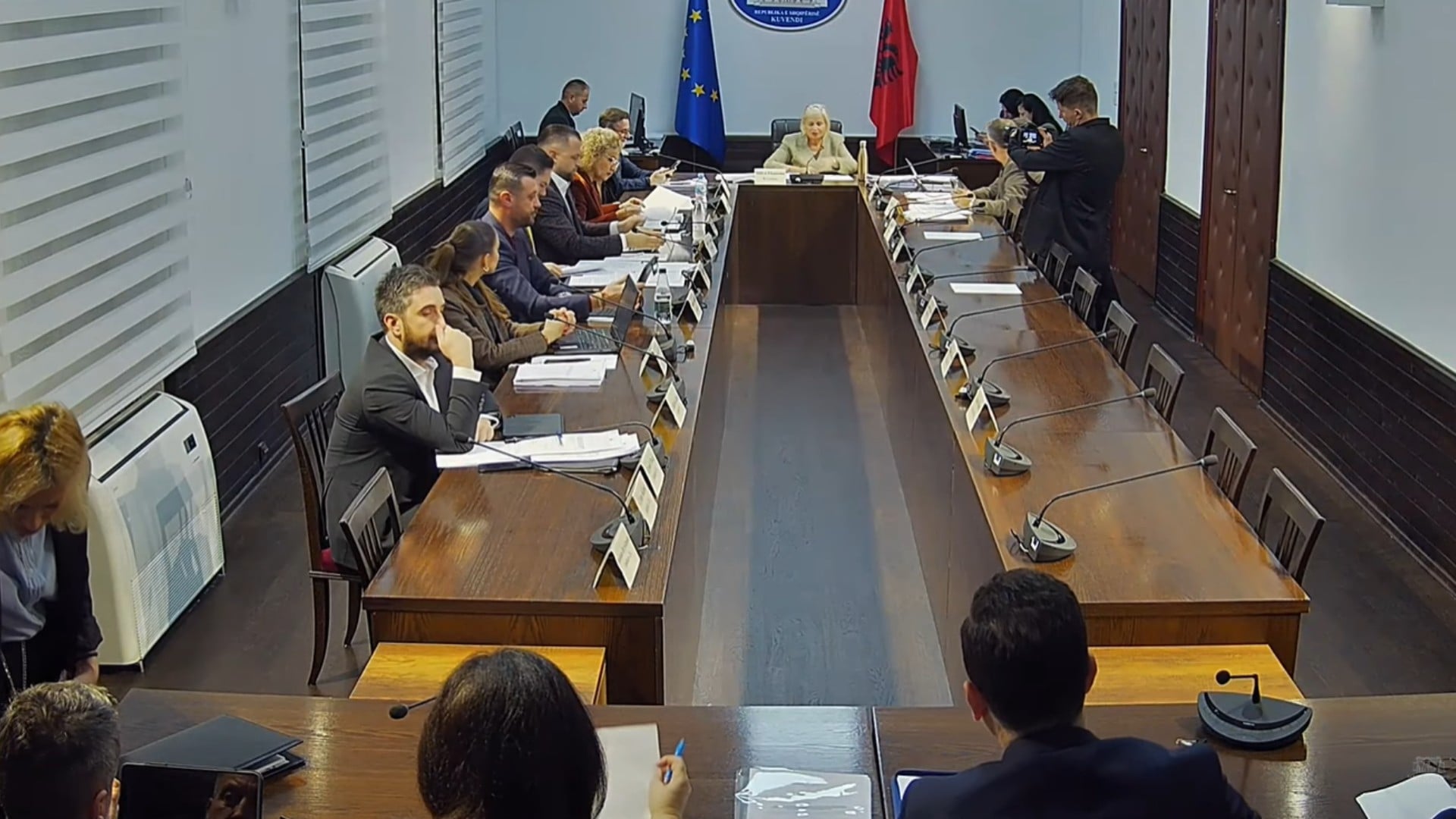
The 2027 draft budget has opened another front of confrontation in the Economy Committee, where the debate was not limited to the figures but moved to the way the fiscal package is being pushed forward and how much the businesses expected to bear the costs have actually been heard. The opposition raised doubts over a lack of consultations and supporting documentation, while representatives of the majority and the government defended the procedure followed so far.
Opposition targets lack of hearings with businesses
PD MP Igli Cara described the draft budget as one of the most contested, insisting that consultations with interest groups should have been held before its review. He referred to objections voiced by the American Chamber and the British Chamber of Commerce, raising questions over why Parliament is not hearing these positions at a time when decisions directly affect taxpayers and businesses.
Cara called for hearings with interest groups to be included in the committee’s calendar, while also bringing into the debate the issue of the circulation tax and the way its shift is being justified. According to him, the budget debate remains incomplete if the entities affected by it are not heard in advance.
Braçe: Parliament is not obliged to call them, but to hear them
From the majority’s side, Erion Braçe defended the position that parliamentary procedure does not oblige Parliament to call associations, but to give an opportunity to be heard to those who seek to present their positions. According to him, in parliamentary practice the budget is first presented and then questions and hearings follow.
Braçe said that, up to that point, according to his account, there had been no associations that had come forward to be heard, and added that Fridays can be used for anyone seeking to present a position. Along the same lines, he argued that businesses’ disagreement with taxes is not a new development, mentioning previous debates over the dividend and the circulation tax as well.
Milva Ekonomi and the Finance Ministry defend the procedure
Economy Committee chair Milva Ekonomi said the budget drafting process had begun as early as August and that the committee follows its progress also through the medium-term revenue plan. She also mentioned the approval of the Fiscal Council, presenting it as part of good governance standards.
Regarding requests from associations, Ekonomi said they are collected and forwarded to the Ministry of Finance, while recalling that hearings had also been held earlier and that some changes had been reflected. She said a request from garment manufacturers had recently arrived and that, according to her, they will be given the opportunity to be heard.
Finance Minister Petrit Malaj did not provide full answers during the debate, but said that the clarifications and information requested by MPs would be submitted the following day.
Bozdo raises lack of regulatory impact assessment
PD MP Eno Bozdo took the debate beyond formal hearings, raising concern that the documents submitted did not contain a regulatory impact assessment for the fiscal package bills. According to him, this is an element that should accompany every legislative act, especially when additional costs for businesses are foreseen.
Bozdo said that, out of five draft laws, only excise duties reported the convening of the Tax Council, while for the other four no consultation with business appeared to have been reported. According to him, complaints are coming from both small and large businesses, making the procedure not only politically debatable, but also weak in formal terms.
Vote in Parliament expected on November 26
Amid objections over consultations and uncertainties over the supporting documentation, the 2027 draft budget is expected to go to a vote in plenary session on November 26. This means the hottest part of the debate is unfolding under time pressure, while businesses and interest groups are seeking real space to be heard, not just procedures fulfilled on paper.
The clash in committee showed that the core of the debate is not only the level of taxes, but also the legitimacy of the process by which the fiscal package is being approved. When the government seeks a greater burden or a different redistribution of it, the first proof is not the word on consultation, but its concrete trace in the documents and in the parliamentary calendar.