
The Economy Committee has approved in principle the majority’s draft for increasing magistrates’ salaries, but the vote has not ended the political and institutional conflict surrounding the issue. At the heart of the debate remains not only the salary formula, but also the question of who has the right to decide on public money when the deadlines set by the Constitutional Court are missed.
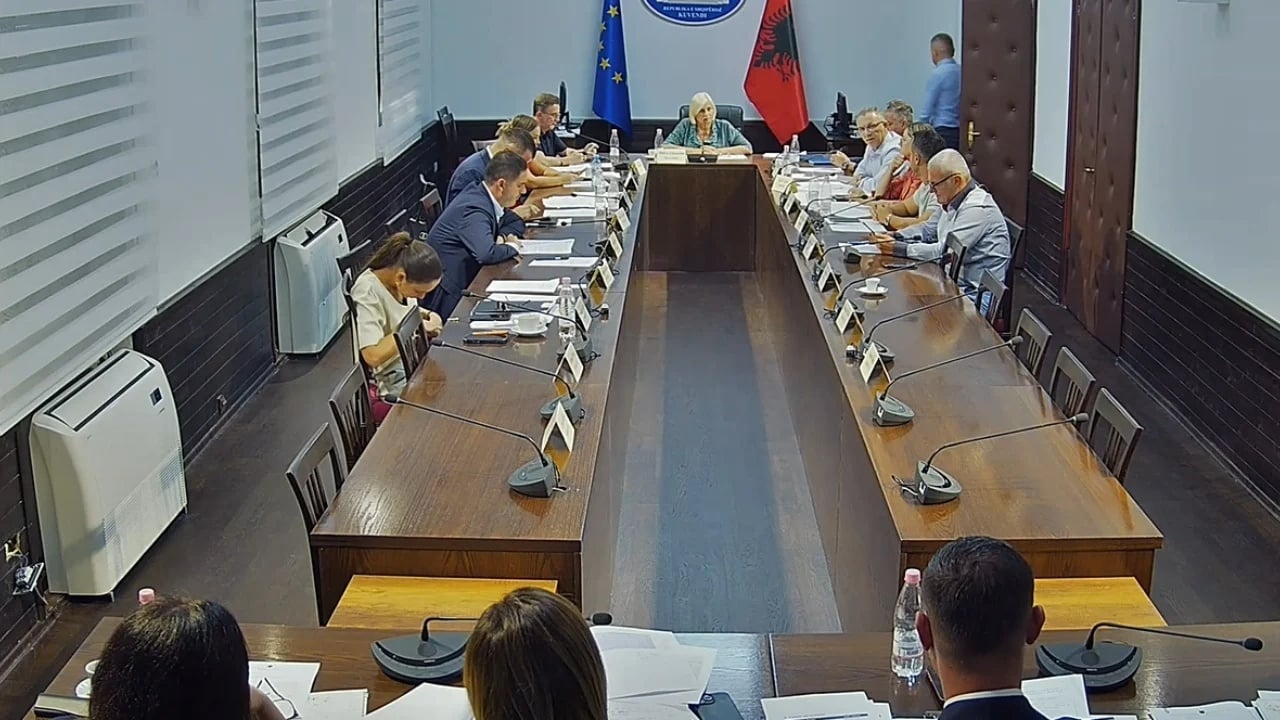
The draft passed with 8 votes in favor, opposition voted against
The bill was approved in principle with 8 votes in favor, 2 against, and 1 abstention. The draft proposed by the Socialist Party provides for the coefficient of magistrates’ reference salary to rise from 36% to 38% of the salary of the President of the Republic.
According to the calculation presented to the committee, this translates into an increase of around 8,500 lek in the reference salary. This amount remains far below the level that, according to the magistrates’ claims and decisions approved by the High Judicial Council and the High Prosecutorial Council, would result in an increase several times higher.
The majority says it is implementing the Constitutional Court ruling, but defends control over the Treasury
During the committee debate, the majority argued that the proposed formula is in line with the Constitutional Court’s ruling. Socialist MP Aulona Bylykbashi, who proposed the draft, defended the position that the court did not impose a single numerical formula, but left lawmakers room to choose the model, as long as constitutional standards are respected.
Along the same lines, MP Erion Braçe strongly objected to the way the High Judicial Council and the High Prosecutorial Council have acted on salaries, claiming they have taken powers that belong to Parliament. He linked the issue directly to the use of taxpayers’ money, raising the concern that no one outside legal authorization can force the Treasury to pay.
The government gave support, but the opposition is asking for the financial bill
The bill also received support from government representatives. According to the Ministry of Justice, the 0.38 coefficient meets the conditions set by the Constitutional Court, while the Ministry of Finance considered the cost manageable for the budget.
The opposition, however, opposed the draft, saying the problem was created precisely by the government’s failure to implement the Constitutional Court’s rulings on time. Democratic Party MP Eno Bozdo also raised doubts over the lack of a full financial bill in the accompanying documentation, arguing that without this data the review remains incomplete.
How the salary crisis in the judiciary was created
The clash deepened after Parliament failed to approve the new salary formula by July 31, 2026, a deadline requested by the Constitutional Court. After that deadline expired, on August 26 the High Judicial Council and, two days later, the High Prosecutorial Council set the reference salary for judges and prosecutors themselves, with a significant increase.
The Ministry of Finance did not execute the payrolls calculated under that formula, arguing that setting salaries is a competence of Parliament. It is precisely this institutional deadlock that has now brought the majority’s draft to the committee, while the clash over the interpretation of the Constitutional Court ruling remains unresolved.
The approval in principle of the draft shows that the majority is seeking to close by law a crisis that was allowed to drag on until it became a clash between institutions.
But beyond the committee vote, two essential issues remain open: whether the proposed formula truly meets the constitutional standard, and how much transparency Parliament will provide on the cost that will weigh on the budget.