
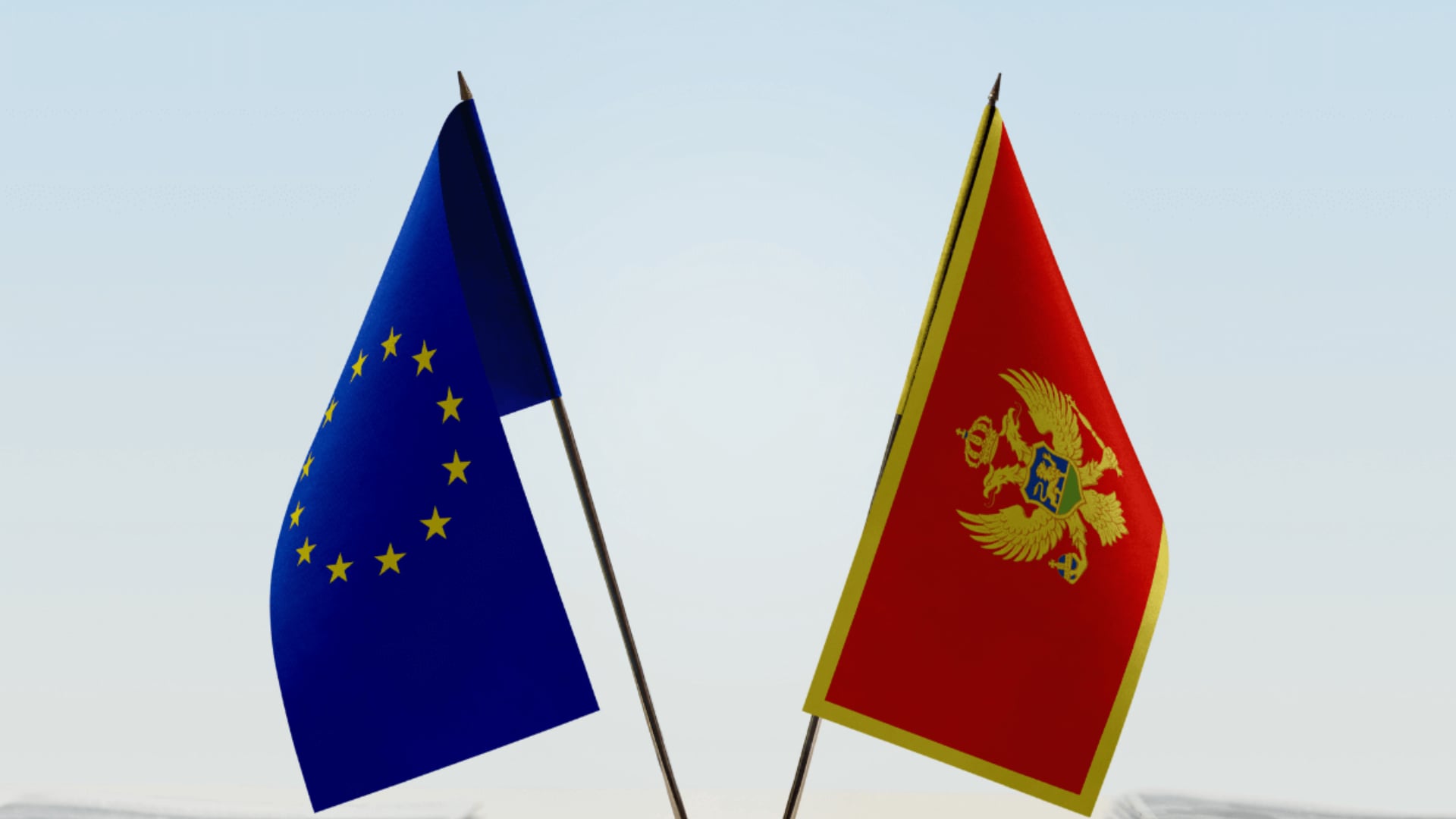
Montenegro could be entering a decisive phase of the European integration process, with a timetable that, according to the European Commission’s preliminary planning, foresees the closure of negotiations by the end of this year and the signing of the accession agreement in June 2027. But Brussels itself indicates that this remains a conditional objective, not a political guarantee.
An ambitious deadline for Podgorica
According to RFE/RL, Podgorica is likely to complete negotiations for membership in the European Union by the end of the year. If that pace is maintained, the accession agreement could be signed in June 2027.
The European Commission’s preliminary plan envisages Montenegro attempting to close all remaining chapters during two intergovernmental conferences expected to be held in November and December. At present, the country has closed 21 of the 33 negotiating chapters.
The most sensitive chapters remain in focus
The final phase of the process is expected to include the most delicate chapters as well, those related to the rule of law, justice and fundamental rights.
These are precisely the areas that usually serve as the real test of readiness for membership, which is why the accelerated pace on paper does not remove the political and institutional weight of the conditions required by Brussels.
Draft agreement in spring, but not without filters
After the negotiations are completed, the draft accession agreement is expected to be finalized in the spring of 2027. The document must then pass through approval by European institutions and member states.
This means that even if Podgorica technically closes the chapters, the process remains dependent on political decision-making at the European level, where every step passes through the EU’s institutional filters.
European Commission leaves the door open to delays
According to the European Commission’s official version, the deadlines are preliminary and their fulfillment will depend on meeting the reforms and conditions required by Brussels.
The agreement is also expected to include continued monitoring of Montenegro until full membership. If the conditions are not respected, the EU may delay the process, showing that the enthusiasm surrounding the timetable remains closely tied to the candidate state’s concrete performance.
Political objective: membership in 2028
The objective of the Montenegrin government is for the country to become the European Union’s 28th member by 2028.
However, between the political objective and actual membership lies a process in which deadlines can shift, especially when issues of the rule of law and the implementation of reforms remain decisive.
For now, the signal from Brussels is encouraging for Podgorica, but not unconditional.
In practice, Montenegro’s progress will be measured not by optimistic statements, but by its ability to overcome the most difficult obstacles in the integration process.