
The European Commission published Albania’s 2026 progress report on November 4, combining a positive assessment of the pace of negotiations with strong criticism of how the country’s institutions function. The document speaks of a Parliament with weakened oversight of the government, attempts to influence the justice system, continuing problems with corruption, and a media environment that remains vulnerable.
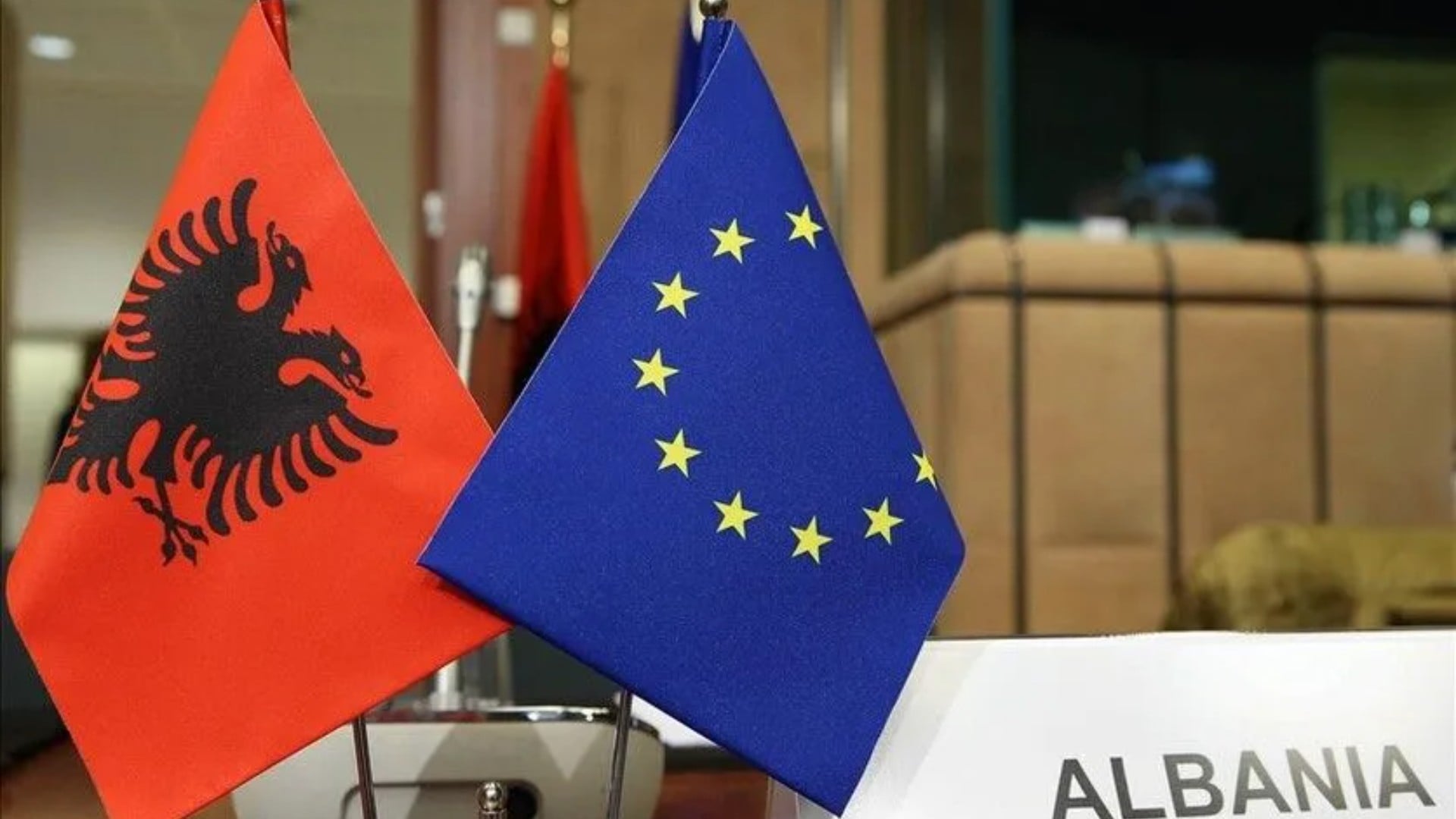
Brussels recognises progress in negotiations, but not without conditions
According to the report, Albania has met the interim benchmarks in the cluster of chapters related to the fundamentals, including justice, fundamental rights and the functioning of democratic institutions.
The Commission assesses that the Albanian authorities have maintained EU integration as a strategic priority and that the aim remains to close the negotiation chapters by the end of 2027. However, the document stresses that maintaining this pace requires swift and high-quality reforms, implying that the political timetable announced by the government is not enough without measurable results.
Direct criticism of Parliament and electoral reform
One of the most critical parts of the report concerns the functioning of Parliament. The European Commission notes that the lack of genuine political dialogue, clashes between the majority and the opposition, as well as weak public consultations, have limited the effectiveness of Parliament.
Along the same lines, the report underlines that some Constitutional Court decisions have not been implemented by Parliament. It also mentions the frequent submission of initiatives by the Council of Ministers, the systematic rejection of opposition requests for inquiry committees, and the politicisation of appointments to constitutional bodies and independent institutions, all seen by Brussels as factors that have weakened parliamentary oversight of the government.
The Commission also calls for a comprehensive electoral reform before the 2027 local elections, stressing that some longstanding recommendations by the OSCE/ODIHR and the Venice Commission remain unaddressed.
Justice and SPAK: praise for results, alarm over political interference
On the justice system, the report highlights the continuation of the 2016 reform and the full completion of the vetting process for judges and prosecutors after the appeals stage. This development is assessed as an element that strengthens independence, accountability and integrity in the system.
But at the same time, the Commission raises clear concern about attempts by public officials and politicians to exert improper influence over the judicial system, including SPAK. The report also mentions personal attacks against magistrates during the period under review.
SPAK is praised for its independence and positive results in the fight against high-level corruption. However, the document is careful not to present this as a closed chapter: according to the Commission, the real impact of anti-corruption measures still remains to be proven, while stronger investigations, prosecutions, trials and more final convictions are required, especially in high-profile cases.
Protests, media and the administration under the report’s spotlight
The report also looks at the wave of citizen protests that began in May 2026 and the student protests in October. According to the Commission’s assessment, this was the largest civic mobilisation in Albania since the democratic transition, with tens of thousands of participants at the peak of the protests. The document also notes violent incidents between protesters and the State Police, while underlining that there has so far been no dialogue.
On media freedom, the criticism is strong. The Commission assesses that Albania has insufficient legal guarantees for freedom of expression and that the environment in which the media work must be improved so they can operate freely, independently and professionally. The report mentions the influence of business groups with political ties, the lack of transparency in financing, the high concentration of ownership, as well as intimidation, smear campaigns, SLAPP lawsuits and job insecurity for journalists.
In public administration, Albania is assessed as moderately prepared, but the Commission criticises the fact that the government has continued budget revisions through normative acts, without parliamentary oversight. According to the report, public consultations have also not been conducted regularly and effectively.
Fundamental rights, property and Growth Plan funds
As for fundamental rights, the report identifies shortcomings in prison conditions, in the effective exercise of property rights and in the protection of minority rights. The Commission calls for improvements to prison reform, the completion of initial land registration, the digitalisation of ownership titles and cadastral maps, as well as faster compensation for property confiscated during the communist regime.
In the financial section, the document finds that Albania has completed 33 of the 66 steps that had to be carried out by December 2025 under the European Union’s Growth Plan. According to the report, progress has also been recorded on most of the other steps. More than 920 million euros in grants and loans are available to the country through the Reform and Growth Instrument.
In essence, the European Commission’s report sends a dual message to Albania: the integration process is moving forward, but the quality of democracy, the independence of institutions and rule of law standards remain areas where Brussels still sees serious problems.
It is precisely these parts of the report that make a triumphalist reading of the 2026 balance sheet difficult, despite the positive assessments for some reforms and for SPAK’s work.