
The European Commission has published its 2026 Progress Report on Albania, crediting the country with steps forward in the EU negotiation process, in justice and in the economy. But behind this positive balance on paper, the document raises a series of alarms about how institutions function, political interference in justice, the weaknesses of parliament and the state of media freedom.
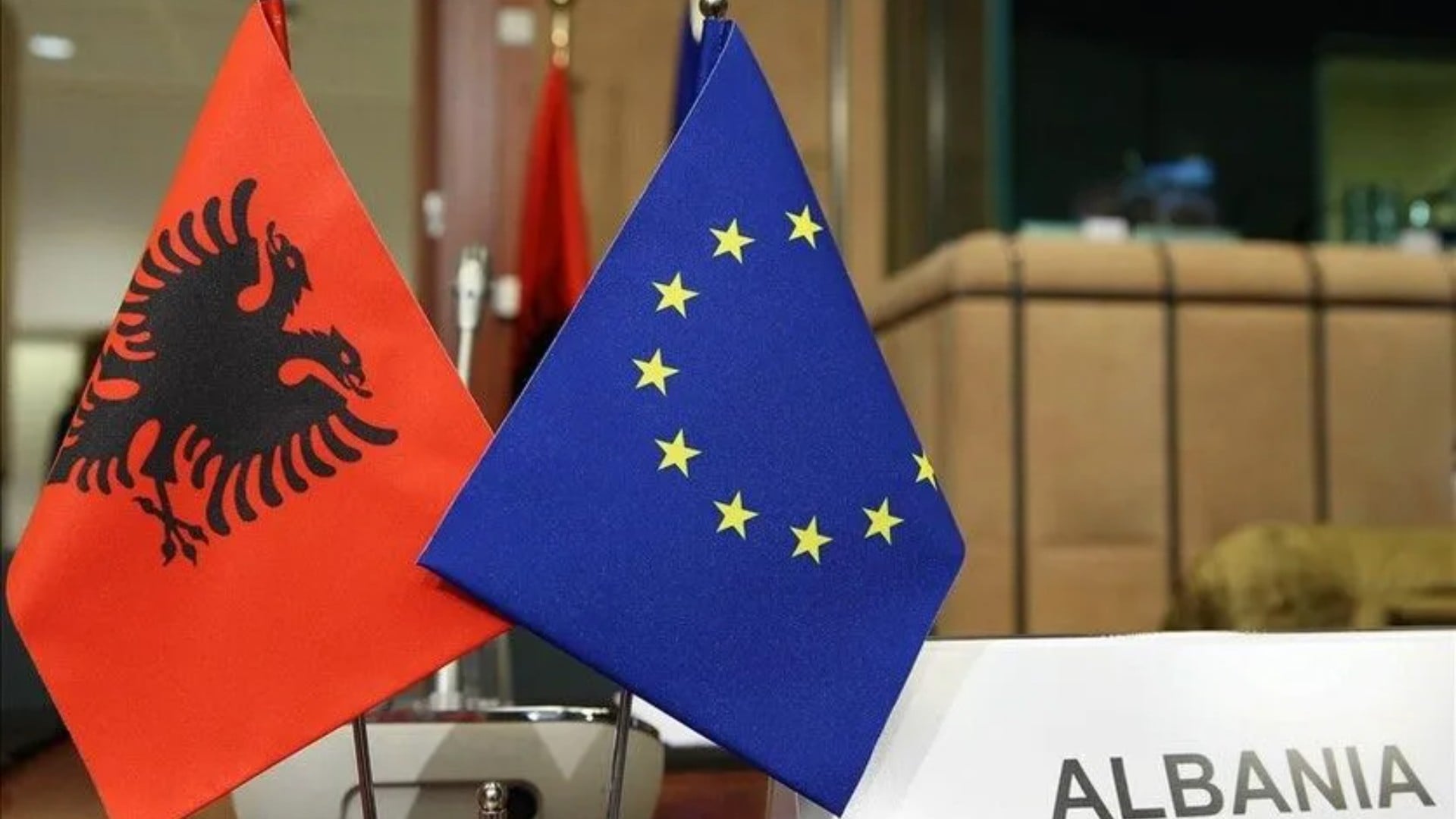
The EU acknowledges progress, but calls for a real pace of reform
According to the report, Albania has met the interim benchmarks in the cluster of chapters related to fundamentals, including justice, fundamental rights and the functioning of democratic institutions. The Commission assesses that the Albanian authorities have maintained their strategic orientation toward European integration, with the objective of closing the negotiation chapters by the end of 2027.
However, the document itself warns that maintaining this pace will not come through political declarations, but through fast and high-quality reforms. At this point, the report suggests that formal progress does not end the debate over the actual implementation of European standards.
Direct criticism of parliament and political confrontation
One of the strongest parts of the report concerns the functioning of democracy. The European Commission finds that the lack of political dialogue and clashes between the majority and the opposition have limited the effectiveness of parliament.
According to the report, parliament has not implemented several Constitutional Court decisions, while the frequent submission of legislative initiatives by the Council of Ministers, the systematic rejection of opposition requests for investigative committees and the politicisation of appointments in independent institutions have weakened parliamentary oversight of the government.
The Commission also calls for comprehensive electoral reform before the 2027 local elections, underlining that several long-standing recommendations by the OSCE/ODIHR and the Venice Commission remain unimplemented.
Justice receives praise, but the report also speaks of political pressure
In the field of justice, the report praises the completion of the vetting process for judges and prosecutors, considering it a development that has strengthened the independence, accountability and integrity of the system.
SPAK is mentioned positively for its independence and results in investigating high-level corruption. But the Commission does not stop at this assessment. The document raises concern that attempts by public officials and politicians to influence the judicial system, including SPAK, continued during the reporting period.
On corruption, too, the tone remains cautious. According to the report, the real impact of anti-corruption measures still remains to be proven, while stronger investigations, prosecutions and trials are required, especially for high-profile cases.
Media, protests and the administration in Brussels’ critical focus
The European Commission also raises clear criticism over media freedom. The report assesses that legal guarantees for freedom of expression are insufficient and that media independence is affected by political and economic ties, concentration of ownership, a lack of transparency in financing, as well as pressure on journalists, including SLAPP lawsuits and insecure working conditions.
A separate section is devoted to the civic protests that began in May 2026 and the student protests in October. The Commission describes them as the largest civic mobilisation since the democratic transition, while noting that no dialogue has taken place so far.
In public administration, Albania is assessed as moderately prepared, but the report criticises the government’s use of normative acts for budget revisions without parliamentary oversight and ineffective public consultations. Problems also extend to prison conditions, property rights and the protection of minorities.
The economy receives positive marks, but with tasks still open
On the economic front, the Commission highlights that Albania maintained a strong growth pace during 2025, supported by domestic demand and tourism. The report mentions the reduction of the current account deficit to a historic level, the decline in the public debt ratio, improvements in the labour market and the resilience of the banking sector.
Positive assessments are also given for sectors such as energy, education, customs, financial services, the free movement of capital, company law and enterprise policies. Likewise, on the EU Growth Plan, the Commission finds that Albania has completed 33 of the 66 steps that were to be achieved by December 2025.
Under the Reform and Growth Instrument, Albania has more than 920 million euros in grants and loans at its disposal, a sum that makes the demand for concrete accountability over reforms and the use of funds even stronger.
Overall, the European Commission’s report presents a two-speed picture: on the one hand, it recognises progress in negotiations, justice and the economy, but on the other it lists repeated problems affecting the heart of the rule of law and democratic functioning.
This is precisely where the report’s real weight is measured: not in the rhetoric of success, but in the fact that Brussels continues to identify political interference, a limitation of parliament’s role, unresolved corruption and a problematic climate for the media.