
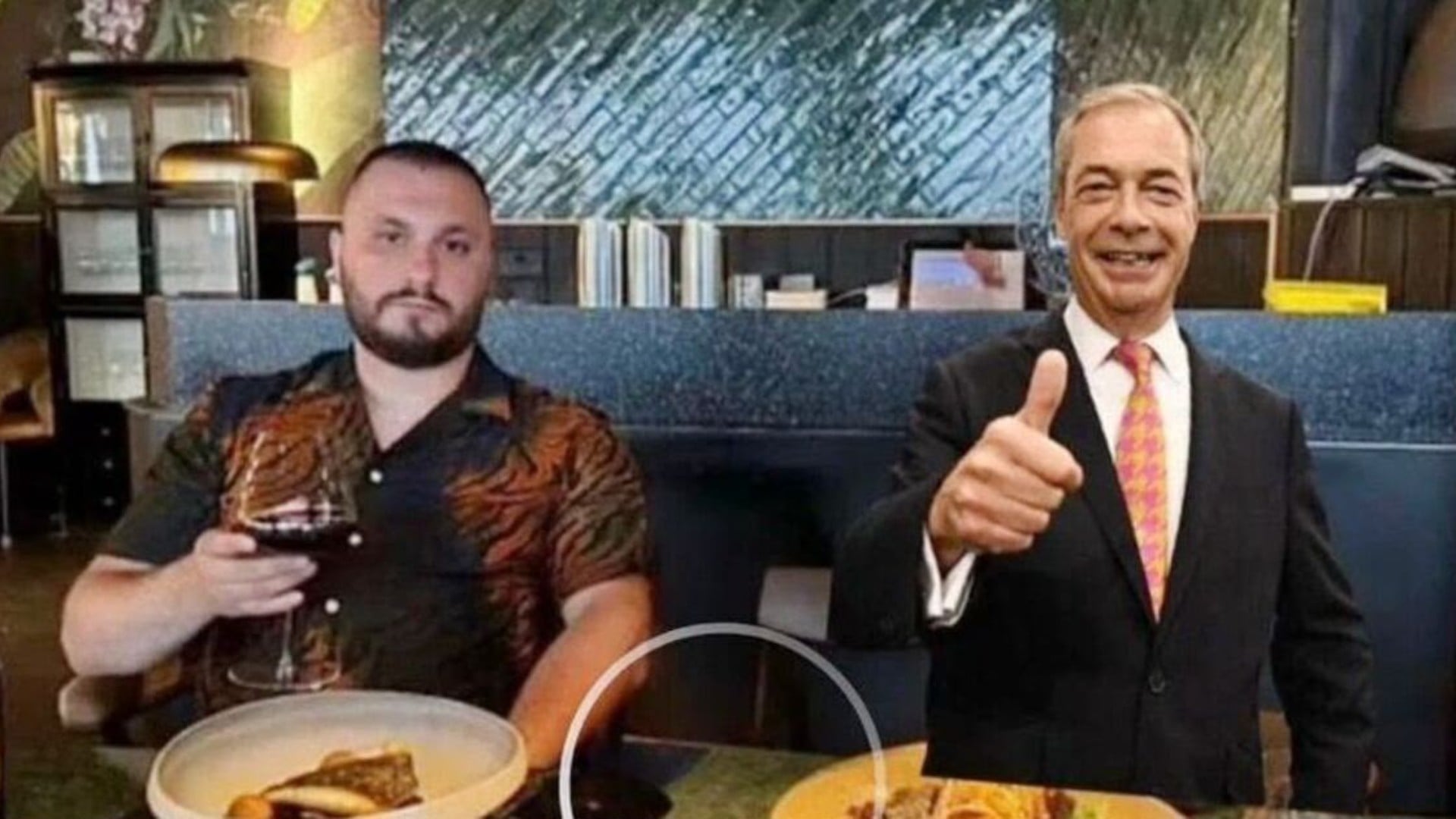
Dorian Puka, the Albanian from Laç who for years has become a recurring figure in anti-immigration debates in Britain, has published on social media a series of messages that, according to him, shed light on how certain media outlets use his story: on screen they portray him as a problem, while behind the scenes they seek interviews and, according to his claim, even offer him money.
Puka’s claim of paid offers
According to the version made public by Puka himself, presenters and producers linked to GB News, as well as British outlets such as the Daily Mail and The Telegraph, have repeatedly contacted him to feature him on programmes or in reports.
In his posts, Puka claims that some of them offered him money for television appearances. He calls these media outlets “fake” and accuses them of building stories for clicks and ratings, while at the same time insistently inviting him to take part in their programmes.
Messages targeting Nigel Farage and his programme
Among the communications published is also a direct reference to Nigel Farage, the Reform UK politician and a well-known figure of Britain’s hard line against immigration. Puka says he asked Farage to stop his people from contacting him by phone and stated that he has no intention of going on his programme.
In another communication, he also presents an ironic or provocative counter-condition to producers, saying he would come on the programme only if Farage arranged his residency documents in England.
From criminal reporting to a symbol of the anti-immigration debate
Puka has a documented criminal past in Britain. He was first sentenced to nine months in prison in 2016 for attempted forced entry into a home and was later deported. He later returned to the United Kingdom, where he again became involved in residential burglaries in London.
After being arrested by plainclothes officers in the Surbiton area, he was sentenced to three years and six months in prison and deported in March 2020. Later, according to British reports, he again returned to Britain illegally. This has made him a preferred figure for media and politics that feed anti-immigrant rhetoric with high-profile individual cases.
Why his case has remained unresolved in Britain
Although his criminal record places him in the category for automatic deportation, Puka has remained in Britain for more than three years because the British authorities have been unable to remove him due to his asylum claim and the legal proceedings that have continued.
A few weeks ago, he lost his battle at the immigration appeals tribunal, while his asylum requests had also been rejected earlier. The publication of the messages now shifts the debate not only to his legal status, but also to the dual relationship that, according to Puka’s claim, certain British media maintain with figures they publicly demonise and privately seek out for audience numbers.
So far, there has been no public reaction from the parties mentioned in Puka’s posts regarding the content of these communications.
The case brings attention back not only to his still-open file with the British authorities, but also to the way immigration and crime are often used as political and media material in Britain.