
The debate over fines imposed on several television stations has shifted from the sanctions themselves to the content that was broadcast. In her response, Audio-visual Media Authority chair Armela Krasniqi defended the institution’s line, insisting that calls for civil war, the use of weapons, executions and the burning of institutions cannot pass as a normal part of political debate.
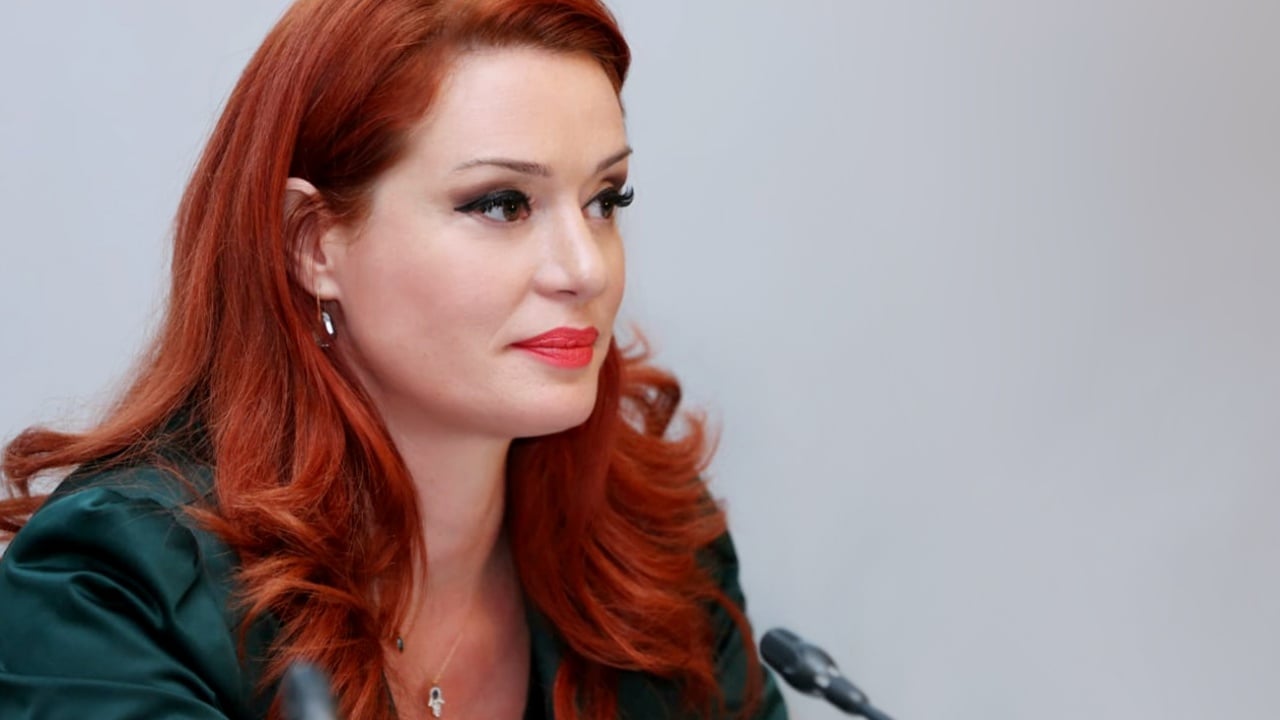
AMA’s response after the controversy over the fines
According to AMA’s official version, the public debate cannot be limited only to the question of whether the fines amount to censorship, without first looking at what was broadcast on screen. Krasniqi published a list of statements identified through the institution’s monitoring, including calls for civil war, the use of grenades, the burning of institutions, threats against the family members of police officers, and the exposure of personal data.
At the center of her response is the claim that freedom of expression does not exclude editorial responsibility. According to her, the European standard does not require media silence, but requires editorial freedom to be exercised together with responsibility for the content presented to the public.
What content the institution says it identified
The public statement lists a series of phrases aired on television which, according to AMA, go beyond political criticism and enter the territory of incitement to violence. Among them are calls for armed overthrow, executions, the burning of homes, the use of explosives, attacks on institutions, and direct threats against individuals and their family members.
The institution’s position is that these formulations cannot be relativized as political metaphors or as the heated language of debate. This is precisely where the most disputed point begins: not only the content of the words, but also the way they were allowed to circulate on national broadcasts without a clear editorial distancing.
The moderator’s role and the limits of live broadcasting
Krasniqi argues that editorial responsibility does not end with the justification that the program was live. According to her, even when the moderator cannot foresee every statement, what matters is the reaction afterward: whether the moderator challenges it, interrupts it, asks for clarification, or lets it pass without taking a position.
In some of the cases mentioned by AMA, moderators are cited as having reacted weakly or unclearly in the face of threatening statements. The institution uses this argument to support the idea that responsibility is linked not only to the guest who speaks, but also to the editorial filter of the screen that broadcasts it to the public.
European references and the figures presented by AMA
To support its position, AMA also cited a case from Latvia, where a regulatory authority banned the retransmission of a Russian channel for 12 months after violations related to incitement to violence, hatred and military conflict. According to the institution, this precedent shows that media freedom does not exclude the enforcement of rules when content crosses into incitement to violence.
The response also states that 11 of the country’s 15 major free-to-air television stations broadcast content identified in these monitoring efforts. Likewise, as of November 9, 2026, AMA says it has imposed 47 administrative fines, 27 of which are related to broadcast content. The institution presents these figures as an argument against the thesis of an improvised action or one linked only to the protest climate.
The debate remains over proportionality and review of the decisions
However, the figures themselves do not close the debate. The fact that content is considered problematic by the regulator does not automatically make every decision right, proportionate or immune from criticism. This is also the point at which the institutional discourse must be viewed carefully, especially when an administrative measure directly affects the media and the boundaries of public speech.
In the end, the real clash remains between two standards that must be upheld together: the protection of freedom of expression and the prohibition of incitement to violence. AMA is seeking to place the emphasis on the second standard, while the legitimacy of every fine will be measured by the evidence, reasoning and legal filters that withstand institutional and judicial scrutiny.
The response by the AMA chair shifts the debate from general rhetoric about censorship to the more uncomfortable question for television stations: how far can the screen go in the name of political debate.
If the broadcast content amounted to open incitement to violence, then the issue is not simply the freedom to speak, but the responsibility for turning that language into a public product with real consequences.