
After a decade of justice reform, the balance sheet presented in Parliament highlights a gap that can hardly be masked by institutional terminology: the judicial system continues to operate mainly in adapted buildings, not ones built for courts. The High Judicial Council (HJC) is seeking land plots, more funding and 199 new employees, while questions were raised in the commission over the failure to carry out investments and the costs of private security.
Only 5 out of 20 courts are in dedicated buildings
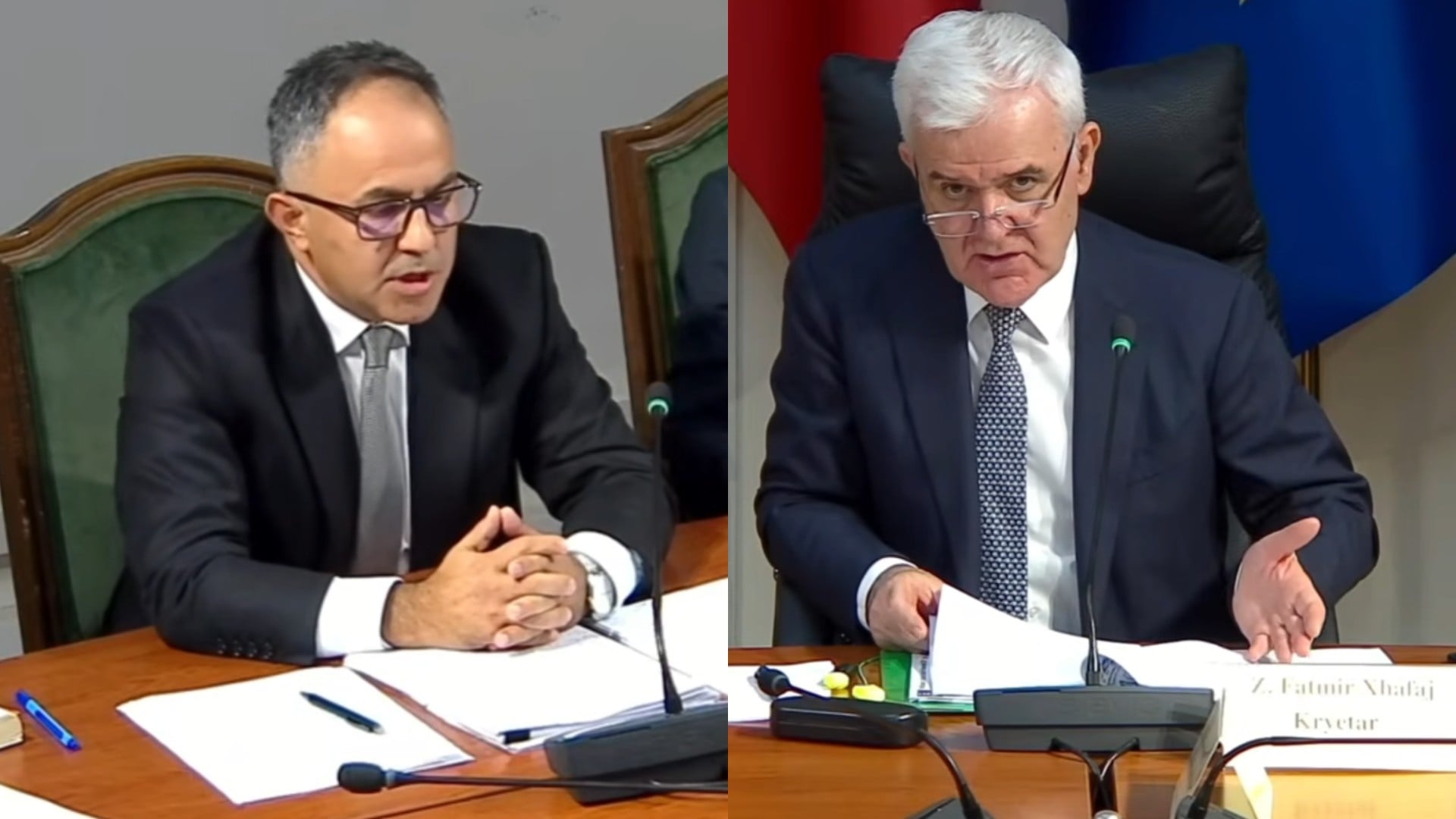
During reporting to the Commission on Citizen Initiatives, Cooperation and Institutional Oversight, HJC chairman Ilir Rusi said that of the country’s 20 courts, only five carry out their function in buildings dedicated to courts.
According to Rusi, the rest of the system operates in adapted premises, while since 2017 not a single new building intended as a court has been completed. He presented this as a problematic indicator of how justice infrastructure has been supported during the years of reform.
HJC seeks land plots from municipalities, but responses are lacking
The HJC has requested that land plots be made available by the municipalities of Kukës, Durrës, Fier, Lezhë and Tirana for the construction of new buildings, but according to the head of the institution, these requests have not received positive responses.
For Tirana, he said that land has long been requested for the Court of General Jurisdiction and the General Court of Appeal. According to the version presented by the HJC, there had been possibilities for expansion and reconstruction where the Court of First Instance is located, but procedures for expropriating the land have not produced results.
One exception was presented in Berat, where the Municipal Council has approved the transfer of a land plot into HJC ownership. For this project, 9 million lek have been earmarked to draft the implementation project for the new Court of First Instance building.
The budget falls while funding requests increase
In the discussion on the 2027 draft budget, rapporteur Evis Kushi said that financing for the HJC and the judicial system is projected at 6.67 billion lek, or 74.22 million lek less than in 2026.
On the other hand, the HJC is seeking additional funds for construction, rent, services and security. Among the requests mentioned were 110 million new lek for goods and services, as well as 215 million lek for equipment related to court security.
According to the HJC, the increase in costs is also linked to the doubling of postal services, rents for several courts and the change in the value of the private security service.
Illyrian Guard under criticism in the commission
During the meeting, commission chairman Fatmir Xhafaj raised concerns about the effectiveness and efficiency of Illyrian Guard, the company that provides security services for the courts. He described this as a separate issue and criticized the weight this item is taking in the budget.
Xhafaj also expressed reservations about the way financial requests are presented, pointing out that seeking funds without fully executing budgets from year to year remains problematic. In essence, the debate in the commission highlighted not only the lack of buildings, but also questions over the management of existing resources.
199 new employees sought, but premises are also lacking
The head of the HJC requested the addition of 199 employees for 2027, arguing that there are vacancies and a need for legal assistants, court secretaries and security staff. According to him, implementation of the Euronix technological system will also require additional personnel and investment in electronic equipment.
But a practical objection was raised in the commission: new appointments are hindered by the lack of infrastructure. According to Xhafaj, for some courts this is the key problem, as there are currently no premises where new employees can be accommodated, making the debate on expanding staff directly linked to the building crisis.
The reporting in the commission laid bare a sharp contradiction: the judicial system is asking for more staff, more security and more funding, while it still has not resolved the physical base where it is supposed to function.
If the claims presented by the HJC hold, then after years of reform the problem appears not simply financial, but institutional as well: investments are delayed, municipalities do not provide land plots, and courts continue to remain in improvised premises.