
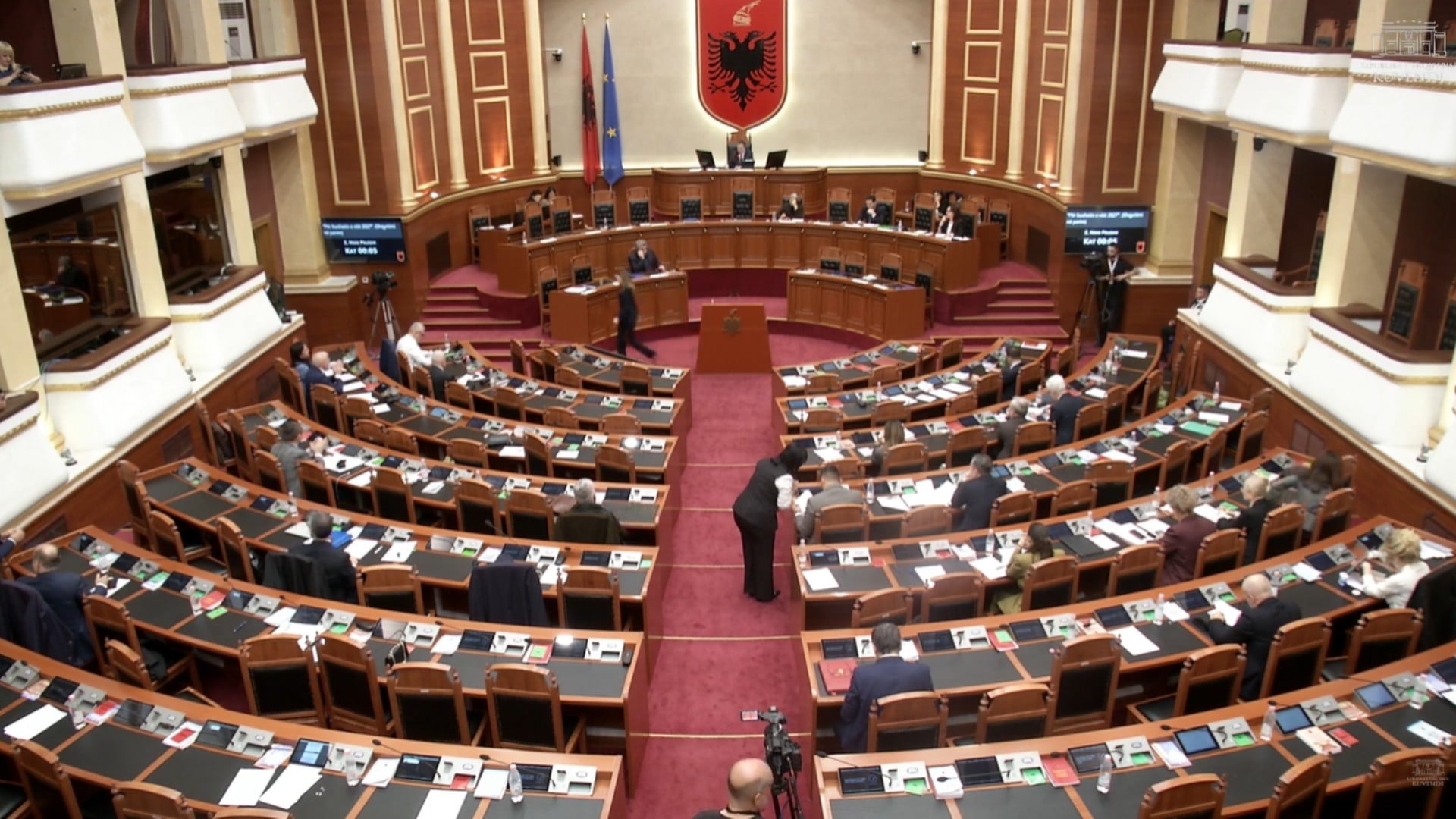
The 2027 draft budget is moving forward amid political tension in Parliament, where the opposition is raising doubts over how public billions are being managed, while the government is presenting wage increases, technology and transfers to local government as priorities. The clash highlighted not only the figures, but also the gap between official messaging and the problems lawmakers brought from the field.
Tabaku: the budget is large on paper, but not in implementation
Democratic Party MP Jorida Tabaku targeted the effectiveness of the draft budget, arguing that the problem is not its size, but the way the government implements public funds.
According to her, budgets are implemented only at a rate of 36%, while during election periods, according to the opposition, tenders and concessions are accelerated. Tabaku linked this practice to corruption and to the lack of any real impact of public spending on citizens’ lives.
Accusations of high prices and heavy healthcare burden
In the debate, Tabaku also raised the cost of living, claiming that citizens are facing sharp price increases, while pensioners are paying for products at prices comparable to those in Europe without having incomes at the same level.
She also raised doubts about the way the public procurement market has expanded, saying this has not been accompanied by a strengthening of the middle class or real support for the economy. In healthcare, Tabaku said that 48% of spending is covered out of citizens’ own pockets, an indicator that, according to her, points to a heavy financial burden on families.
Kukës as a case of regional inequality
MP Flamur Hoxha shifted the debate to the lack of consultation with business and to regional inequalities, with a particular focus on Kukës County. He said the package had been presented without sufficient information for businesses, while associations had submitted more than 100 suggestions.
In his remarks, Hoxha mentioned the lack of paved roads in areas near the border, problems with water supply and sewage, as well as shortages at Kukës Hospital. According to him, the economic situation pushes residents to cross the border for supplies or for work, reinforcing the idea of uneven development among counties.
The government’s version: more money for the police and municipalities
On the government side, Minister Evin Demo placed the emphasis on public security and financial support for the State Police. According to the official version, the draft budget provides for wage increases for police personnel, as well as investments in technology, equipment and logistical conditions.
Demo also announced that state transfers to municipalities are expected to reach 49.4 billion lek, up 4%, while the Performance Grant will remain at 200 million lek. The government presents this as part of decentralization and the strengthening of the financial and administrative capacities of local government.
Tourism, culture and sport in the priority package
At the session, Minister Blendi Gonxhe also presented the part of the budget related to tourism, culture, sport and youth. According to him, funding will increase for cultural heritage, museums, the restoration of historical sites and arts institutions.
This package also includes investments for elite sport, federations and sports projects in schools. The government presents this as an expansion of the role of culture and heritage not only as identity, but also as an economic asset for tourism and local development.
The debate over the 2027 budget is taking place in a climate in which the opposition is questioning not only the priorities, but also the credibility of implementation. Against this, the government is relying on promises of increased funding and investment, while the main question remains whether these figures will truly translate into services and relief for citizens.