
Prime Minister Edi Rama delivered a direct message from Berlin, where according to the official version he took part in a high-level meeting of the so-called “Coalition of the Willing.” At the heart of his message was the idea that Europe made a mistake by cutting off communication with Russia and that this channel should have been kept open from the beginning.
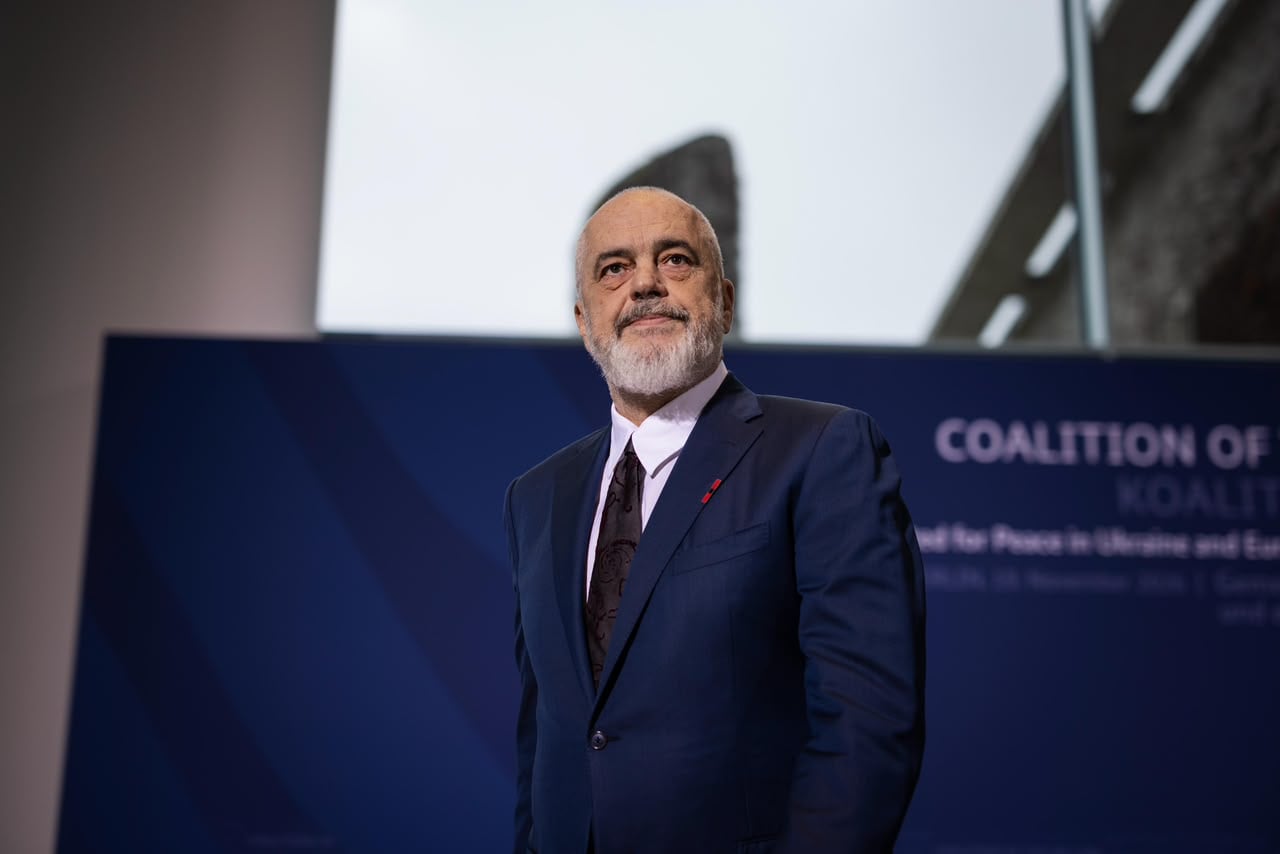
The meeting in Berlin at the invitation of the German chancellor
According to the official announcement, Rama was in Berlin at the invitation of Germany’s Federal Chancellor, Friedrich Merz, for a high-level meeting of the “Coalition of the Willing.”
The meeting comes at a time when pressure is growing in Europe for political and diplomatic coordination on the war and on relations with Russia, as European countries continue to seek a more unified position.
Rama: Europe should have spoken earlier with Russia
In his remarks, Rama said it was necessary for Europe to have a representative group that could speak on its behalf in possible communication with Russia.
He called it a “strategic mistake” that this communication, in his view, was not maintained from the start. Rama added that there had been some contacts in the early phase, but that they were later cut off and that only now is a restart being attempted.
Reference to the decision in Dublin
Rama also linked this development to what, according to him, had been decided earlier in Dublin, presenting it as a step toward creating a representative mechanism for Europe.
However, his statement remains at the political level and is not accompanied by concrete details on the format, mandate or real weight that this group would have in relation to European decision-making.
The answer on Putin, Xi and Trump
Asked about his feelings when he sees Vladimir Putin, Xi Jinping and Donald Trump, Rama chose a short answer: “Why should I have feelings?”
The response avoided personal comments and turned attention back to the main political message he sought to convey from the meeting in Berlin.
Rama’s position emphasizes the need for a diplomatic channel with Russia, but without clarifying how such an approach would translate into concrete European policy.
At a time when political statements are often presented as solutions in themselves, it remains to be seen whether this line will produce a real role for Europe or only another rhetorical formula at international tables.