
Prime Minister Edi Rama has chosen to set the public tone himself for a meeting with students in Tirana, publishing footage on Facebook from the conversation held at the Palace of Brigades. In his version, the dialogue was “encouraging” and focused on protest without violence, while no further details have been provided about the composition of the group, the method of selection, or the specific issues discussed.
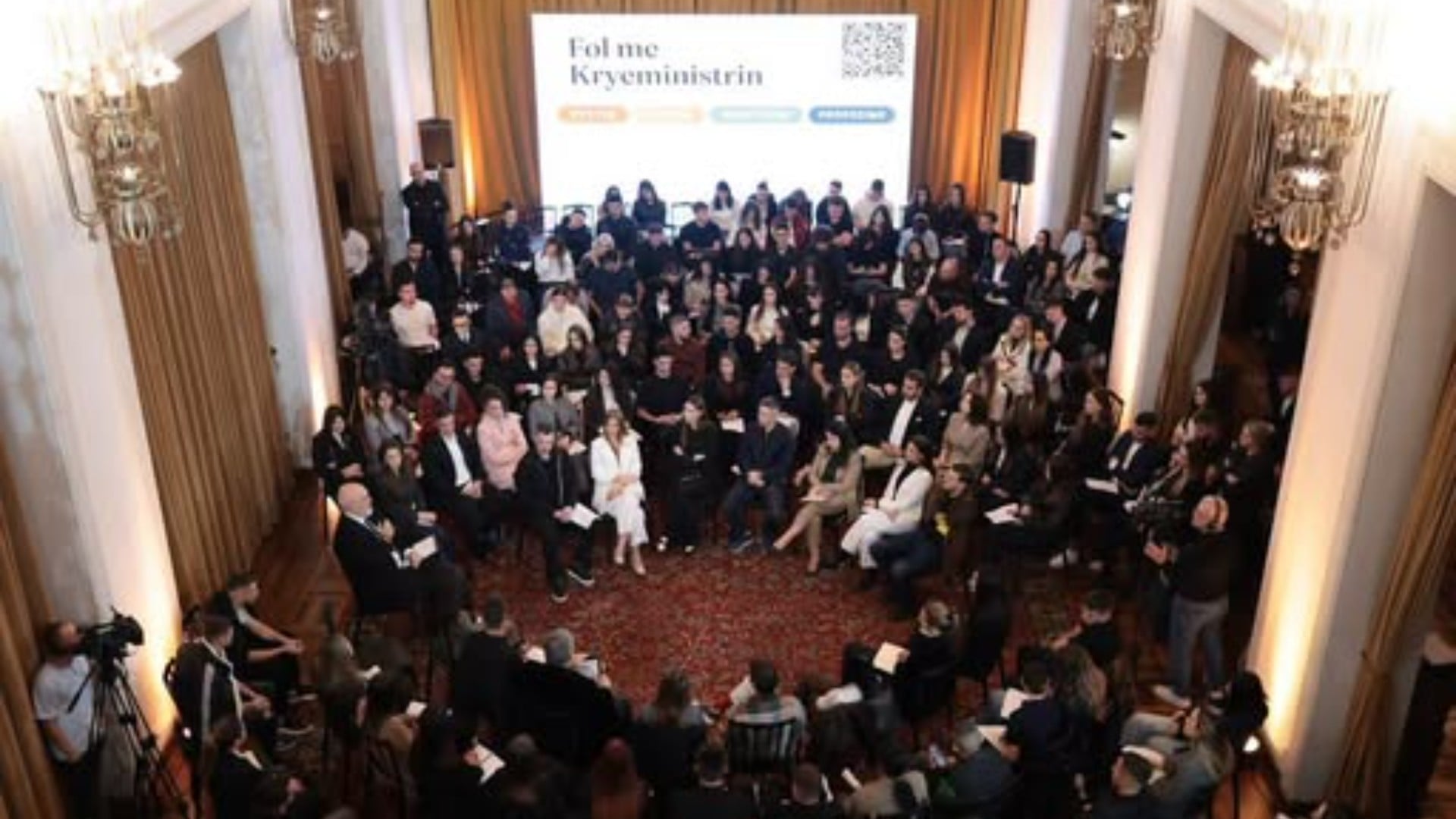
The meeting was made public through social media
The meeting between the head of government and a group of students was not initially announced through detailed institutional information, but was published by Rama himself on Facebook, together with footage from the Palace of Brigades.
From what has been made public, the students’ concerns were at the center of the conversation. However, full details have not been given about the demands raised or about any concrete commitments that may have emerged from this meeting.
Rama’s message: yes to protest, no to violence
In his post, Rama described the conversation as an “encouraging dialogue” with students who, according to him, believe in protest and not in stones.
This wording emphasizes distancing from violence, but at the same time frames the meeting through the prime minister’s political language, rather than through a fuller account of what the students are seeking.
He acknowledges some of the concerns, without clarifying what changes
According to Rama’s post, he agreed with a considerable part of the concerns raised by the students.
What is missing from the public communication is the concrete content of that agreement: what the concerns were, what was accepted, and whether there will be measures or decisions that directly affect students.
Signal that communication will continue
The prime minister ended his reaction with the expression in English, “To be continued…”, suggesting that communication with the students is expected to continue.
For the moment, the format of that continuation remains unclear and whether there will be a real consultation process or simply another episode of political communication built for the public on social networks.
The meeting at the Palace of Brigades was presented by the prime minister as a positive step in dialogue with young people, but the information provided so far remains controlled and limited to the official version published by him.
Without greater transparency on the composition of the group, the topics discussed, and the concrete results, the real weight of this meeting remains to be measured beyond the video and the political message that accompanied it.