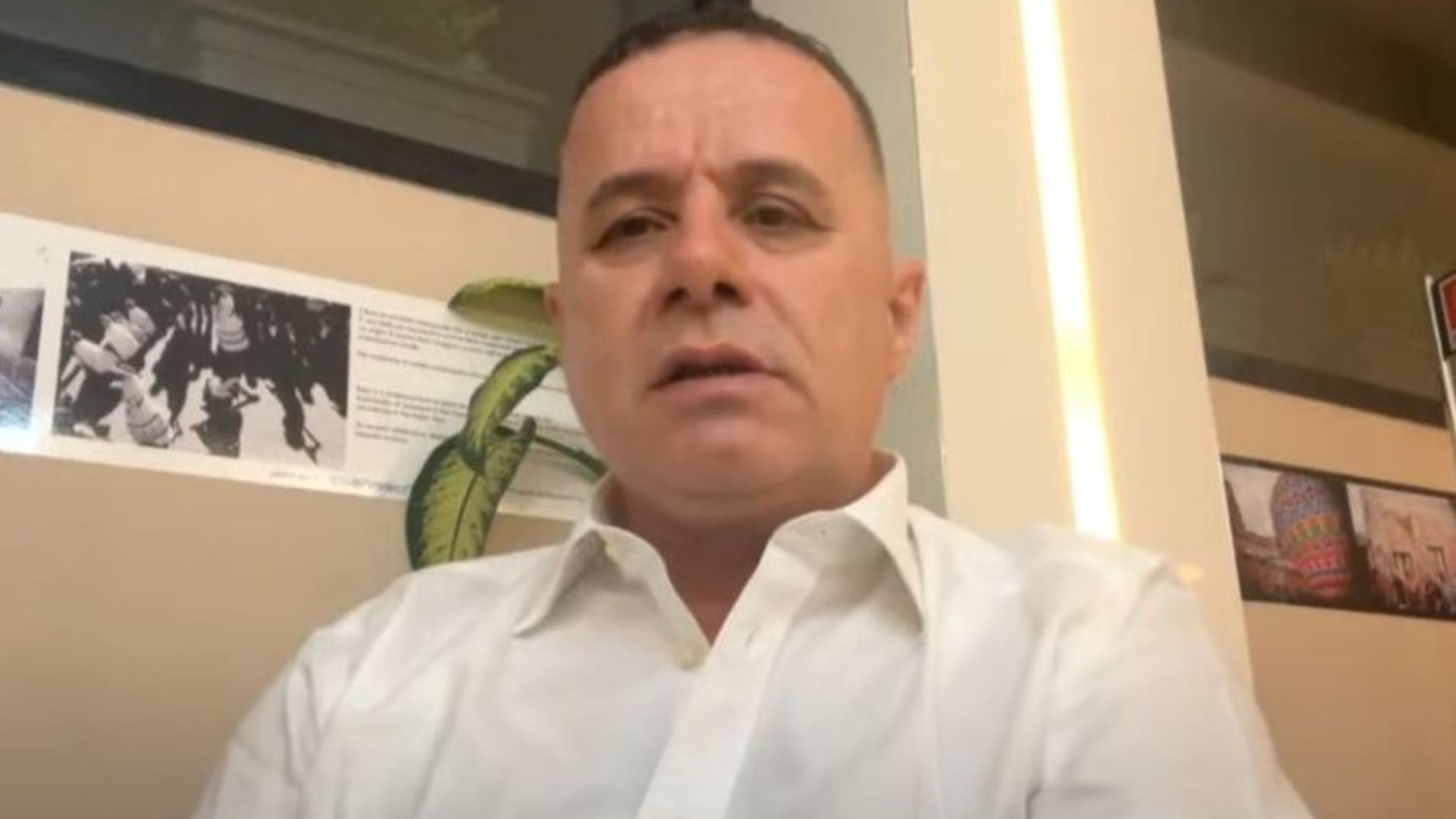
The next hearing at the Special Court Against Corruption and Organized Crime, GJKKO, in the “Partizani” case was marked by a new development: Paro Laçi, former president of the “Partizani” football club, did not appear in court and announced through a written submission that he is in Switzerland, where he has applied for political asylum. In his version, he says he is afraid to return to Albania because he feels threatened by former Prime Minister Sali Berisha.
Letter from Switzerland and request for protection
In the notice addressed to the Special Court, Laçi said he is in Switzerland and has applied for political asylum. He claims he is at risk and, for that reason, did not appear at the court hearing where Sali Berisha, Jamarbër Malltezi and other defendants are being tried in the “Partizani” case.
Laçi has also requested protected witness status. For any further communication with the court, he asked that contact be made through his lawyer, Idajet Beqiri.
What the trial panel decided
The trial panel, chaired by Judge Elsa Ulliri, decided that Paro Laçi’s testimony will be taken through a letter rogatory, via the Swiss authorities. This means the court will not wait for him to appear physically in the courtroom, but will seek to obtain the testimony through channels of international cooperation.
As for the request to be included in the witness protection program, GJKKO clarified that this is not within the competence of the trial panel, but of the prosecution. With this position, the court is passing the assessment to the institution pursuing the charges, without itself examining the protection requested by Laçi.
The GJKKO hearing and the expert examination for Isa Tare
At the start of the hearing, the court decided to appoint experts to conduct an expert examination of witness Isa Tare. The purpose of the verification is to clarify whether he suffers from any illness that could affect his testimony and whether such a condition also existed when he was questioned in 2022.
This development shows that the debate in the “Partizani” case is extending not only to the content of the testimony, but also to its procedural validity and the condition of witnesses at the time they were questioned.
Clashes over testimony
The first witness heard at the hearing was Rolando Llazari, who worked in the administrative and property structures of the Ministry of Defense between 2002 and 2011. Asked by SPAK whether the “Partizani” club had been included in the deployment plan of the Armed Forces, he said the office where he worked had no knowledge of this, as it was not within its competence.
SPAK then sought a partial challenge to the testimony. On the other hand, Jamarbër Malltezi claimed in the courtroom that the prosecution had misdirected the witness by not providing him with the deployment plan. These clashes show that an important part of the proceedings is shifting to the way evidence has been administered and how it is being interpreted in court.
The “Partizani” case remains one of the most closely followed proceedings at GJKKO, not only because of the political profile of the defendants, but also because of the heightened tension surrounding testimony, procedures and claims of threats.
Paro Laçi’s claims of danger and his request for political asylum remain, at this stage, part of the version he has presented to the court. Meanwhile, the trial continues amid strong procedural objections and clashes between the parties.