
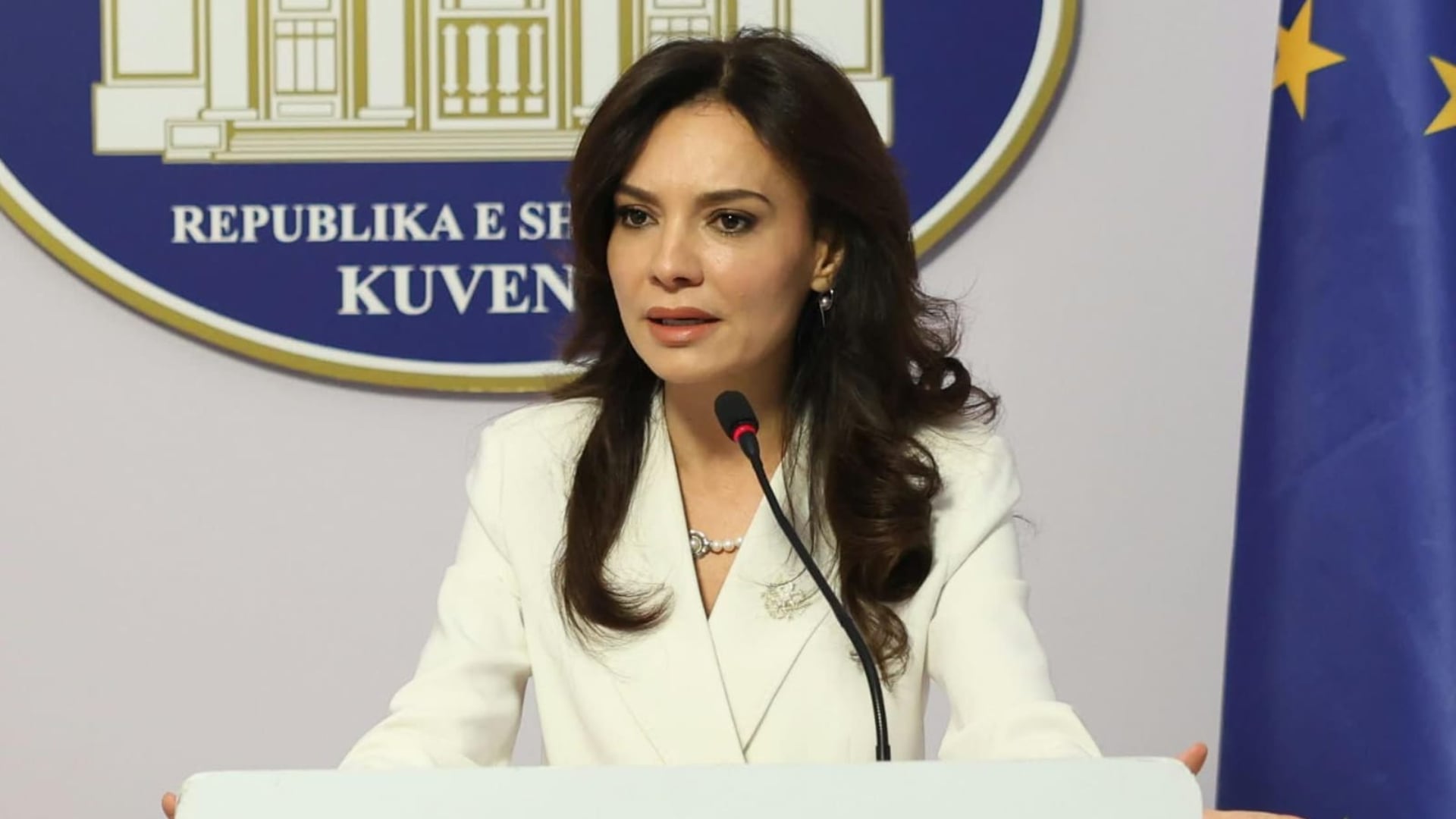
Elisa Spiropali’s statements, in which she compared developments within her party to dark practices of the communist regime, are being read not simply as a political outburst, but as a symptom of a deeper pattern: subordinates are targeted, while responsibility at the top remains out of range.
The comparison with communism brings the core of the debate back into focus
In her lengthy public appearance, Spiropali invoked names such as Koçi Xoxe and Kadri Hazbiu to illustrate, according to her, the way she is being politically treated. The comparison is strong and unusual, but at the same time it highlights the internal crisis now emerging in the Socialist Party.
The problem lies not only in the language used. The real debate is tied to the fact that, even when figures of the repressive apparatus are mentioned, attention remains on the executors and not on the political center that produces the decision-making.
Political responsibility does not end with subordinates
The argument raised in this debate is straightforward: authoritarian systems do not function on the initiative of secondary individuals, but on the will of the leader. From this point of view, comparisons with specific names from the past cannot explain the mechanism of power if the main political responsibility is left out.
This logic extends to today’s developments as well. The imprisonment, targeting, or removal of officials do not necessarily prove reform of the system. On the contrary, according to this critical reading, they may serve as a way to shift blame downward, while political control at the top remains unchanged.
The Socialist Party and the missing standard of internal democracy
In the background is a broader accusation about the way political parties function in Albania. Instead of moving closer to the democratic standards preached in public, internal practice is often presented as exclusionary, vertical, and dependent on the decision of a single person.
In this light, Spiropali’s case is seen as another episode in a familiar pattern: political ascent comes from the leader, and so does political downfall. This weakens the claim of institutional autonomy and turns the debate into an essential question of control over power within the party.
When the rhetoric of survival takes the place of responsibility
A critical reading of Spiropali’s reaction is that she is trying to denounce the injustice done to her, without taking the accusation all the way to the source of the power that elevated her and that, according to this interpretation, is now marginalizing her. This is seen more as an attempt at political survival than as a full confrontation with the mechanism that produces such blows.
That is precisely where the central question arises: why are the “foot soldiers” denounced and not the “general”? For critics, the answer is that in a party built on the concentration of power, touching the top remains taboo even when the conflict becomes public.
The debate opened by Spiropali’s statements goes beyond a personal clash or an internal reckoning within the Socialist Party. It touches on the way political responsibility is distributed in Albania and how real the mechanisms of democracy within parties actually are.
When high-ranking figures speak of injustice but stop short of naming the person who controls the system, the message remains incomplete. And that is exactly where the problem begins — one that Albanian politics continues to avoid.