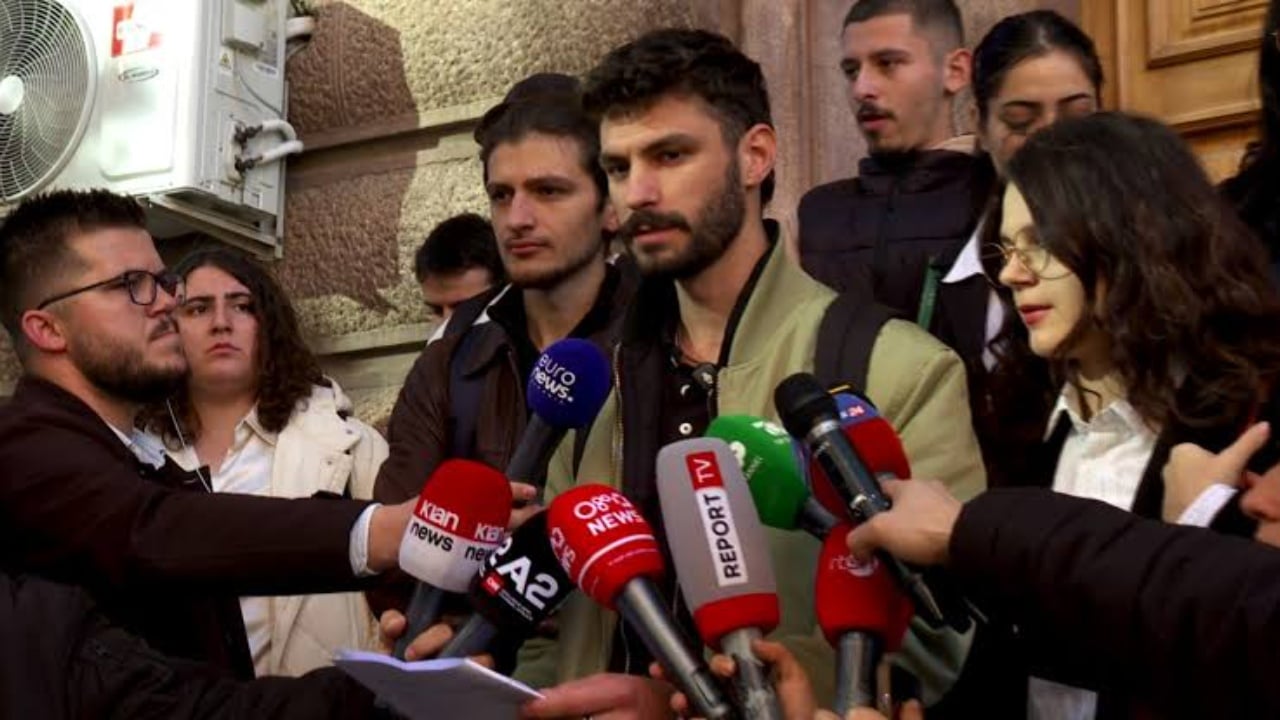
Albania’s Constitutional Court has moved to a plenary session three complaints against government acts approved on October 28 on protests, taking the legal confrontation into a more significant phase. The requests were filed on behalf of students who have been protesting for weeks and who are fundamentally challenging the package of restrictions imposed by the executive.
Three complaints over the October 28 acts
According to public information, three complaints have been filed with the Constitutional Court against the government acts on protests approved on October 28. The case has now been referred to a plenary session, a development that gives weight to the debate over the constitutional limits of government intervention in the right to assembly.
The complaints were filed on behalf of students, who have been holding protests for several weeks. At the center of this confrontation is not only an administrative act, but the very relationship between public order, police power and constitutional freedoms.
What students and civil society are challenging
Two groups of students and four civil society organizations have turned to the Constitutional Court to challenge the normative act which, according to the official version, is aimed at managing protests. According to the complaint, this act gives police the right to ban or restrict protests, demand the deletion of posts and impose fines of up to 500,000 lek.
These measures in particular are being contested as a strong interference with freedom of expression and organization, especially as the expanded police powers affect not only assemblies on the ground, but also online communication related to protests.
Organizers’ liability also under challenge
Another point in the complaints concerns the normative act that provides for the liability of organizers for damage caused by other people during the October protests.
The request is for the annulment of this provision, which according to the challengers places a heavy burden on organizers and raises questions about the proportionality of the measure, especially when responsibility is sought even for the conduct of third parties.
Objections also raised over police registration of protesters
The students are also challenging the police registration with the prosecution of protesters who are being denied permission to leave the country. They describe this practice as unconstitutional.
This is another element that broadens the debate beyond the management of protests in the street, directly affecting freedom of movement and the way police and procedural mechanisms are used against citizens who take part in assemblies.
The transfer of the complaints to a plenary session does not yet provide an answer on the merits, but it shows that the case has entered a decisive phase for the constitutional review of the government’s acts.
At its core, the confrontation concerns the question of whether the measures approved in the name of public order remain within the limits of the Constitution, or amount to an excessive restriction of the right to protest.