
Democratic Party leader Sali Berisha visited MP Kliti Hoti at the Trauma Hospital, after he was injured during Saturday’s protest. After the visit, Berisha leveled serious political accusations at Prime Minister Edi Rama, while presenting the MP’s injury as a sign of an escalation in the clash between the opposition and the government.
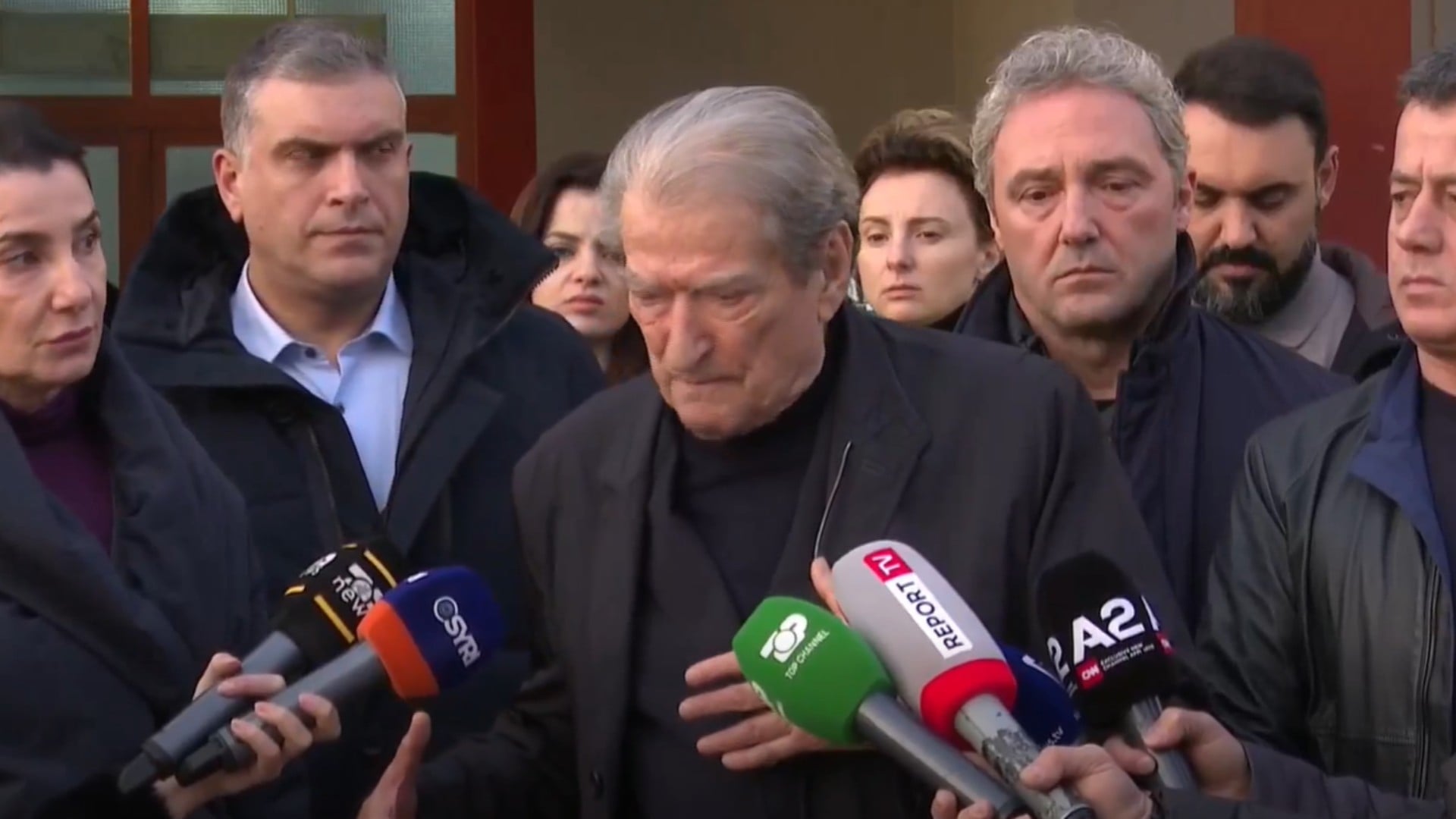
The visit to Trauma and direct political accusations
Berisha said Hoti was struck by a rubber bullet during the protest and claimed the incident was not accidental, but a politically ordered act. In his public remarks, the DP leader directly linked the injury to Prime Minister Rama.
He used harsh language toward the government and the forces that intervened in the protest, claiming that the area of the heart had been targeted. These remain political accusations by the opposition, at a time when no exhaustive official response has been made public regarding the specific episode.
What Berisha said about Kliti Hoti’s condition
According to Berisha, the MP suffered a heavy blow near the shoulder, with a deep wound, burns around it, and consequences that, according to him, have also affected the lungs. He said Hoti was undergoing further medical examinations at the Trauma Hospital.
In his statement, Berisha insisted that the MP was helping a protester at the moment he was struck. At this stage, the version publicly presented regarding the circumstances of the injury is that of the opposition.
Claim of more than 70 injured in the protest
Berisha said the number of injured during the protest had exceeded 70 people. He added that more than 20 of them were treated by doctors at the center near the Taiwan area.
The figure mentioned by him further raises the political weight of the incident, but requires institutional verification and full transparency on the real toll of the intervention by law enforcement, the type of means used, and the chain of responsibility.
Attacks also directed at the Police and its leaders
In addition to the accusations against Rama, Berisha also attacked police leaders, mentioning Demon and casting doubt on measures previously announced against officers. According to him, the suspensions announced earlier have not actually been reflected on the ground.
His statements further deepen the political confrontation after the protest, while at the center remains the question that institutions must answer with facts: how an MP was injured during the police intervention and who bears responsibility for the use of force.
The incident has increased political tension around the protest and has brought back into focus the relationship between the state’s use of force and the right to assemble.
Beyond the strong party rhetoric, the case requires documented public clarification, especially regarding the manner of intervention, operational orders, and the full toll of those injured.