
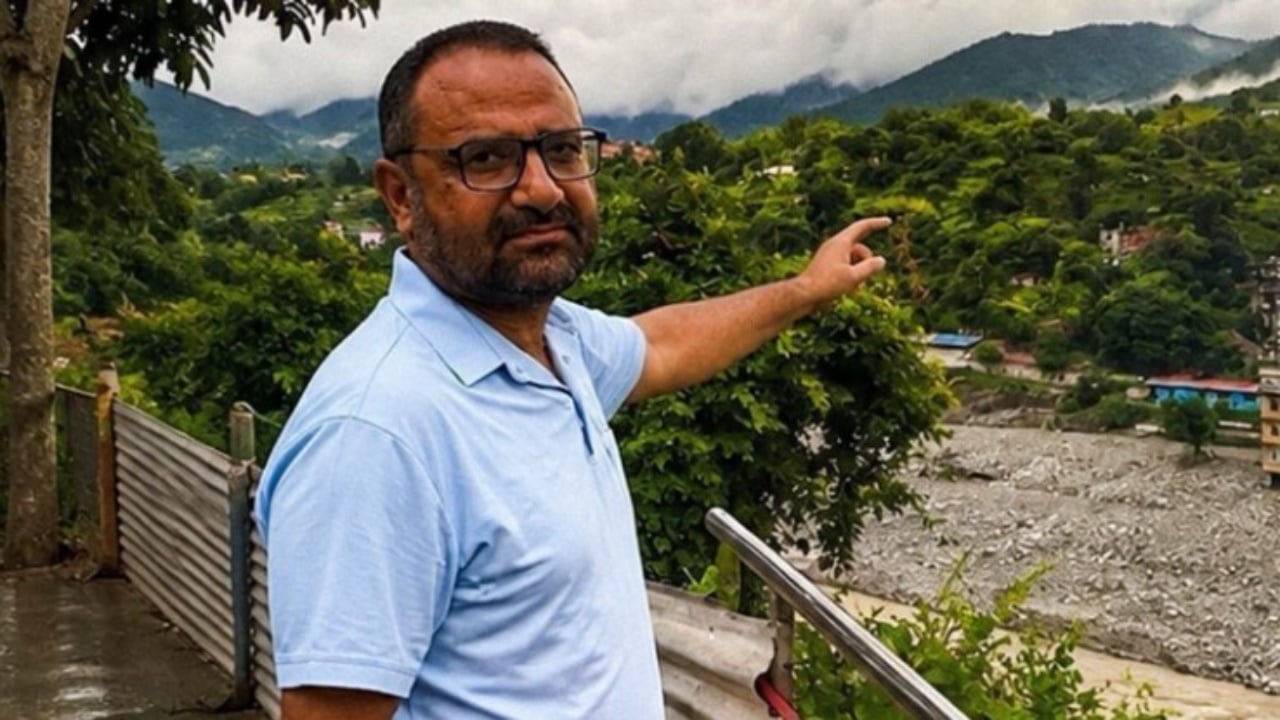
Amid the chaos of a devastating flood in Nepal, a teacher came to the center of the story after organizing the timely evacuation of 1,643 students from a school in the Trishuli valley. The flow of water reached the school grounds and, moments later, the bridge beside it collapsed.
The alarm came in the morning, when the school was full of students
The incident happened at around 09:20 on Wednesday morning at Tribhuvan Trishuli Secondary School. About 900 children were inside the three-story complex, while hundreds of others were arriving on foot or by bus.
According to reports, the school principal first received a warning phone call from a friend in Betrawati, about eight kilometers farther up the valley. At that stage, the danger was still being assessed.
The evacuation began when it became clear the water level was rising rapidly
Rajendra Dawadi, 47, an English teacher, initially tried to determine whether the building was safe. The school was built of concrete and stood about 60 meters above river level.
But the situation changed quickly when a parent arrived with news that the water was rising at an alarming pace. The school bell then rang, not to bring students into class, but to get them out.
Teachers immediately began taking the children out and directing them toward higher ground. At the same time, Dawadi called the school bus drivers, each carrying about 80 children, ordering them to return immediately.
One bus crossed the bridge in the final seconds
According to reports, Dawadi managed to contact all the bus drivers except one. At that very moment, he saw the bus in question crossing the bridge.
With floodwaters already entering the school grounds, he signaled to the driver to turn back immediately. The bus managed to make it across to the other side and, moments later, the bridge collapsed.
As the danger became visible, panic spread among the students. One student suffered a panic attack and was transported by motorcycle to higher ground, while the others left on foot.
All the students survived, but not all the adults
In the end, the students gathered in a safer area near a bodhi tree. Below them, the raging current was destroying the school and transforming the landscape within minutes.
All 1,643 students at the school survived. But the human toll did not come without losses.
According to reports, 32-year-old social history teacher Santos Pariyar was swept away after returning to the room he had rented near the river. The school’s maintenance worker, Sultan Lama, also lost his life after going back to close the doors.
After the rescue, a catastrophe with wide-ranging consequences in the Himalayas
At the center of the catastrophe, according to scientific analyses so far, is the detachment of a large mass of ice and rock from the Langtang Lirung area, near the border between Nepal and Tibet. The mass is reported to have fallen about 1,200 meters into the Lhende Khola river canyon.
The collapse then turned into a powerful flow of water, mud, ice, rocks and debris, which moved rapidly down toward the lower valleys. Satellite images analyzed after the event show that not only the ice collapsed, but also part of the rocky base beneath the glacier.
The flood destroyed settlements, bridges, roads and energy infrastructure, while also altering riverbeds across an area stretching for dozens of kilometers. The disaster affected both sides of the border between Nepal and Tibet, with hundreds of victims and thousands missing, according to reports.
Scientists remain cautious about directly linking a single geological event to climate change. However, rising temperatures in the Himalayas are being considered a factor that increases the instability of mountain slopes and the risk of sudden flooding.
The story of the rescue in Trishuli highlights the decisive response of the school staff in critical seconds, in a catastrophe that struck not only a local community but an entire mountain region.
Beyond the individual act, the incident refocuses attention on the growing danger facing areas near glaciers in the Himalayas, where scientific warnings are becoming increasingly urgent.