
As the El Niño phenomenon intensifies, British authorities are urging citizens to prepare for scenarios involving disruptions and several days of isolation at home. According to the official guidance, families should have food, water and basic equipment to cope with the loss of electricity or running water.
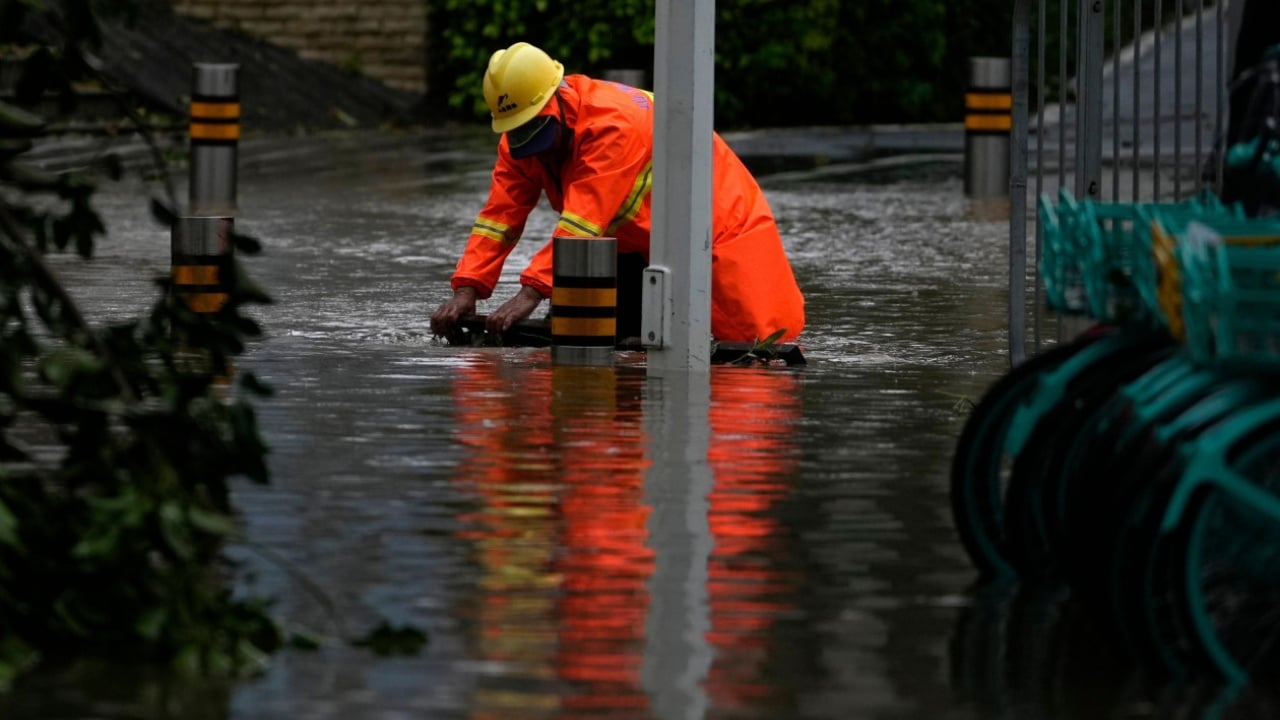
The British government’s call for supplies at home
Britain’s Minister for Environment, Food and Rural Affairs, Angela Eagle, told The Guardian that citizens should secure food supplies so they can cope with situations in which they may remain stranded at home until rescue teams arrive.
The message comes at a time when authorities are linking the need for preparedness to the risks that could come from the intensification of El Niño and extreme weather events. In essence, the burden of the initial response is shifting to families, which are expected to be ready for several days without basic services.
What foods are recommended
Professor Elizabeth Robinson, an environmental economist at the London School of Economics, recommends that families keep enough food and water for around two weeks.
She suggests long-life products such as cereals, rice, pasta and canned foods, stressing that many of them can also be consumed without cooking in the event of a power outage.
The recommended list also includes canned beans and legumes, fish or meat, canned fruit and vegetables, as well as long-life milk. For families with babies or young children, nappies and powdered milk are also advised.
Basic items for the emergency kit
Britain’s Department for Environment, Food and Rural Affairs has also published a list of items that should be kept at home as part of an “emergency kit.”
According to the list, basic items include a battery-powered torch, a power bank, a battery-powered radio and spare batteries. A first-aid kit, wet wipes, hand sanitiser, bottled water, non-perishable food that does not require cooking, and a can opener are also recommended.
Warning over prices and dependence on imports
Robinson also raised another concern: worsening climate conditions could have a direct impact on food prices.
According to her, the United Kingdom is highly dependent on imports of fruit and vegetables, while extreme weather in countries such as Spain and North Africa has already shown that it can bring shortages and rising product prices. She mentions rice, coffee, cocoa and tea, as well as animal feed, as goods that could become more expensive.
Why El Niño is being seen as a serious threat
El Niño is a natural climate phenomenon linked to changes in winds and water temperatures in the Pacific Ocean, which affects weather patterns in many regions of the world. Data published on September 1 show that water temperatures in the central Pacific are around 2.6 degrees Celsius above the average of the past 30 years.
According to the average of 14 climate models, that deviation could reach around 4 degrees Celsius in November. Climate analyst Zick Hausfather said historical data suggest unusual levels, while officials from the UN and the World Meteorological Organization have warned of increased risks from droughts, floods and severe blows to economies and societies.
In this climate of alarm, the message coming clearly from London is that families should rely more on advance preparation at home.
The supply list is concrete, but the broader warning is tied to a more costly reality: extreme weather is no longer seen only as a matter of forecasting, but also as a test of supplies, prices and the capacity of institutions to cope with crises.