
The administration of seized and confiscated assets came under scrutiny in a committee session, where the opposition raised suspicions that they are being returned to former owners through schemes involving third parties. On the other side, the Agency for the Administration of Confiscated Assets acknowledged that such claims are circulating, but said that so far it has no verified cases.
Suspicions of returns to former owners
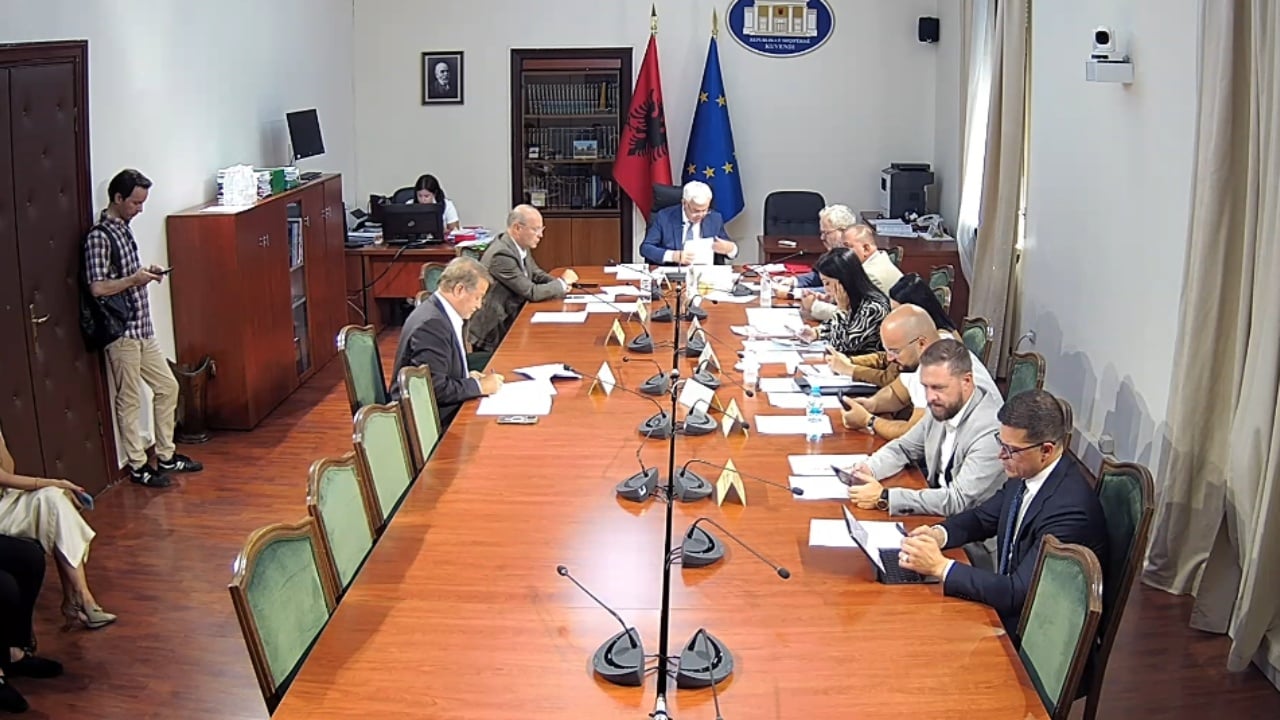
At the Committee on Citizens’ Initiatives, Cooperation and Institutional Oversight, Democratic Party MP Gjin Gjoni said he has information that some seized assets end up once again in the hands of the people who previously held them, through various methods and at modest prices.
He asked whether there is official information about this practice and whether legal changes are needed to curb such a scheme, while also raising the issue of using these assets for social groups in Lezha County.
AAPK: We have heard the claims, but no cases have emerged for us
AAPK chief administrator Risena Xhaja said she has heard claims that assets may pass through third parties to their original holders, but according to her account, to date no such benefit has emerged in the agency’s procedures.
According to her, the tenant fills out a declaration and responsibility then falls on the tenant and on the investigative bodies. She said the agency verifies that the former owner is not the direct beneficiary, while lease contracts are for one year.
Gjoni insisted that he knows of a specific case in which the person who had the property rented it, calling into question the real effectiveness of the filters that are claimed to be applied.
Use for vulnerable groups and institutions
The debate also touched on the social use of seized apartments. Xhaja said they are used only for the needs of vulnerable groups and for the families of police officers killed in the line of duty.
She added that in Lezha there have been no requests from agencies to use seized premises. According to her, several institutions have previously benefited from these assets, including the Special Court Against Corruption and Organized Crime, the Court of First Instance and the Tirana Prosecutor’s Office.
Committee chair Fatmir Xhafaj shifted the discussion to the real function of this administration, asking how many assets go to the benefit of victims, how many are used for a preventive effect, and how many properties could be made available to judicial institutions that lack capacity.
Three years without sales of real estate
Xhaja said that the agency is currently administering apartments, other units and pastures, but not spaces that could be immediately handed over to the courts. She added that institutions have mostly requested land for logistical needs.
One of the strongest points of the session was the acknowledgment that no real estate has been sold for three years. According to AAPK, the process has been blocked pending a Supreme Court decision that will determine how the sale should be carried out.
On administration costs, Xhaja said they have fallen even though the number of employees has increased, arguing that renting out the assets has reduced the need for guards. She also mentioned income from bank deposits, but did not provide a concrete figure for the number of assets put into use.
The debate in the committee highlighted a familiar gap in the administration of seized assets: strong suspicions of abuse on one side and a lack of formalized evidence on the other.
When the agency’s own head acknowledges that she has heard of transfers through third parties, but the system relies mainly on the tenant’s self-declaration, one question remains open: how strong is the actual oversight of assets administered in the name of the public interest?