
A new political accusation has been put into circulation by Sali Berisha, who claims that a clash has begun within the top ranks of the government between Edi Rama and Belinda Balluku. The statement comes at a time when the opposition is trying to read the arrest of Ergys Agasi as a sign of shaken internal relations within the majority.
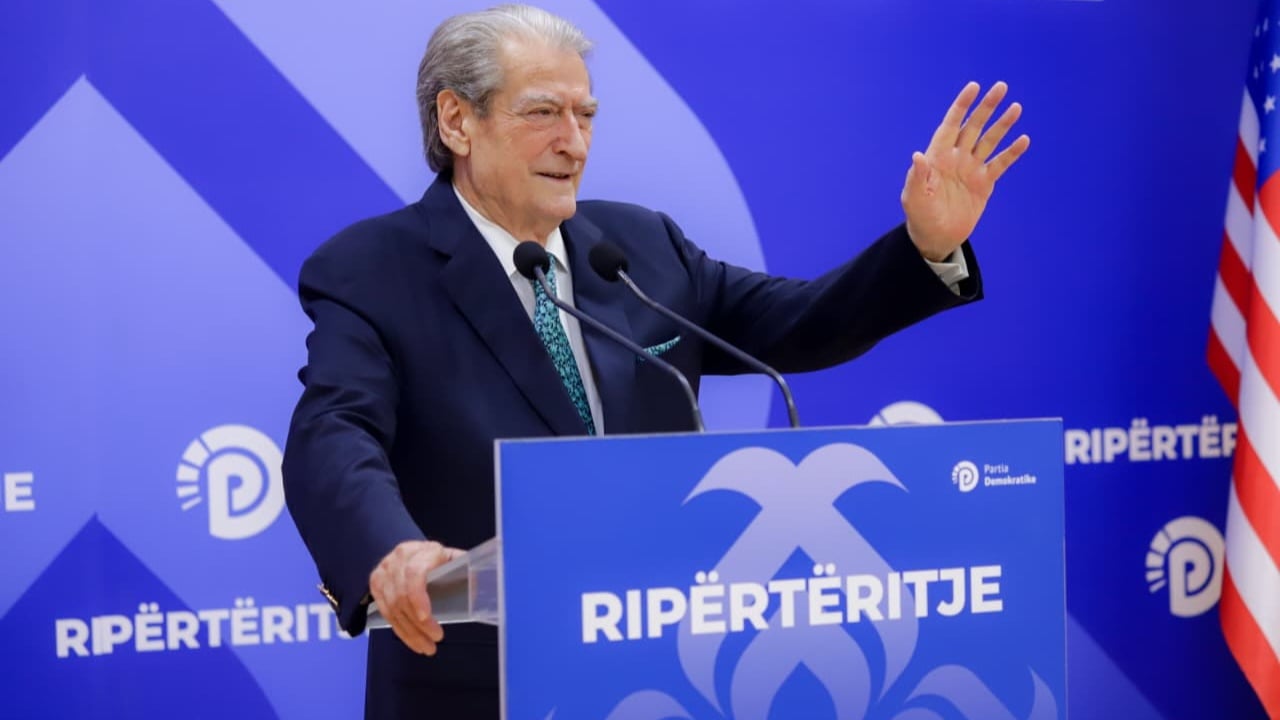
Berisha’s claim of tension in the government
The head of the Democratic Party declared that a “real tension” now exists between Prime Minister Edi Rama and Deputy Prime Minister Belinda Balluku. According to him, this is directly linked to developments that followed the arrest of Ergys Agasi.
A political accusation with no public evidence presented
In his statement, Berisha used strong political language and suggested that the arrest has produced consequences for the government’s internal balance. However, at this stage, this remains a political claim articulated by the opposition, with no additional public elements to prove the clash mentioned.
He went further by implying that, in his reading, the balance of power within the cabinet may have shifted to Rama’s disadvantage. This moves the statement from ordinary opposition rhetoric to a direct message about the balances at the top of the executive.
Why the Rama-Balluku relationship is seen as key
The relationship between Edi Rama and Belinda Balluku has for years been considered one of the strongest axes of the majority. Precisely for this reason, any claim of cracks in this relationship carries greater political weight than a routine attack from the opposition.
Whether the suspicions raised by Berisha point to a real split or are simply political pressure on the government remains unclear. But the very fact that the attack is focused on one of the most important relationships in government makes the statement politically sensitive.
From opposition rhetoric to political cost
Berisha suggests that Balluku’s position may be producing political costs for the prime minister. If this is read as a signal of internal division, then the debate does not remain only within the rhetoric of the day, but touches on the cabinet’s political functioning.
So far, there has been no public reaction from Rama or Balluku to these claims. In the absence of an official position, the statement remains part of the political clash between the opposition and the government, while question marks over internal relations within the majority remain open.
Berisha’s claim places one of the most important relationships within the government at the center of the debate. For the moment, this is a political accusation that raises more questions than it provides answers.
In the tense climate of Albanian politics, even unclear signals of cracks at the top of power are read as indicators of a deeper movement within the majority.