
The debate over magistrates’ salaries has returned with sharp tones in the Economy Committee, where the ruling majority is defending a formula that would bring about 8,500 lek more to the reference salary. Opposing it, the High Judicial Council and the High Prosecutorial Council are seeking an increase of around 80,000 lek, making even clearer the gap between what the justice system is asking for and what the government says the budget can sustain.
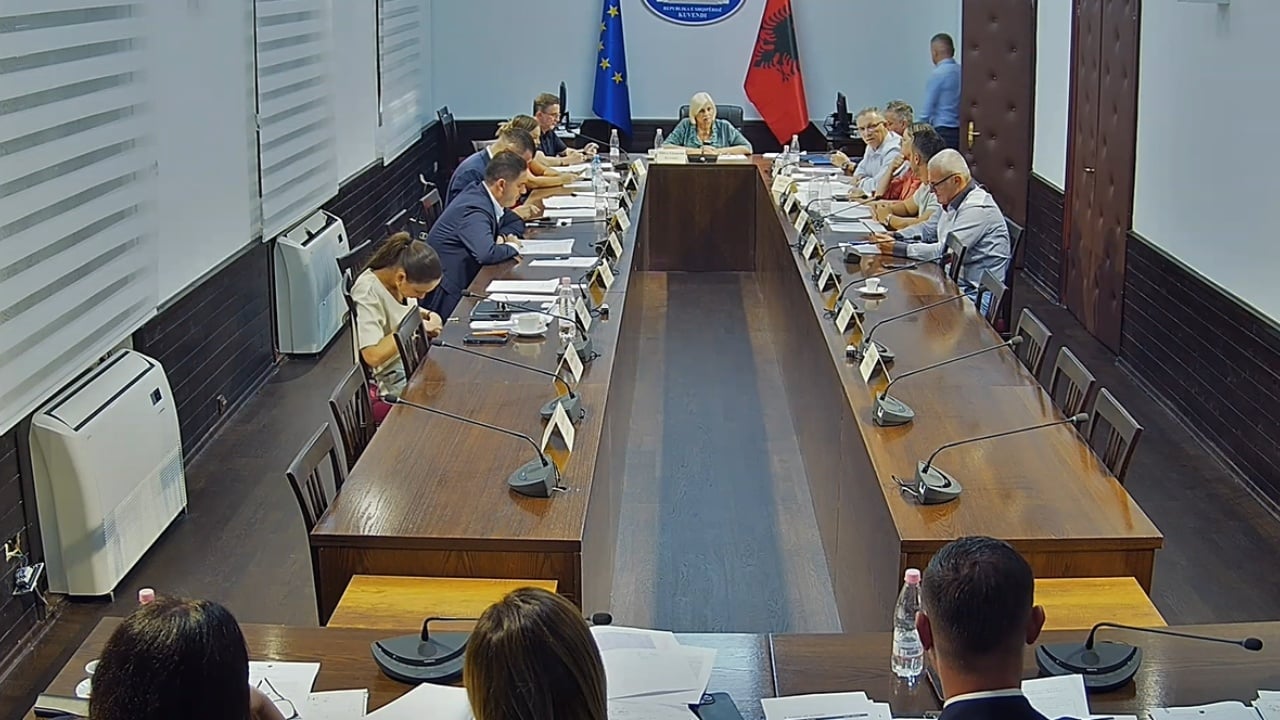
The majority defends the formula of 38% of the President’s salary
The draft law reviewed by the Economy and Finance Committee provides that magistrates’ reference salary be calculated at 38% of the salary of the President of the Republic, up from the current 36%.
According to representatives of the majority, this solution respects the Constitutional Court’s decision while also staying within the state’s financial limits. In practice, the draft backed by the Socialists brings an increase of around 8,500 lek, far from the expectations of the justice system’s institutions.
HJC and HPC seek a much higher increase
The High Judicial Council and the High Prosecutorial Council have requested an increase of around 80,000 lek, more than nine times what the majority’s draft provides.
This very difference has fueled the political and institutional clash, as the issue is tied not only to a technical coefficient, but also to how the Constitutional Court’s decision is being interpreted and how fully it is actually being implemented.
The government says it is implementing the ruling, but within budget limits
The proposer of the draft, Aulona Bylykbashi, argued that the Constitutional Court did not define a mandatory formula and that the choice belongs to Parliament, provided there is no reduction in salaries. According to her, the 0.38 coefficient was chosen as a compromise between constitutional guarantees and the budget’s capacities.
The government has also lined up behind this formula. According to the official version of the Ministry of Justice, the proposal meets the conditions set by the Constitutional Court, while the Ministry of Finance considers the cost manageable.
1.5 billion lek in arrears and payment in installments
Beyond the debate over the formula, arrears are also on the table. The government has calculated about 1.5 billion lek in financial effects carried over from April 2023, the period from which, according to the Constitutional Court’s ruling, financial implementation should begin.
Because of the cost, the executive proposes that these payments be settled in installments over two years. This shows that the delay in implementation has produced not only legal debate, but also a considerable bill for the public budget.
DP against the draft, after the constitutional deadline expired
The Democratic Party has declared that it will vote against the draft law in the September 17 session. MP Enno Bozdo linked the situation to the failure to implement the Constitutional Court’s decision on time, accusing the government of delay.
The debate escalated after Parliament failed to approve the new salary formula by July 31, within the deadline set by the Constitutional Court. After that deadline expired, the High Judicial Council and the High Prosecutorial Council decided that from August 1 the reference salary would be calculated on 222,425 lek, plus an additional 14,000 lek for qualifications, but the Ministry of Finance did not execute the payrolls on the grounds that determining salaries is Parliament’s competence.
At its core, the clash is not only about a few thousand lek more or less. It highlights the tension between Constitutional Court decisions, institutional delays, and the way the government is trying to spread the bill at a pace that suits the budget.
With the current draft, the majority is pushing forward a minimal solution compared with the demands of the justice bodies, while the political and institutional battle is expected to shift to the plenary session.