A direct message has come from Berlin for Albanian politics: SPAK must be left to do its work without political pressure, while the fight against corruption remains one of the toughest tests for Albania’s progress in the European integration process. The warning comes at a time when the government presents the pace of negotiations as a success story, but for European partners the emphasis remains on standards, not propaganda.
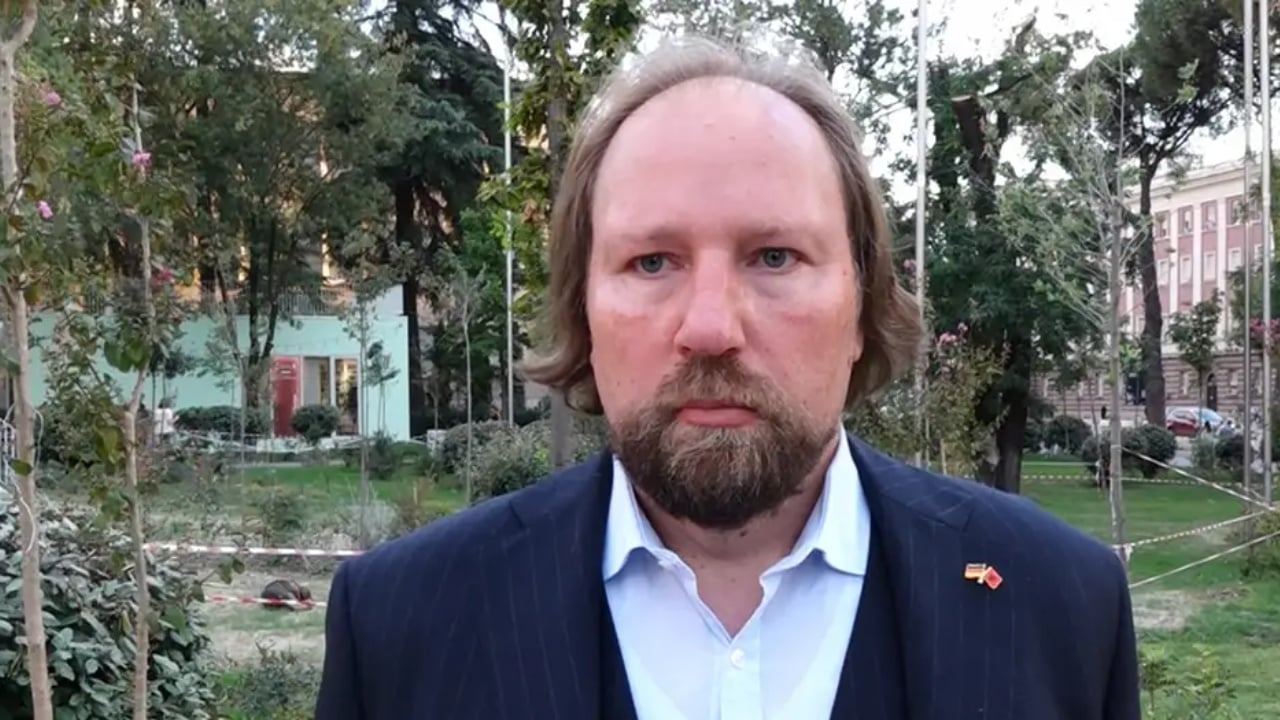
Message from the Bundestag: no interference in SPAK
Anton Hofreiter, chairman of the Committee on European Affairs in the German Bundestag, told DW that Albania could close its EU negotiation chapters in 2027, but only if it makes real progress in key areas, especially in the fight against corruption.
He called for SPAK to work without interference from politics, “not even verbally,” placing the issue in the functioning of the rule of law rather than in the public rhetoric of the day. For a country seeking EU membership, this is a test that cannot be passed with declarations.
Corruption remains the central knot of the process
According to Hofreiter, corruption is one of the most important issues for any country aiming for membership in the European Union. He noted that high-profile cases have also been seen in Albania, which in his view shows that no one should be considered untouchable.
However, his message did not stop at the investigations themselves, but at the political condition that they must not be obstructed. In essence, the signal is clear: European partners assess not only the number of case files, but also the real freedom of institutions to act without pressure.
Environment and the law, not just investments
In the interview, Hofreiter also linked environmental issues to the rule of law. Asked about the large protests for environmental protection in Albania, he stressed that anyone seeking to join the EU must implement European laws, which include not only democratic standards but also environmental ones.
He acknowledged that Albania needs investment and has the right to attract capital, but underlined that these investments must comply with European legislation. This suggests that economic development, often used as a political justification, cannot be placed above the rules.
Ambitious 2027 target, but with many conditions
According to him, closing the chapters by 2027 is possible, but it remains a very ambitious goal. Beyond the negotiations, he recalled that the ratification process comes afterward, along with a series of other steps that do not depend only on Tirana.
Hofreiter said Germany supports Albania with assistance in legislation, infrastructure, financing and advice, but added that the Albanian government and parliament still have a great deal of work to do, both in adopting laws and in implementing them.
He also warned that within the EU there are political forces, especially on the populist right, that do not want Albania’s membership. For this reason, in his view, Albanian politicians should not give arguments to the opponents of enlargement.
The message emerging from this statement is less celebratory than it is often presented in Tirana: the road to the EU is not measured by politically declared deadlines, but by concrete proof that justice is allowed to work, corruption is genuinely struck at, and the law is enforced even when it affects powerful interests.
It is precisely there, in the divide between rhetoric and standards, that the seriousness of Albania’s integration process will also be measured.