
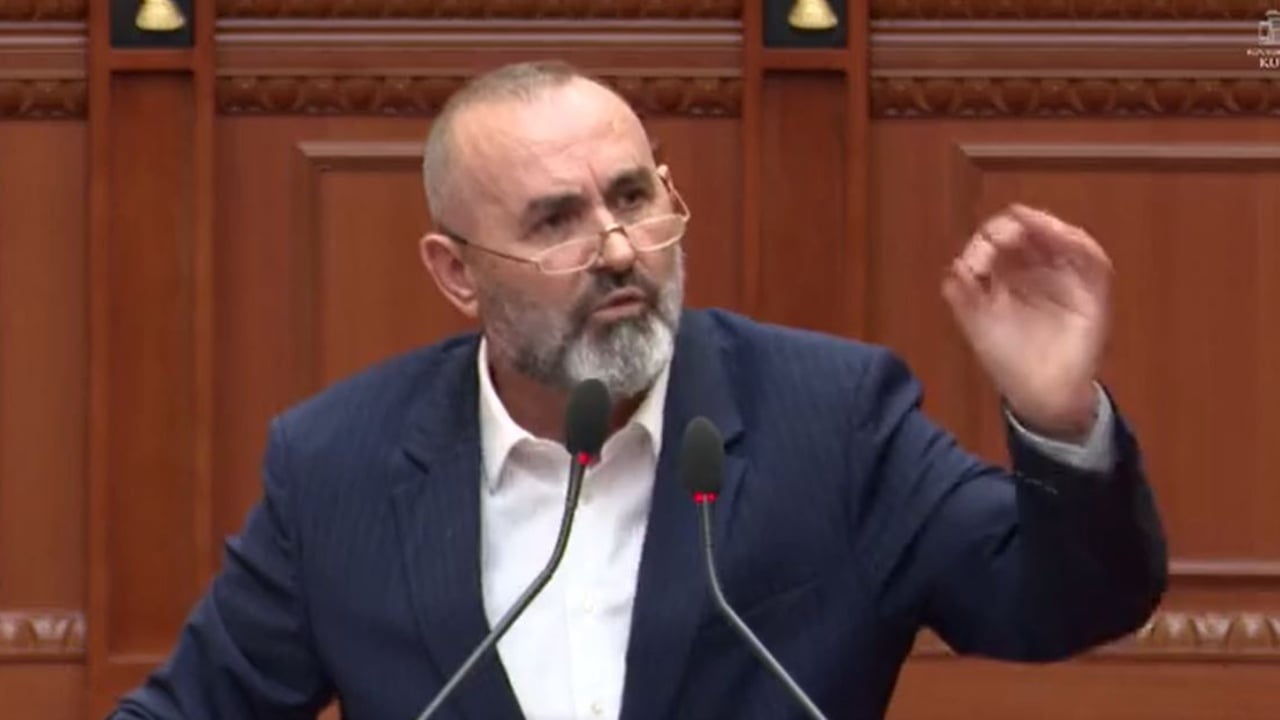
The debate over salaries in the justice system returned with sharp tones to Parliament, where Ulsi Manja defended a revised version of the draft law and sought to dispel doubts over how the initiative had been rewritten. In the version that went to a vote, the bonuses that had raised the most questions were removed, while the government and the majority are presenting the intervention as the implementation of the Constitutional Court’s decision.
What changed in the final version
According to Manja’s statements in the plenary session, the final draft no longer contains the bonuses initially proposed for Supreme Court judges and for the Prosecutor General. These were precisely the elements that had sparked debate, as they provided for additional benefits that, according to the official version, were not required by the Constitutional Court’s decision.
Manja said the draft removed hardship bonuses of up to 80% of the initial gross salary, a 5% function bonus for the Prosecutor General and Supreme Court judges, as well as a 2% bonus for each year of work experience. This makes the final version clearly different from the initial initiative that had been put forward for discussion.
The majority links the draft law to the Constitutional Court’s decision
According to Manja, the draft law aims to address Constitutional Court decision no. 15 of 2026, in the part related to the reference salary formula for judges and prosecutors, as well as the financial effects stemming from it.
He argued that the reference salary remains linked to the salary of the President of the Republic, but the coefficient is changed from 0.36 to 0.38. He also said that financial effects have been provided for from April 1, 2023, until the law enters into force, shifting the debate as well to the burden this creates on the state budget.
Questions over the procedure and the missed deadline
Part of the debate focused on the way the initial initiative was changed. Manja said the amendments that removed the bonuses were submitted in writing by MP Ermal Paçaj and were approved in the Laws Committee in accordance with Parliament’s Rules of Procedure.
He denied claims of constitutional violations or unclear moves between several drafts. However, the fact that the intervention was reformulated along the way and accompanied by political controversy keeps open the discussion over the real transparency of the lawmaking process.
Another issue was also raised in the session: the failure to address the Constitutional Court’s decision within the July 31, 2026 deadline. According to Manja, the passing of this deadline does not deprive Parliament of the right to determine the salary formula by law, nor does it transfer this competence to other institutions.
The debate does not end with this vote
According to the version defended by the head of the Laws Committee, no other institution can assume the attributes of the lawmaker, especially when it comes to effects that affect public finances. For this reason, the majority is presenting the vote as an intervention to fill a legal gap.
Manja himself acknowledged that the issue could return again to the Constitutional Court. He also spoke of the need for a broader review of the salary scheme in the justice system, proposing a “pyramidal architecture” from first-instance courts to the Court of Appeal and the Supreme Court, while SPAK, according to him, remains excluded for the reasons provided by law.
In essence, the next vote does not close the conflict over salaries in the justice system, but only shifts it into another phase: from the removed bonuses to the new formula, the cost to the budget, and the limits of Parliament’s competence in relation to Constitutional Court decisions.
Beyond the political interpretation in the chamber, it remains to be seen whether the approved version will also withstand constitutional scrutiny and the debate over salary standards in the justice system.