
Prime Minister Edi Rama used an event in New York to present an optimistic picture of Albania, claiming that the country has for years had “the largest airport in the region” and more passengers than Belgrade. In the same appearance, he acknowledged that Albania continues to face allegations of corruption, but compared that perception with the assessments that, according to him, come from European partners.
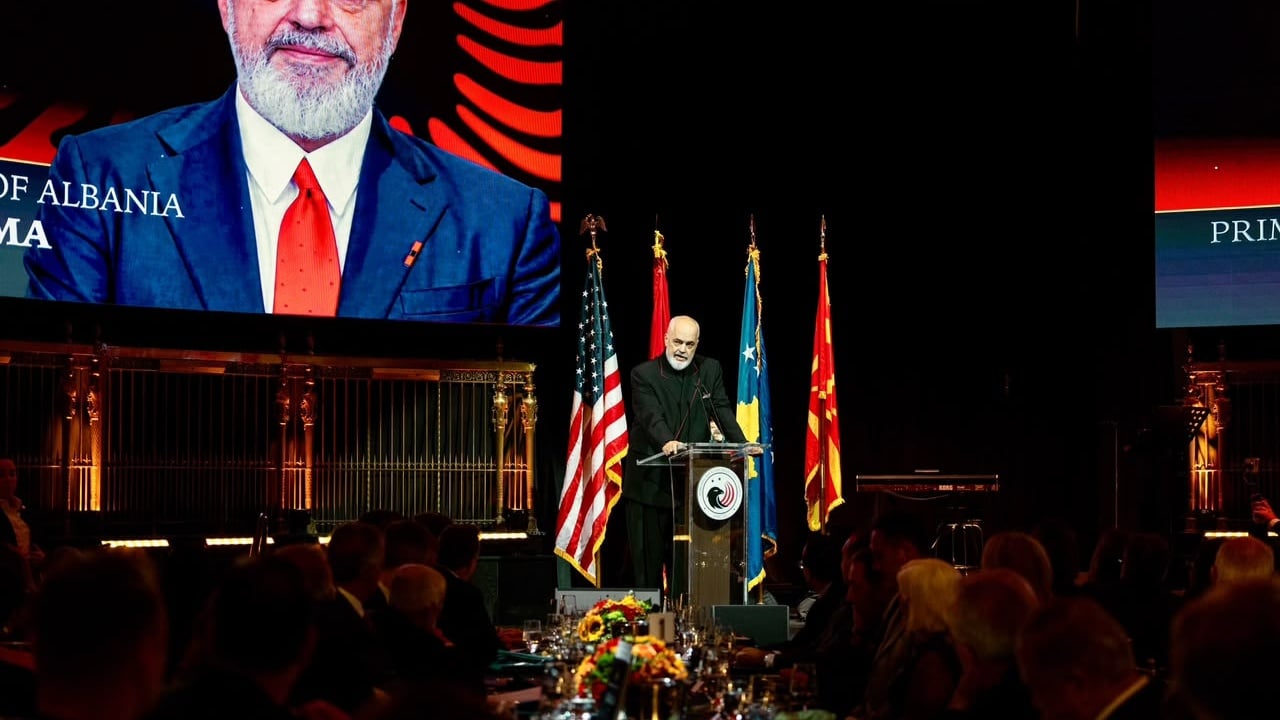
Statement at the gala: from Thaçi to Albania’s development
In remarks delivered at the gala evening organized by the Albanian-American Relations Council, Rama began with a comment on the absence of former Kosovo President Hashim Thaçi, saying that Albanians had disappointed “a great friend.”
The prime minister then changed the subject and shifted the focus to developments in Albania, insisting that the country has changed significantly in recent years and that success, in his view, is not always well received by everyone.
The claim of the largest airport in the region
According to the version presented by Rama, Albania has had the largest airport in the region for the fifth or sixth year. He said this advantage is not only relative in terms of growth rates in Europe, but also in concrete figures.
The prime minister also said that the airport in Albania has more passengers than the one in Belgrade, presenting this as an indicator of the change that has taken place in the country.
Political message: not everyone “swallows” this narrative
Rama linked this claim to what he described as difficulty for others in accepting it, saying it is not easy for “everyone to swallow” such a change for Albania.
He added that there are “forces that do not like to see us like this,” a political formulation often used in cases when the government seeks to support its narrative of success with the idea of opponents or outside skepticism.
Corruption, partial acknowledgment and comparison with European partners
In the same speech, Rama said Albania has shortcomings and pointed out that corruption was also mentioned by other speakers at the event.
However, he claimed that what Albanians see as a problem, European partners see as a success. The comparison remains politically charged, especially when it comes without concrete data in the same statement and at a time when corruption continues to be one of the most sensitive issues in public debate.
Rama’s remarks in New York came as a blend of diplomatic messaging, a defense of the government’s record, and a narrative that seeks to present Albania as a regional success story.
But beyond the triumphalist tone, the claims of regional superiority and the way the issue of corruption is relativized remain points that require critical reading, especially when they are articulated in forums where politics usually prefers the stage of promotion more than a confrontation with the real record.