
The arrest of former SHISH director Vlora Hyseni has now entered the prime minister’s political messaging as well. In an interview with German media outlet WELT, Edi Rama used the case to defend the government’s narrative on the fight against corruption, attributing the credit to the functioning of justice institutions, especially SPAK.
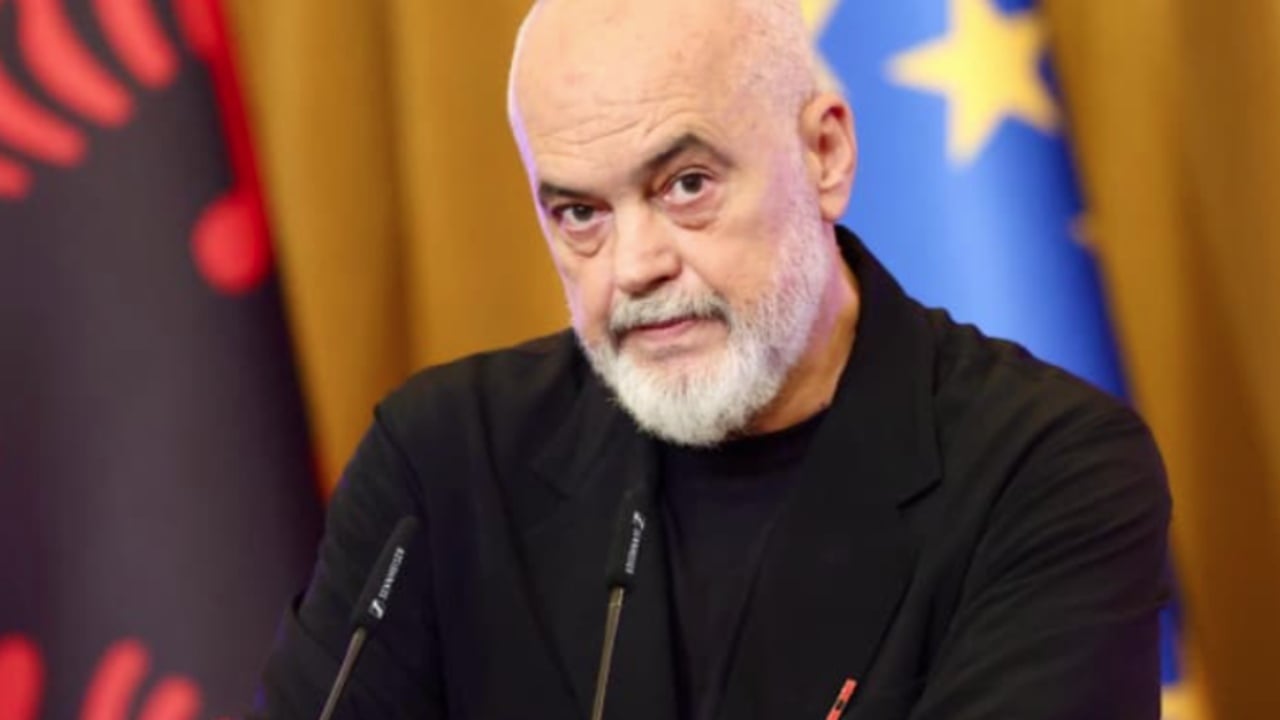
Vlora Hyseni’s arrest at the center of the interview
In WELT’s questions about corruption in Albania and investigations into senior officials, the arrest of the former director of the State Intelligence Service was also mentioned. Hyseni’s case was placed in the same framework as other proceedings that have affected important figures in the administration and politics.
According to the version made public, Hyseni was arrested as part of a SPAK investigation. Her case is seen as part of a series of strikes reaching the highest levels of the state, a development the government is trying to present as proof of a changing system.
Rama speaks of a “final phase,” but with reservations about procedures
Asked what is being done concretely against corruption, Rama said Albania has moved from a country where, according to him, “corruption was the system” to a reality where “the system fights against corruption.” He went further, saying the country is in the “final phase of the clean-up.”
However, in the same interview he did not offer unconditional support for the way all procedures are being carried out. Rama said that, in his view, not every action is in line with European standards and pointed to the high level of pretrial detention in Albania.
SPAK as proof of success, but also as politically uncomfortable ground
Asked whether SPAK is functioning, Rama gave a twofold answer: on the one hand, he described the process as tough and unavoidable; on the other, he acknowledged that it is also painful. This suggests that the blows struck by the justice system are being used by the government as evidence of reform, even when the political cost falls on people close to those in power.
At its core, his message was that the targeting of senior officials should be read as institutional success and not as a political failure of the majority that produced or promoted them. It is precisely here that the most debatable point of this public argument lies.
Political responsibility turned into a defensive argument
Faced with questions about political responsibility, given the arrests and convictions of people close to him, Rama relied on a historical comparison. He said that before he took office, since 1912 no minister in Albania had ever appeared before an independent prosecutor.
According to him, the fact that today people can be held accountable “wherever they are” constitutes his very political responsibility. It is a formulation aimed at turning the targeting of high-level officials into political capital for the government, rather than opening a deeper debate on responsibility for appointments, oversight and the culture of power.
Rama’s interview comes at a moment when investigations into high-profile figures are being used at once as proof that justice is functioning and as a means of defending the government’s political record.
For this very reason, the case of Vlora Hyseni and the references to SPAK remain more than a criminal matter: they are also part of the battle to control the public narrative on corruption and responsibility in power.