
Prime Minister Edi Rama used an interview with the German media outlet WELT to defend the government’s narrative on the fight against corruption, at a time when SPAK investigations have reached important names close to power. At the center of the questions was also the arrest of former SHISH director Vlora Hyseni.
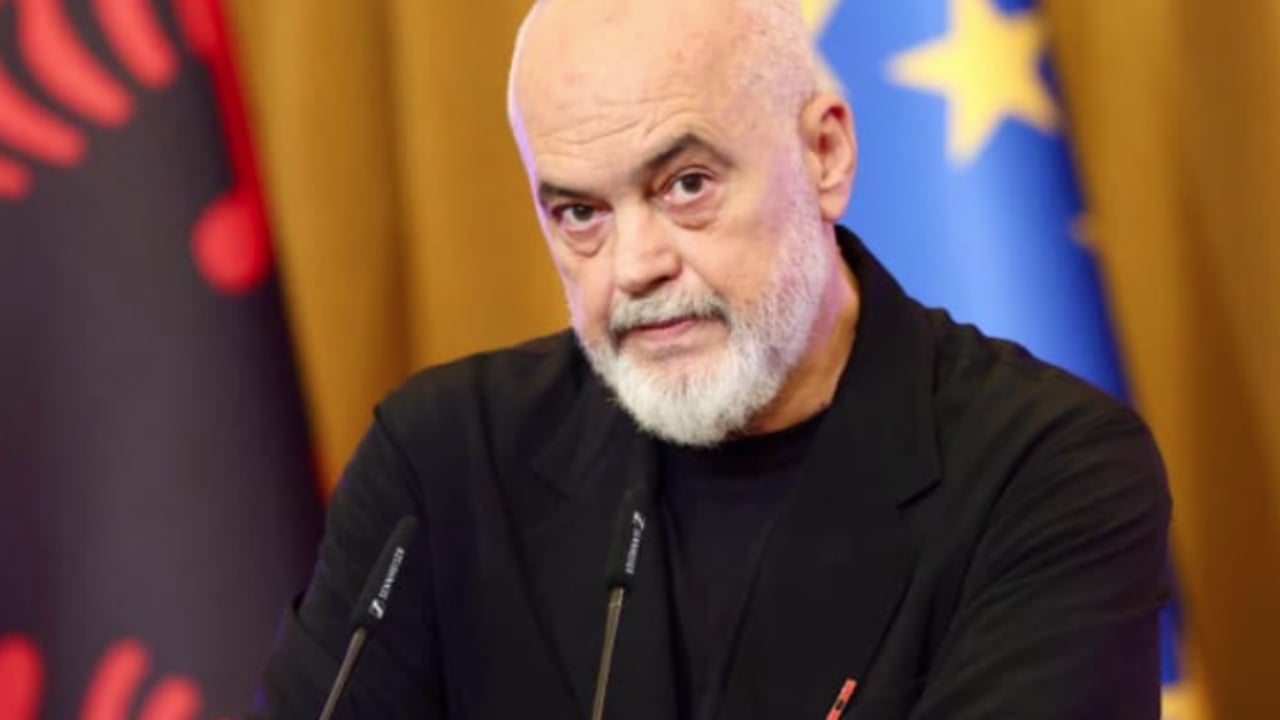
Questions on corruption and the Vlora Hyseni case
During the interview, WELT emphasized that corruption remains a problem in Albania and linked that debate to the arrest of the former head of the State Intelligence Service. The German outlet placed Hyseni’s case in the same framework as other investigations and convictions involving senior officials.
Aspects of the case remain in SPAK’s hands, while Hyseni’s arrest is part of a series of proceedings that have affected Albania’s administration and politics.
Rama: from “corruption was the system” to “the system fights corruption”
In his response, Rama said Albania has moved from a reality where, according to him, “corruption was the system,” to a phase where “the system fights corruption.” He went further, declaring that the country is in the “final phase of cleaning up.”
This is a political line the government has often used to present judicial interventions as proof of the state’s transformation, even though the investigations themselves have highlighted that corruption problems continue to affect high levels of the administration.
SPAK, praise with reservations
Asked whether SPAK is functioning, Rama gave a more nuanced response than the usual triumphalist rhetoric. He said the process is “partly painful” and claimed that not all procedures are in line with European standards.
According to him, Albania has the highest rate of pretrial detainees on the continent, but he presented this as part of a harsh and unavoidable process. In other words, support for SPAK’s strikes and, at the same time, a complaint about the way they are being carried out.
Political responsibility and officials close to power
When asked about the demands directed at him for political responsibility because of the arrests and convictions of people close to him, Rama tried to turn this into an argument in favor of his own governance.
He said that before he came to power, no minister had appeared before an independent prosecutor, and added that he feels proud that today, according to his version, the country is able to hold people accountable “wherever they are.” This is precisely where the political debate lies: whether the targeting of senior officials is proof that the state is functioning, or an indication of how deep the problem runs inside the very system the government claims to have reformed.
The interview comes in a climate where SPAK remains the most sensitive point in the relationship between power and justice. On the one hand, the government seeks to present this as an institutional success; on the other, the number of cases involving high-profile figures continues to fuel suspicions that corruption is not simply a legacy of the past, but a problem that continues to be produced within the current political elite.