
The government has rejected the first version of the tourism project in Zvërnec, not because of the investment volume itself, but because the plan entered protected territory and affected areas with high environmental sensitivity. At the same time, documents highlight the scale of the planned intervention on Sazan, where permits and restrictions remain closely tied to environmental and archaeological conditions.
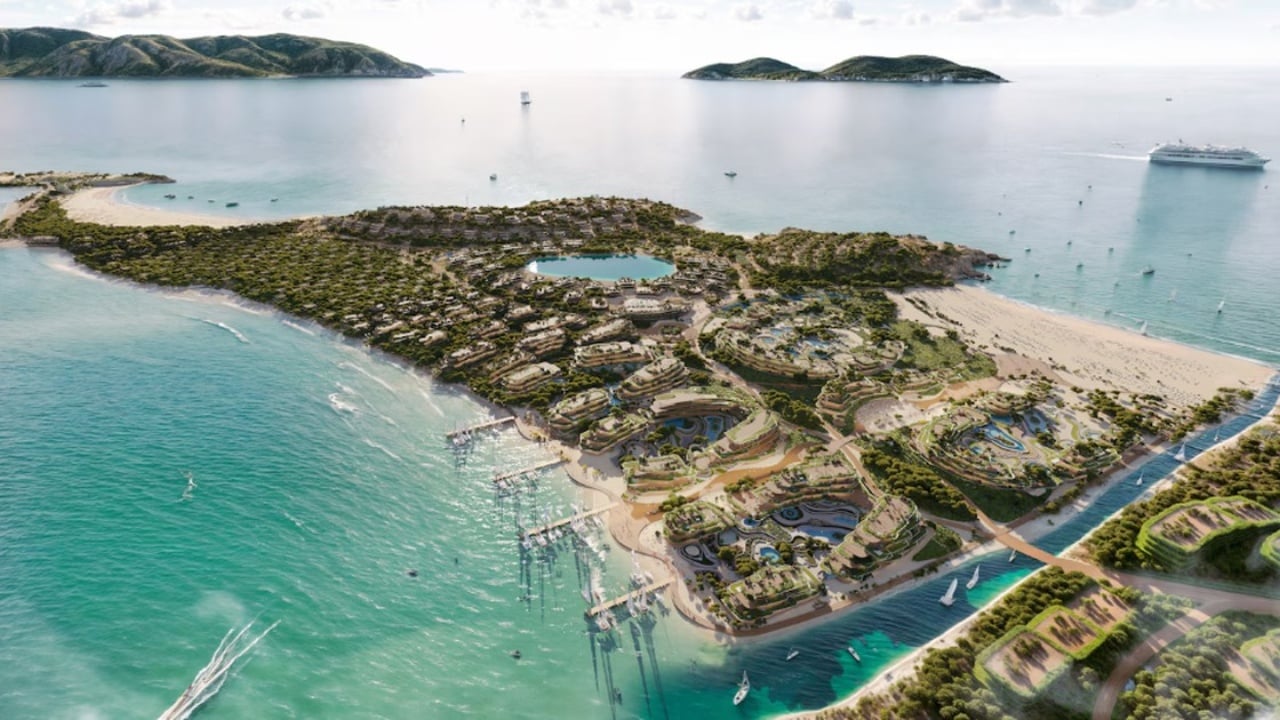
The first plan for Zvërnec was deemed unacceptable
According to documents published in the “Flamingo Mirror,” the initial project for the development of Zvërnec envisaged hotels, residences and buildings up to 8 storeys high in an area that is classified as protected.
The official version says it was precisely the status of the territory and the risk to nature that led to opposition to this variant. In essence, it was a high-intensity intervention in one of the most sensitive areas of the coastline.
What exactly the project affected
Documents from the National Agency of Protected Areas show that the area envisaged for the project was located within the “Pishë Poro–Nartë” Protected Landscape and affected two natural monuments: Limopuo Lagoon and the Molassic Hills of Zvërnec.
This territory contains dunes, habitats for migratory birds and rare biodiversity. According to the institutions, construction could have put pressure on habitats, polluted the waters and disrupted the balance of the Narta Lagoon.
For these reasons, the project was not accepted in its initial form and a deeper environmental assessment was requested, suggesting that the concerns were neither secondary nor merely formal.
The scale of the rejected project in Zvërnec
“Zvërnec Peninsula” was planned to extend over about 266 hectares, with nearly 1.7 million square metres of construction.
Of this area, about 771,000 square metres would be occupied by residences, while 292,000 square metres would be hotel structures. The plan envisaged buildings of up to 8 storeys, with a maximum height of 39 metres, as well as recreational spaces and a marina.
These figures show that this was not a limited tourism development, but a broad transformation of the territory, in an area where environmental limits are essential.
Sazan, outside the island’s protected land area but not without conditions
In Sazan’s case, the documents present a different situation. The project linked to Jared Kushner, according to the published data, does not extend into the island’s protected land area.
However, this does not mean the intervention is without restrictions. The Institute of Cultural Heritage has requested surveys because of the high underwater archaeological potential. If important finds emerge, the project may change and the cost will be covered by the investor.
The agreement also states that there will be no intervention on the water surface around Sazan, part of which is included in the Karaburun–Sazan Marine National Park.
How much is planned to be built on the island
The investment on Sazan is planned in an area of about 45 hectares, where tourism structures, residences, gastronomy facilities and marina interventions will be built.
The development is planned to be divided into three phases. The documents also refer to about 1,000 jobs, as well as 2,651 square metres dedicated to beach stations.
Although the project on Sazan is presented with clearer limits than the first Zvërnec variant, the scale of the intervention remains significant and attention remains on how the conditions set out in the documents will actually be implemented.
The case of Zvërnec shows that the institutions themselves have acknowledged that a tourism development can go beyond acceptable limits when it clashes with the protection of nature.
While in Sazan the limits have been written on paper, the real test remains on the ground: how much the conditions will be respected and how much weight the public interest will carry against the investment project.