At a critical moment for Kosovo’s institutions, acting Prime Minister Albin Kurti has openly linked unlocking the election of the president with moving forward on the draft law on the Specialist Chambers. According to his statements, without the election of the president, the country risks immediately sliding toward new elections.
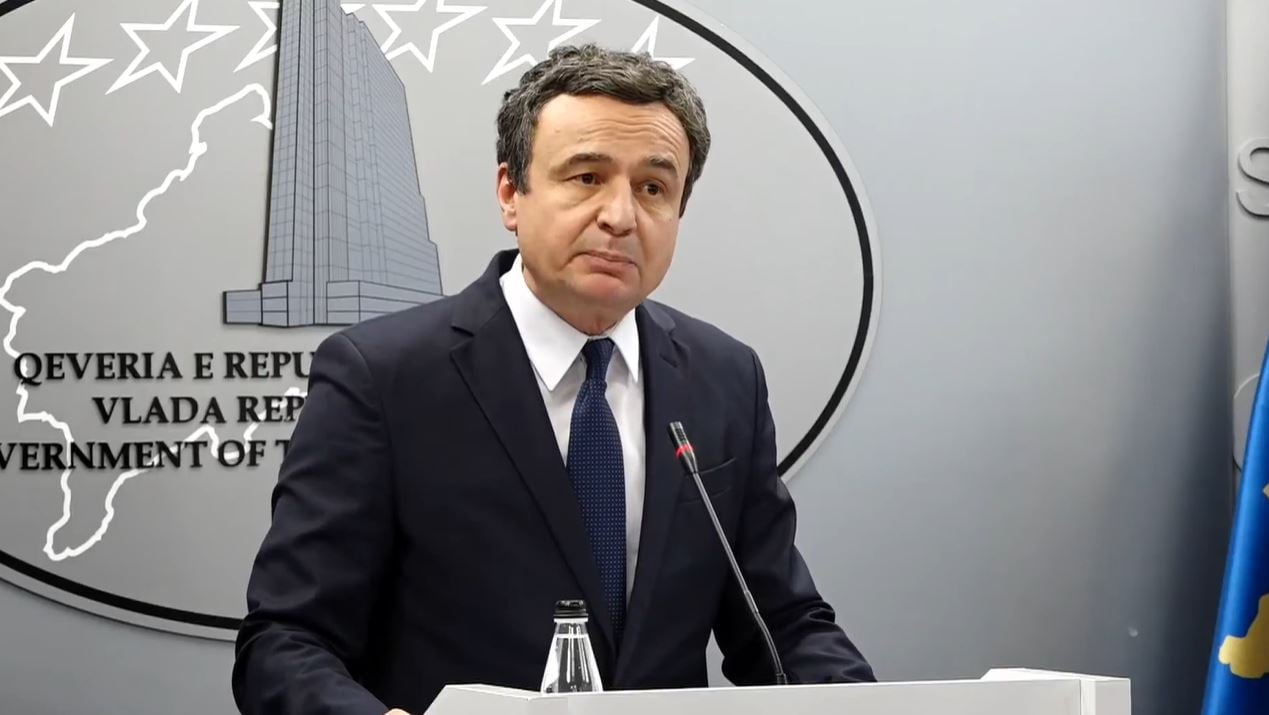
Kurti: without a president, the country could go to elections
Kurti said the issue of the president must be resolved before any other political scenario, arguing that the absence of an elected president pushes the country into an immediate institutional crisis.
According to his version, if the president is not elected, Kosovo could face new elections within a very short timeframe. He said other issues currently under discussion also cannot be resolved immediately and require time.
Offer to the PDK in exchange for votes
Kurti made a direct offer to the PDK: if the party publicly commits to securing at least half of the votes of its deputies for Bekim Sejdiu, then the majority will proceed with the second-reading vote.
With this formula, the acting head of government made it clear that he is seeking a public political guarantee from the opposition before moving ahead on another sensitive issue in the Assembly.
Accusations of obstruction and lack of meetings
In his statements, Kurti accused the PDK of refusing cooperation and of setting conditions without accepting a political meeting. He also mentioned the relationship with Bedri Hamza, saying that a direct meeting between the sides is not being accepted.
According to Kurti, Vetëvendosje has shown signs of cooperation in several cases, including votes and parliamentary procedures also linked to the Specialist Chambers. On the other hand, he claimed that the PDK is seeking an agreement without truly entering into dialogue.
The law on the Specialist Chambers remains part of the political bargaining
Kurti said that if the president is elected today, he commits to passing the draft law on the Specialist Chambers on Thursday. At the same time, he said the rules of procedure cannot be violated because of the Constitutional Court ruling.
This makes clear that a law carrying political and institutional weight is being used in the same negotiation as the crisis over the president, in a climate where the sides continue to speak more through public conditions than through direct agreements.
Kurti’s statements highlight a political deadlock in which the election of the president, the relationship between the majority and the opposition, and the processing of the law on the Specialist Chambers are becoming intertwined in the same confrontation.
For the moment, his message is unequivocal: without an agreement on the president, the country could once again enter an electoral cycle, while the law on the Specialist Chambers remains tied to this political unblocking.