
A vote held in the early hours of the morning in the Assembly of Kosovo immediately opened a political and institutional clash with Brussels. The European Union said the changes to the Law on the Specialist Chambers run counter to Kosovo’s international obligations, while their approval came on the same night as the breakthrough in the crisis over the election of the new president.
Brussels raises alarm over the independence of the Specialist Chambers
According to a position made public by an EU spokesperson to Radio Free Europe, Brussels is “deeply concerned” by the amendments and additions to the law governing the functioning of the Kosovo Specialist Chambers.
According to the EU, these moves undermine Kosovo’s international obligations and affect an issue that Brussels considers essential: the judicial independence of the Specialist Chambers and the continuation of their mandate without political interference.
Call for accountability, not a weakening of the mandate
In its official reaction, the EU called on Kosovo to uphold its international commitments to guarantee the independence of the Specialist Chambers, as well as its pledge to accountability and justice for victims and their families from all communities.
Brussels insisted that the Specialist Chambers have consistently been supported as an independent judicial institution and stressed that they operate on the principle of individual criminal responsibility. The political message is clear: the EU does not look favorably on limiting the powers of a structure that it has itself funded and supported over the years.
Last-minute deal and overnight vote
The legal changes were approved on second reading in an extraordinary session called late on October 6, completing the parliamentary procedure for the draft law initiated by the opposition Democratic Party of Kosovo.
Shortly afterwards, in the first minutes of October 7, the Assembly elected Justina Shiroka Pula as the new president. According to developments in the session, this came after a political agreement reached at the last moment, which simultaneously secured the votes for the changes limiting the powers of what is widely known as the Special Court.
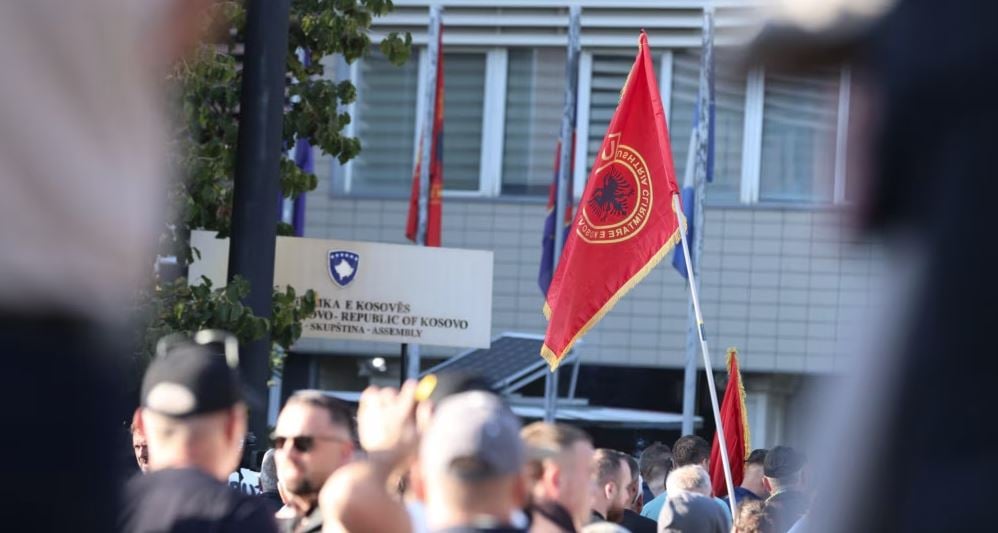
The night session followed a long day of political deadlock among the parties. At the same time, outside the institutions, protests against the changes to the law continued on October 6 as well, one day after clashes had been recorded between protesters and the Kosovo Police.
EU welcomes the breakthrough, but sets political conditions
In the same reaction, Brussels welcomed the end of the institutional deadlock that had gripped Kosovo since 2025, following the election of the new head of state. According to the EU, the return of institutional stability should pave the way for reforms and closer ties with the union.
However, the message was not only encouraging. According to the EU’s official position, important work awaits Kosovo on reforms under the Growth Plan, the implementation of the Stabilisation and Association Agreement, regional cooperation, and gradual integration into the Single Market.
Brussels also recalled that partnership with Kosovo is tied not only to support, but also to responsibility. In the background remains the fact that the European Union is the main financial backer of the Specialist Chambers, with nearly 400 million euros provided since their establishment.
The legal basis of the Specialist Chambers is linked to the 2014 exchange of letters between then-President Atifete Jahjaga and former EU High Representative Catherine Ashton.
Although based in The Hague, the Chambers are part of Kosovo’s judicial system. For this reason, the latest clash is seen not simply as a technical debate over a law, but as a political test of Pristina’s relationship with the commitments it has made to international partners.