
Parliament has approved the new administrative-territorial map with 85 votes, a broad intervention in local organization that, according to the majority, aims to create larger units that are more financially sustainable. But behind this official wording lies another political and administrative fact: 15 municipalities are losing their status as independent units, despite local objections and public protests.
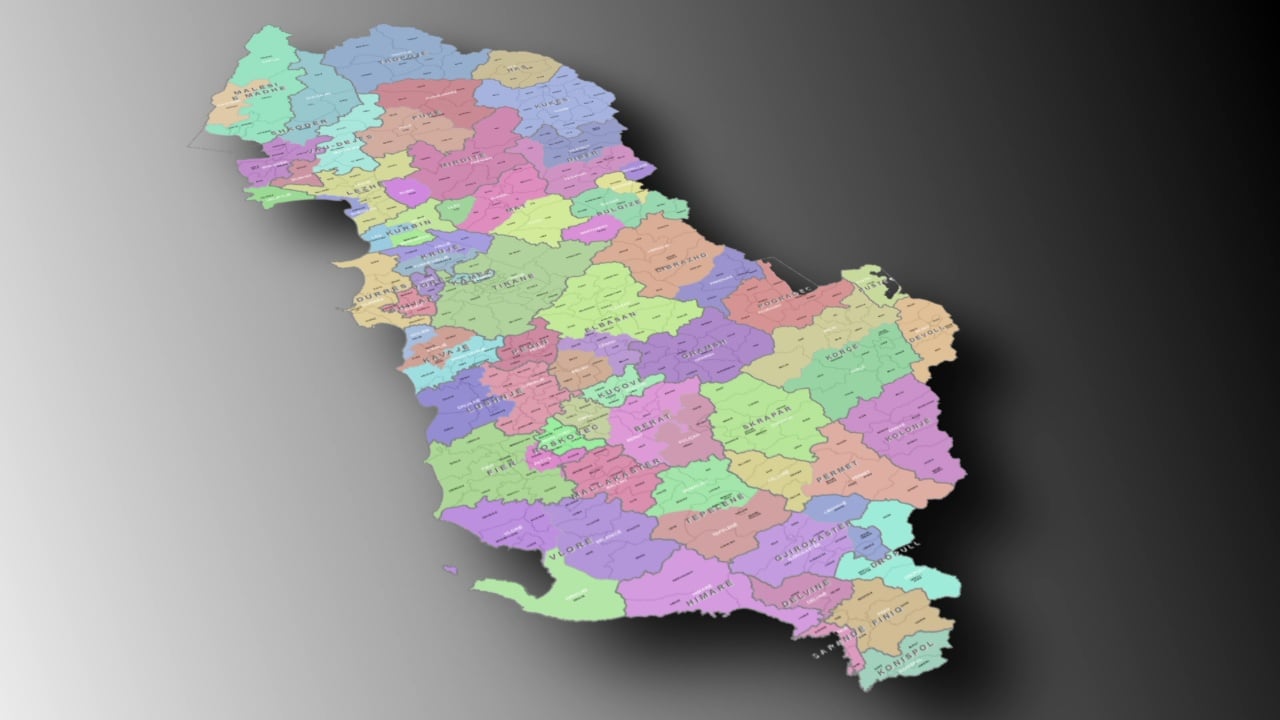
From 61 to 46 municipalities, under the argument of “financial sustainability”
The version approved in Parliament provides for reducing the number of municipalities from 61 to 46. According to the majority, the main objective is to create larger local units that are financially more sustainable.
The opposition failed to advance its proposal for 100 municipalities and later made clear that it would not take part in the next phase of the process. In this clash, the majority passed its version without broad political consensus.
15 municipalities lose status, local objections did not change the decision
With this draft law entering into force, 15 municipalities will lose their status as independent units of local self-government. The decision was taken even though there were objections during public hearings, while citizens from some of these municipalities also protested in front of the Presidency of Parliament.
Despite this, the units were merged with larger neighboring municipalities. This makes the reform not only an administrative matter, but also a decision with direct impact on local representation and control over local resources.
How the map changes: moves from Tirana to the south of the country
In Tirana County, the new administrative unit of Rinas is being added, which includes the village of Rinas, currently part of Krujë Municipality, as well as Bërxullë and Domje from Vorë Municipality.
The new configuration merges Fushë-Arrëz with Pukë, Klos with Mat, and Rrogozhinë with Kavajë. In Berat County, Dimal and Poliçan are merged with Berat, while in Fier County, Patos is merged with Fier.
Divjakë will be part of Lushnjë. In the south of the country, Selenicë is merged with Vlorë, Këlcyrë with Përmet, Memaliaj with Tepelenë, and Libohovë with Gjirokastër. In the southeast, Maliq is merged with Korçë. In Elbasan County, Cërrik and Belsh are merged with Elbasan, while Përrenjas is merged with Librazhd.
The reform does not end here, the phase on competencies is expected
The approval of the map is only the first phase of this reform. Next week, another special parliamentary committee is expected to be established, where the competencies of municipalities after the new changes will be discussed and drafted.
This means that, beyond the new boundaries on the map, the question remains open as to how local power will be redistributed in practice and how much real space will remain for local self-government after the imposed mergers.
The 85-vote approval gives the majority full control over the direction of the territorial reform, while local objections and the opposition’s non-participation leave the process without broad public and political consensus.
In essence, the new map is not just an administrative reorganization. It affects the balance between the center and local government, the representation of communities, and the way resources will be managed in larger territories.