
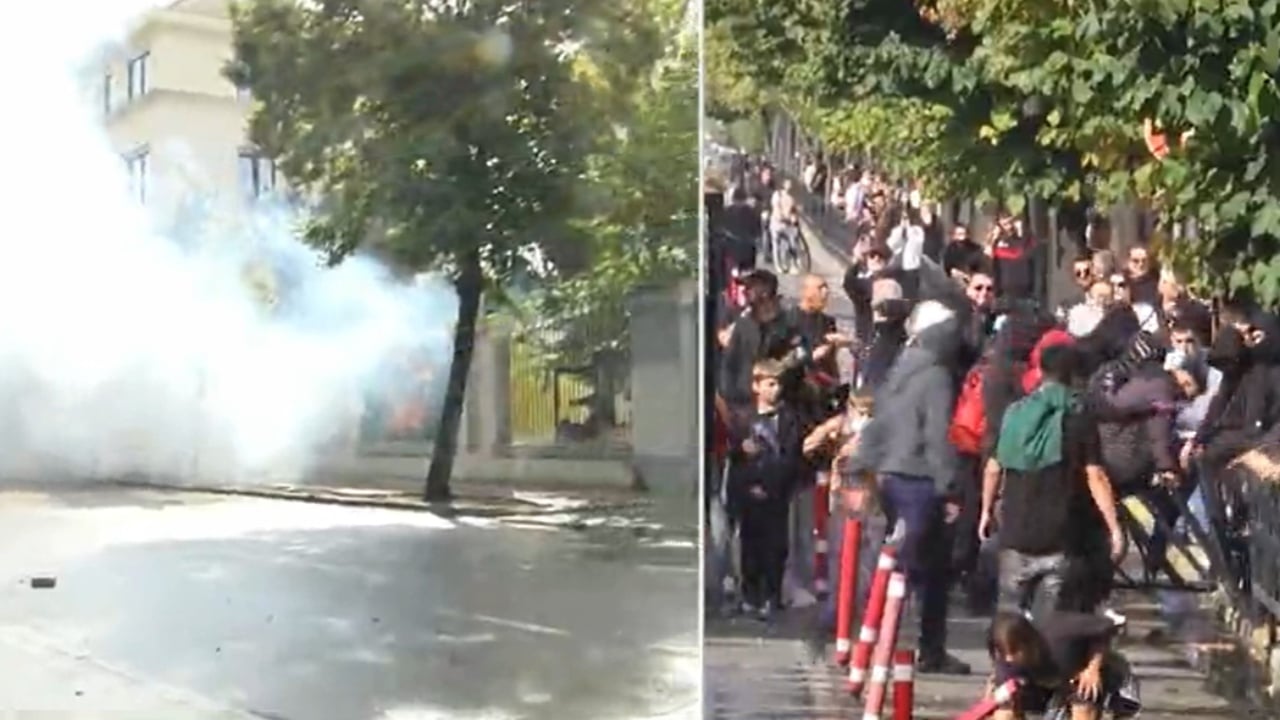
The student protest entered its third day this Thursday, extending the class boycott to high schools and university faculties in Tirana, as well as in several other cities across the country. In the capital, crowds began gathering in the early hours outside Parliament, in a tense climate following the unrest of the previous day.
Boycott spreads in Tirana and other cities
Pupils and students responded to calls for protest from the morning, while absences have been reported in secondary schools and universities. The movement also appears to be sustained through calls circulated on social media.
In addition to Tirana, the boycott of classes has also been reported in several other Albanian cities, showing that the protest is not remaining confined to the capital.
Gathering outside Parliament on a day of political tension
In Tirana, protesters began gathering outside Parliament, while public and political attention has shifted to developments on the ground. The situation comes at a time when the climate in the country remains tense.
Against this backdrop, lawmakers canceled the plenary session scheduled for Thursday, a decision that makes even clearer the political weight the protest has taken on.
The aftermath of Wednesday’s clashes
Today’s escalation comes after what happened on Wednesday in Tirana, where there were clashes, fires and material damage on streets, at institutions and at businesses. These developments have increased pressure on institutions and on how the situation is being managed.
So far, what is known is that the protest is continuing on an inflamed ground, where the damage and tensions from the previous day have left behind a climate of uncertainty.
Rama accuses the opposition, but the protest remains at the center
Prime Minister Edi Rama reacted after Wednesday’s events, accusing the opposition of trying to block Albania on its path toward Europe. This is the political version of the majority, articulated at a moment when the protests are producing public and institutional costs.
However, on the ground the focus remains on the mobilization of pupils and students, the boycott of classes, and the tension brought by the clash between the protest and institutions.
The third day of the protest is thus unfolding amid the boycott in education, the gathering in the capital and a political reaction seeking to impose its own reading of events.
What remains evident is that the situation has gone beyond a routine protest and is now directly affecting the parliamentary agenda.