
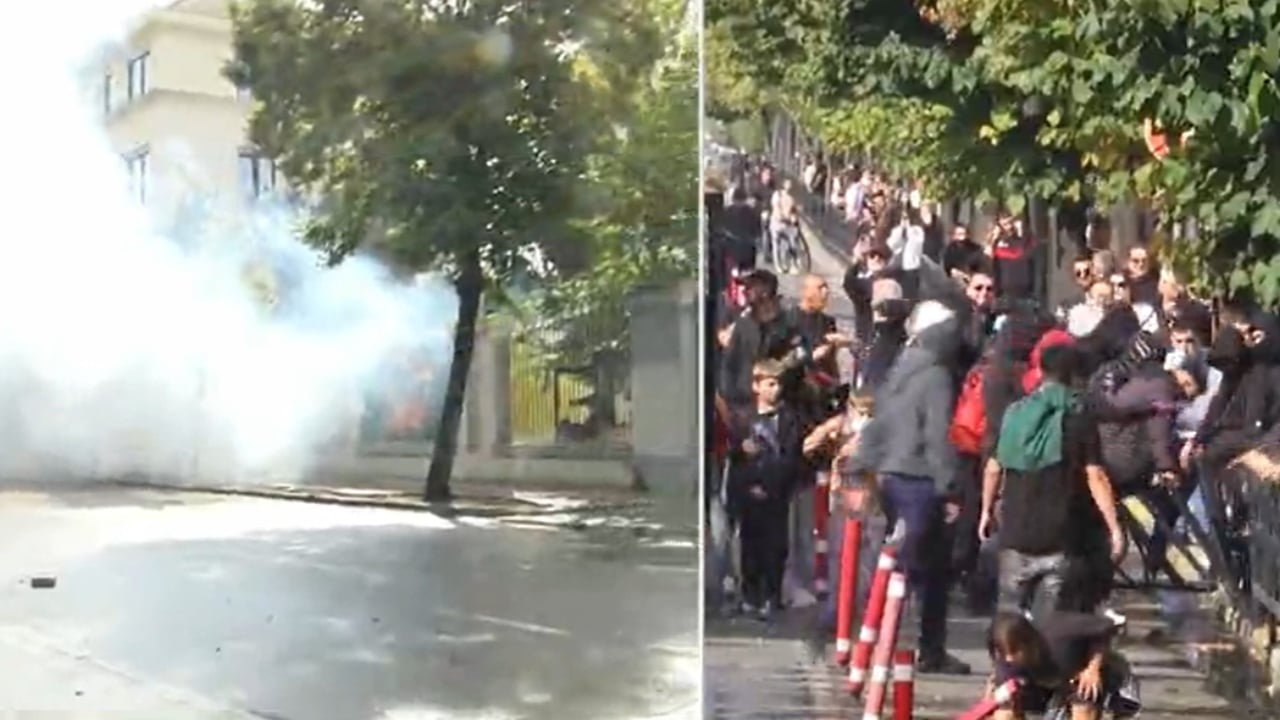
The student protest entered its third day this Thursday, with classes boycotted in high schools and faculties in Tirana, as well as in several other cities. In the capital, the gathering began early in the morning outside Parliament, as the situation follows a tense day marked by clashes, fires and material damage.
The boycott spread beyond Tirana
Pupils and students responded to calls for protest circulating on social media, boycotting classes not only in Tirana but also in other cities across the country.
The involvement of high school students and university students in several districts shows that the movement has not remained limited to the capital, while educational institutions faced absences in lecture halls and classrooms.
The rally focused on Parliament
From the early hours of the day, protesters began gathering outside Parliament in Tirana. The shift in focus to the Assembly building further heightens the political climate, at a moment when the protest is moving from street discontent to direct pressure on institutions.
The official version has spoken of police escorts, while developments on the ground are being accompanied by increased tension between law enforcement forces and protesters.
The consequences of yesterday weigh on the situation
This wave of protest comes immediately after Wednesday’s tensions in Tirana, where clashes, fires and material damage were reported on streets, at institutions and at businesses.
The toll from the previous day makes the authorities’ management of the protest even more delicate, especially as the confrontation between public discontent and the police response risks deepening.
Parliament pulls back, government blames the opposition
In this climate, lawmakers canceled the plenary session scheduled for this Thursday. The move comes at a moment when all political and public attention is focused on the protest and its consequences.
On the other hand, Prime Minister Edi Rama reacted after Wednesday’s protest by accusing the opposition of trying to block Albania on its path toward Europe. According to the government, the country will not turn back, but this is a political interpretation that does not provide answers to the direct causes of the anger that has brought students and pupils into the streets.
With the protest entering its third day and the boycott spreading to several cities, pressure on institutions has increased significantly.
The cancellation of the plenary session and the tension on the ground show that the situation is no longer being treated as an isolated episode, but as a crisis with a direct impact on the country’s public and political life.